







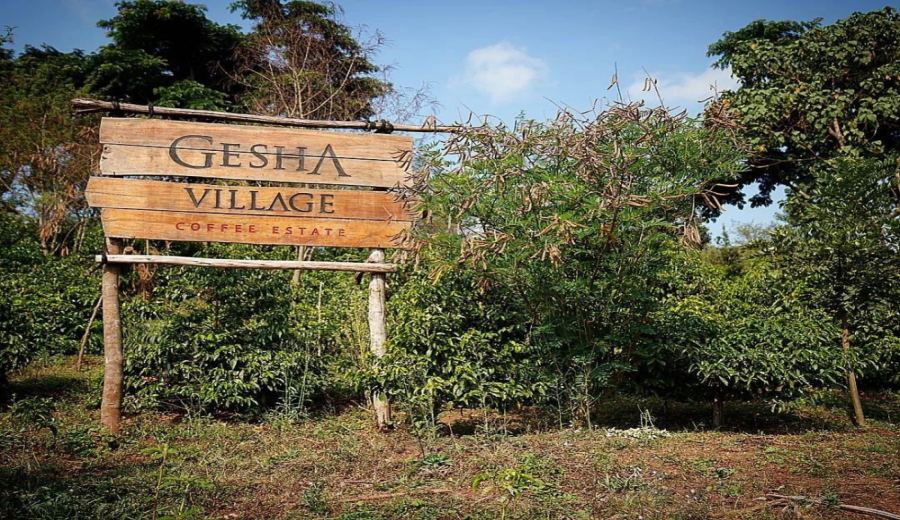
Introduction:The coffee beans from Ethiopia’s Gesha Village are renowned for their unique flavors, yet they are often confused with Panamanian Gesha. This article provides an in-depth analysis of Gesha Village’s five grades—Competition, Gold Label, Red Label, Green Label, and Chaka—breaking down everything from grading standards and flavor profiles to pour over parameters, helping you accurately choose your preferred beans. It includes professional cupping flavor descriptions and three-stage brewing techniques, offering references for both coffee beginners and advanced enthusiasts.
As the birthplace of coffee, Ethiopia’s Gesha Village grows the Gesha variety, which shares the same name as Panama’s but delivers vastly different flavors. The estate divides its products into five distinct grades: Competition, Gold Label, Red Label, Green Label, and Chaka, each with clear selection criteria and flavor positioning.
Competition BatchRepresents the flagship offering of Gesha Village, accounting for only 3.7% of annual production and available only through global auctions. These beans undergo multiple rounds of screening and represent the highest quality, with complexity and flavor layers far surpassing regular batches.
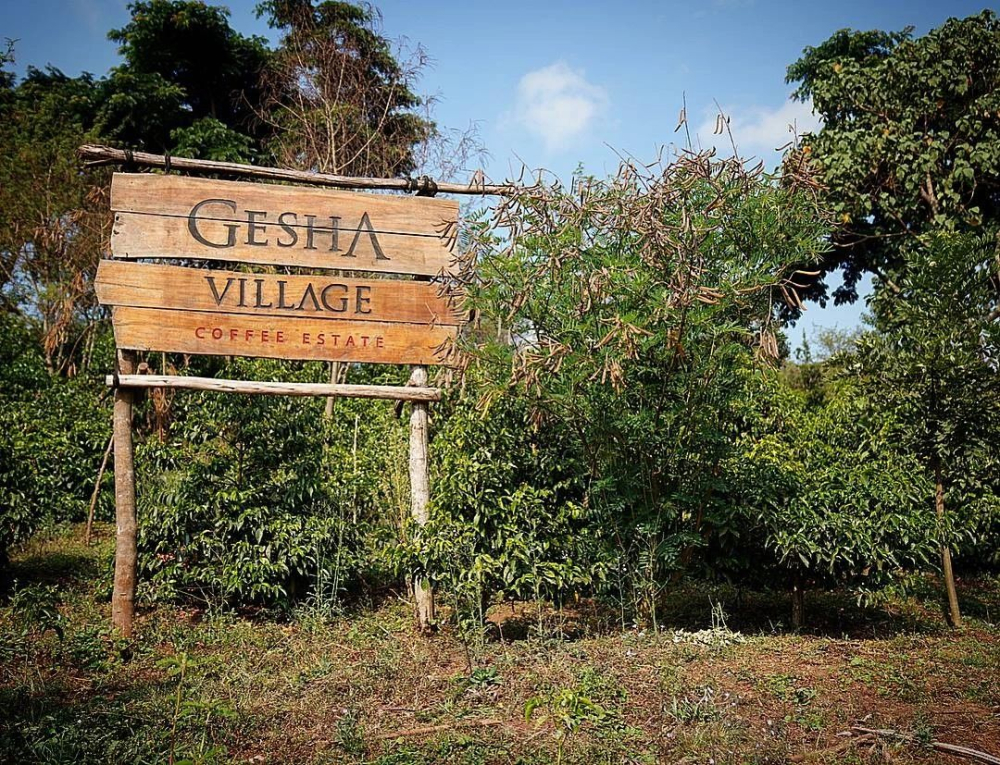
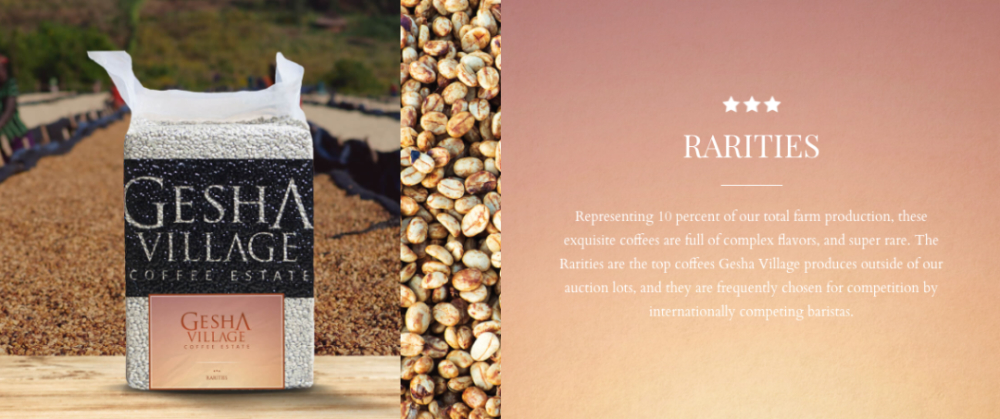
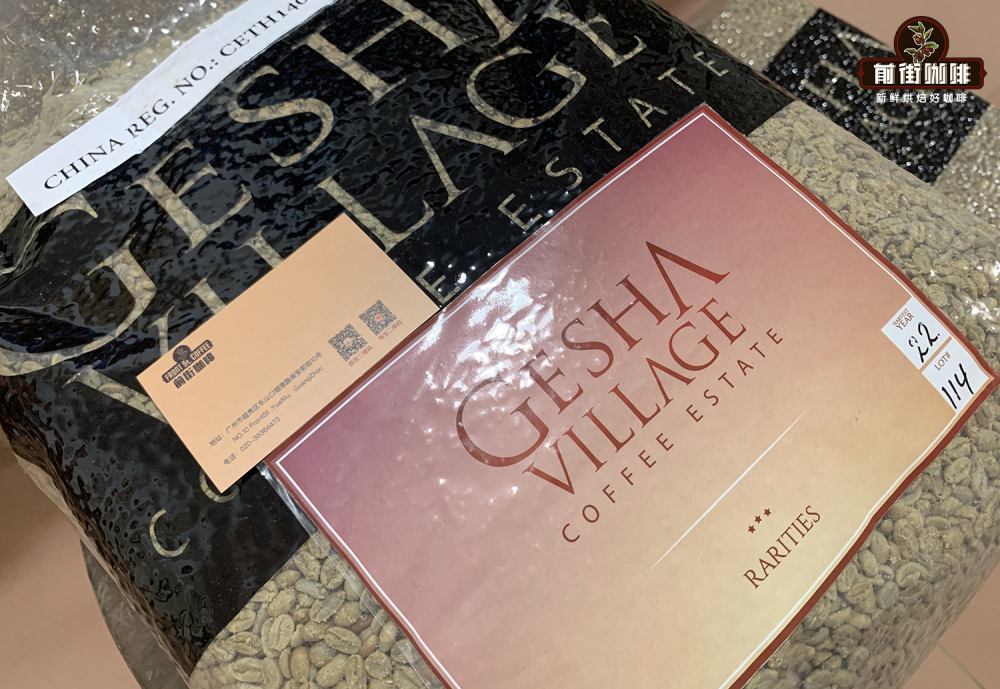
Gold Label (Rarities)Officially named “Rarities,” this grade makes up 10% of total output. Although not part of the auction lot, it boasts exceptional quality. This year’s cupping revealed citrus and jasmine floral notes reminiscent of Panamanian Gesha, paired with honey sweetness and a tea-like aftertaste, overturning its previous ordinary profile akin to Yirgacheffe.
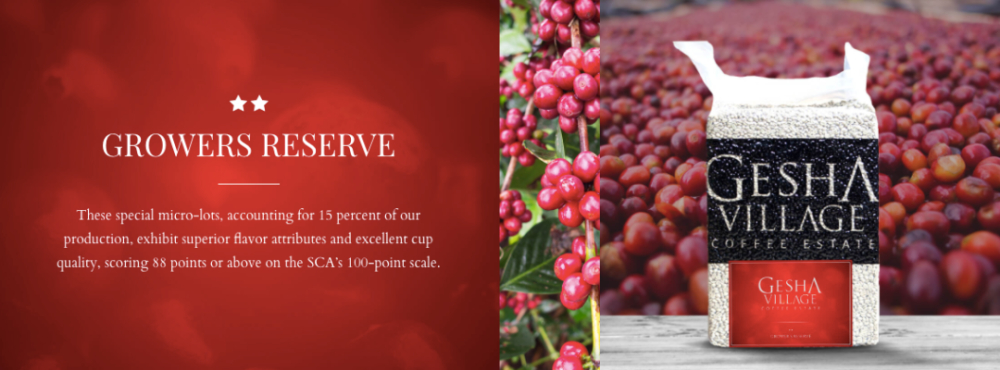
Red Label (Growers Reserve)Also known as the “Growers Reserve,” this grade accounts for 15% of production, with SCA cupping scores of 88 or higher. Its flavor intensity and complexity are slightly lower than Gold Label, but it features prominent tropical fruit notes and outstanding value. Typical flavors include bergamot, lemon, and creamy sweetness, with jasmine floral notes and toffee undertones emerging as the cup cools.
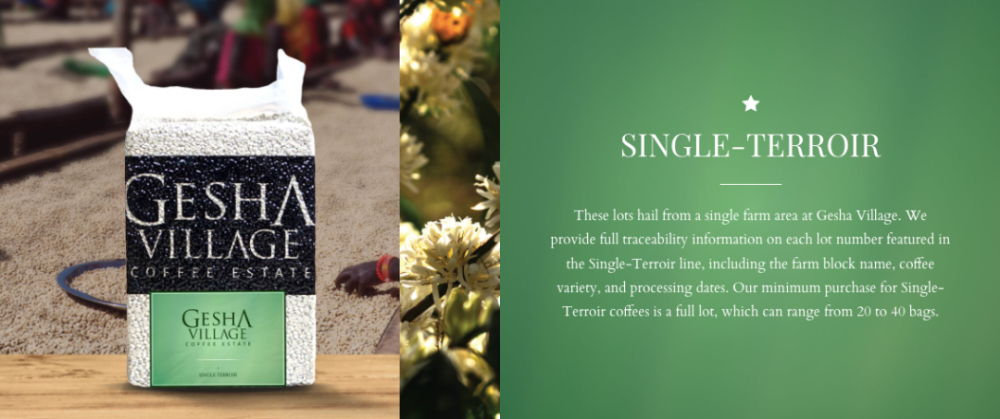
Green Label (Single-Terroir)Highlights single terroir characteristics, providing detailed information on plot, variety, and processing. This batch delivers rich and mellow flavors, with balanced berry acidity and honey sweetness, and a unique fermented finish. It’s ideal for those seeking regional distinctiveness.
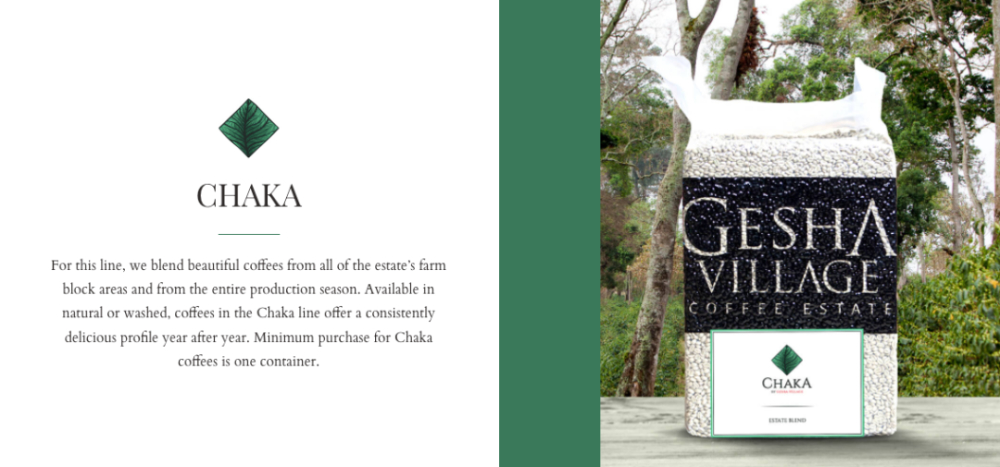
Chaka BatchHas the lowest entry barrier, blending beans from multiple plots and varieties without emphasizing segmentation. Its flavors are dominated by mild citrus and grapefruit acidity, making it suitable for beginners and showcasing the foundational quality of Gesha Village.
Professional cupping uses 11.3 grams of coffee beans brewed with 94°C water. The Gold Label exhibits intense dry aroma, shifting to floral and berry notes in the wet aroma, with prominent citrus tones on the palate, a lingering sweetness, and a fermented aftertaste. The Red Label highlights tropical fruit character, with jasmine floral notes becoming apparent as the cup cools. The Green Label offers full-bodied berry sweetness and acidity akin to Kenyan beans, while the Chaka presents gentle citrus acidity.
The sun-drying process has a significant impact: after floatation to remove impurities, the beans are spread in thin layers on African raised beds for sun drying. During this period, plastic covers are used and defective beans are sorted again, with a total drying period of 18 to 30 days. This method enhances sweetness and the complexity of fruit flavors, hence it is recommended touse medium-light roastingto highlight floral and fruity sweetness.
Recommended Pour OverThree-Stage Parameters:Coffee-to-water ratio of 1:15, water temperature at 90°C, suitable for medium-light roasted beans. After pre-wetting the filter paper, the first stage involves blooming 30 grams of water for 30 seconds, followed by pouring in a circular motion until 125 grams, then pausing. When the water level is about to expose the coffee bed, the second stage pours up to 225 grams to finish. Total extraction timeis strictly controlled within 2 minutesto balance cleanliness and flavor development.
Actual Tasting Experience: The Gold Label boasts intense jasmine floral notes, bright citrus juice flavors, and a long finish of peach sweetness and honey. The Red Label emphasizes nutty flavors with an overall more balanced mouthfeel. The Green Label features vibrant acidity with fermented wine-like notes and excellent body. The Chaka offers soft citrus and grapefruit acidity, suitable for everyday drinking.
Purchase Recommendations: For top-tier flavors, choose the Competition batch; for value, opt for the Red Label; to explore regional characteristics, consider the Green Label; beginners can start with the Chaka. Note that sun-dried beans require longer resting—store them for 7 to 14 days after roasting before brewing to unlock optimal flavors.
Once you understand the differences between grades and brewing essentials, you can precisely match your needs whether for personal enjoyment or sharing. Gesha Village’s diverse grading system provides coffee lovers with a complete flavor spectrum, from beginner to connoisseur.
The above content is compiled by CoffeeHunters, a coffee news website.


