







Introduction:In addition to its renowned Geisha, Panama’s Finca El Bosque also hides surprises in its Diamond Mountain series—naturally processed Caturra and Catuai. This article delves into this high-altitude, sun-dried coffee bean grown between 1400–1700 meters above sea level, exploring everything from the terroir, varietal characteristics to the details of the sun-drying process, to uncover its layered flavors of citrus, honey, and cocoa. It also provides expert extraction parameters and technique suggestions for the V60 dripper, making it an ideal reference for coffee enthusiasts looking to explore non-Geisha specialty beans.
Among the diverse product lines of Finca El Bosque in Panama, the Diamond Mountain series focuses on the Caturra and Catuai varieties, with the sun-dried Caturra beans showcasing a flavor profile distinctly different from that of Geisha. These beans, grown in the Boquete region at altitudes of 1400 to 1700 meters in high-altitude farms, undergo a refined sun-drying process that concentrates rich fruit aromas and sweetness, making them an excellent choice for coffee lovers wanting to explore specialty coffee.
Finca El Bosque’s Diamond Mountain brand encompasses two of its high-yield and consistently high-quality farms—Jaramillo and Canas Verdes. These two areas not only benefit from ideal elevation but also maintain high-altitude conditions averaging 1600–1800 meters above sea level, paired with a climate marked by significant day-night temperature variations, providing the perfect growing environment for Caturra and Catuai. Jaramillo receives up to 4000 mm of annual rainfall, with day-night temperature differences maintained between 11–25°C; while Canas Verdes enjoys abundant rainfall of 3500 mm, with slightly lower but still favorable day-night temperature ranges for flavor development. Both farms not only produce exceptional quality coffee but have also been certified by the Rainforest Alliance and carry the eco-friendly (Eoo-friendly) label, ensuring environmentally friendly cultivation practices, reduced pesticide use, and strict waste control.
This sun-dried Caturra is processed using the traditional natural sun-drying method. After harvest, the coffee cherries are directly placed on concrete patios in the courtyard for sun exposure, approximately 8 hours per day for 3 to 5 days, allowing the beans inside the fruit to gradually absorb rich fruity aromas. Once the pulp reaches a certain moisture level, it is then transferred to a Guardiola drier for 72 hours of final drying via rotation, a step that effectively controls fermentation and stabilizes dryness. Finally, the skin and pulp are mechanically removed, leaving behind the beans rich in internal flavors. This processing method allows the coffee, beyond its inherent nutty and chocolatey base, to bloom with bright notes of citrus, berries, and fermented wine-like aromas.
In terms of green bean appearance, this sun-dried Caturra exhibits a slightly yellowish hue with more noticeable silverskin. Upon closer inspection, the Caturra beans are slightly elongated and have a curved tip, contrasting with the flatter, pointed-end shape of Catuai. One roaster used a Yangjia 800N semi-direct-fire roaster, processing a medium roast batch of 480g. During roasting, the charge temperature started at 165°C, with adjustments made to heat and air vent gradually—setting the air vent to 4 at both 112°C and 127°C, and reducing the heat at 151°C to control the drying rate. The beans showed wrinkles and dark spots at 9 minutes, entering the pre-first crack phase, and eventually continued developing for 1 minute and 20 seconds after first crack began (around 10:48), finishing at 191°C. This process preserved rich aromas and layered complexity.
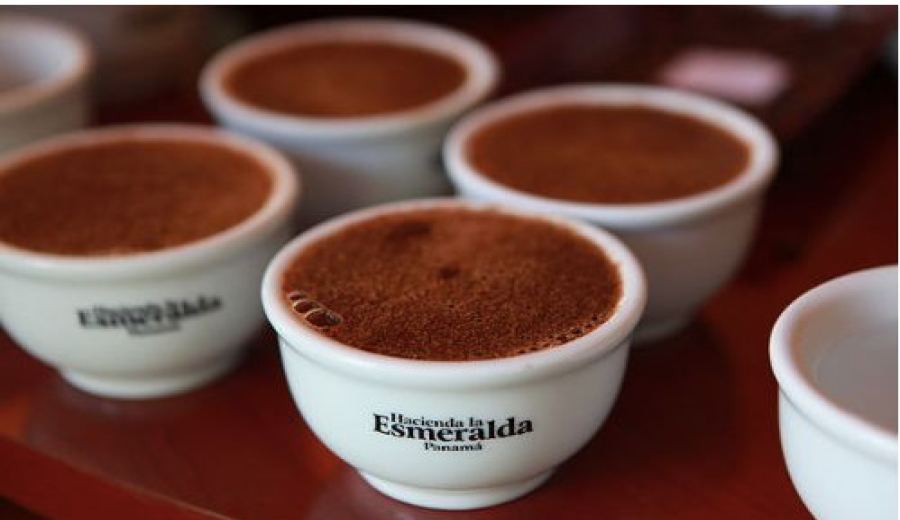
Cupping results show that this bean has a dry aroma with distinct citrus and berry notes, while the wet aroma is dominated by citrus. Upon tasting, it reveals a complex flavor profile of citrus, honey, cocoa, and mild fermented wine-like notes. The acidity is bright, the mouthfeel smooth, and the finish leaves a mellow cocoa aftertaste. Overall, the cup is balanced and layered, making it highly suitable for appreciation through the pour over method.
For this vibrant-flavored sun-dried Caturra, it is recommended to use a V60 #01 dripper for pour over. The V60’s 60-degree conical design directs water flow to the center, extending contact time between water and coffee grounds. Coupled with its large bottom hole and spiral grooves, it not only helps control flow rate but also promotes full expansion and extraction of the coffee grounds, avoiding rapid filtration that could lead to flavor loss. The spiral ridges help evenly distribute water flow, enhancing extraction efficiency so that every sip delivers the freshness of citrus and the sweetness of honey.
Practical pour over recommendations are as follows: Use a V60 #01 dripper, with water temperature controlled at 90–91°C, a coffee dose of 15g, and a brew ratio set at 1:15. Grind size is recommended to be medium-fine (approximately 80% passing through a Chinese standard No. 20 sieve). The suggested pour over technique is a three-stage extraction—begin with a 30-second bloom using 30g of water, followed by pouring in small circles to reach 125g for the first pour. When the water level drops and is about to expose the coffee bed, continue pouring to a total of 225g, then stop and wait for the water level to drop naturally before removing the dripper. Total extraction time is about 2 minutes. These parameters fully highlight the bean’s bright acidity, nutty foundation, and honey sweetness, making it ideal for coffee enthusiasts who pursue detail and layered flavors.
The above content is compiled by CoffeeHunters, a coffee news website.


