







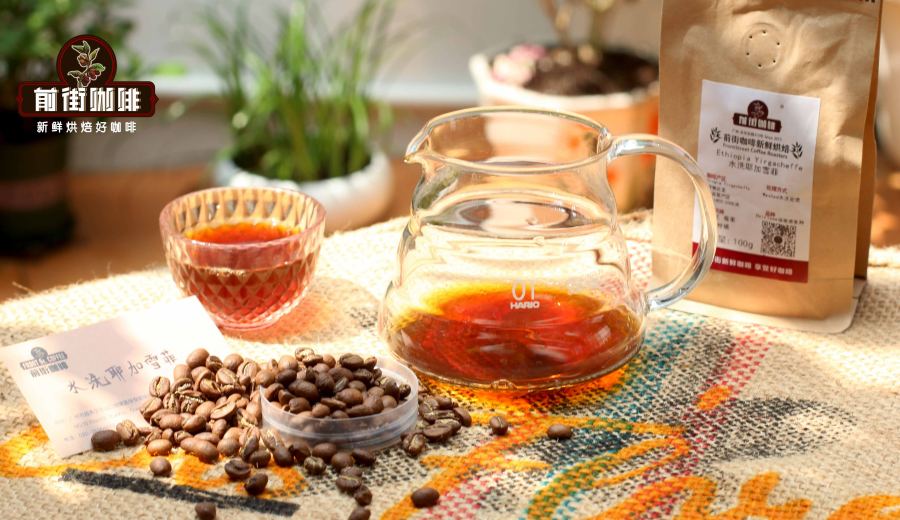
Introduction:As one of Ethiopia’s most representative coffee regions, Yirgacheffe is renowned for its bright and vibrant acidity, captivating floral notes, and citrus characteristics. However, different micro-regions within this area, processing methods, and harvest seasons can all significantly influence the final flavor profile of the brew. This article will delve into the core regions of Yirgacheffe and provide practical and precise pour over parameters — including water temperature, grind size, coffee-to-water ratio, and pouring steps — for commonly seen washed and natural processed beans. These tips will help coffee enthusiasts accurately control the brewing rhythm and bring out the most fascinating layers of each coffee bean.
Yirgacheffe (Yirgacheffe) is a well-known specialty coffee region in southern Ethiopia, celebrated globally for its unique bright acidity, delicate floral aromas, and citrus notes. Yet, this highland area, sitting at an altitude of approximately 1,900 meters, actually encompasses multiple legally defined micro-regions. Coffee beans produced from different plots and processed through varying methods can exhibit quite distinct flavor profiles. This article will guide readers through the official boundaries of the Yirgacheffe region and offer handy pour over techniques tailored to both washed and natural processed beans — allowing you to brew representative and captivating cups of this region’s coffee at home.
Visual reference:  (Image shows the geographical distribution of Yirgacheffe’s main producing areas)
The core charm of Yirgacheffe lies in its refreshing acidity and rich floral-fruit aromas. When brewed with the right water temperature, grind fineness, and pouring technique, it can fully express a soft yet layered mouthfeel, reminiscent of floral tea. Many coffee lovers first try pour over precisely because they’re drawn to Yirgacheffe’s distinctive citrus and honey aftertaste. However, to consistently extract such qualities, understanding the correct pour over parameters is absolutely key.
Let’s start with a natural processed Red Cherry Yirgacheffe as an example. It is recommended to use 15 grams of coffee grounds, paired with hot water at 93°C. The grind size can be compared to that of fine sugar, roughly equivalent to setting 4 on the small Fuji grinder. When using a V60 filter, it is suggested to set the coffee-to-water ratio at 1:15. First, pour 30 grams of water for blooming, for about 30 seconds. This helps the coffee grounds fully expand and release aroma. Then proceed with the second pour, stopping at 105 grams total, and allow the coffee to steep for a while. Finally, pour up to a total of 225 grams. It’s recommended to discard water from the later stages of extraction. Keep the overall brewing time around 2 minutes and 2 seconds to effectively avoid over-extraction, which could lead to bitterness or unwanted flavors.
If choosing a washed processed Yirgacheffe, it is also recommended to use 15 grams of coffee grounds, but adjust the water temperature slightly down to 92°C to better highlight its fresh citrus and floral characteristics. Maintain the same 1:15 coffee-to-water ratio and use a V60 filter. Begin again with 30 grams of water for a 30-second bloom, then pour up to 110 grams and stop, followed by topping up to 225 grams total. As with the natural process, it is advised to discard the latter-stage water. The overall brewing time should be about 2 minutes and 5 seconds. These parameters allow the washed Yirgacheffe to express a clearer, brighter fruit profile, often described by enthusiasts as akin to “fruit tea” — where floral and fruity aromas are abundant on the palate, finishing with a gentle honey-like sweetness.
However, to truly appreciate the diverse flavors of Yirgacheffe, one cannot overlook its officially defined producing regions. Under Ethiopia’s ECX (Ethiopian Commodity Exchange) trading system, the name “Yirgacheffe” is not limited to coffee solely produced in the town of Yirgacheffe. In fact, according to official certification, coffee produced in areas including Wanago, Yirgacheffe town, Kochere, and Gelena Abaya all qualify to be labeled as “Yirgacheffe.” Therefore, even if the coffee beans do not come from the traditionally defined town of Yirgacheffe, as long as they originate from within these legally designated areas, they can still exhibit similar regional flavor traits.
This also explains why coffee beans labeled as Yirgacheffe might still vary subtly in flavor details. Factors such as highland microclimates, soil composition, the craftsmanship of processing facilities, and seasonal harvesting all play a role in shaping the final cup. Thus, for pour over enthusiasts, besides mastering basic brewing parameters, understanding the regional background and processing method behind each coffee bean is also essential for enhancing flavor recognition ability and improving brewing success rates.
In summary, Yirgacheffe is not only the flagship of Ethiopia’s specialty coffee scene, but also a land brimming with potential and diversity. By applying precise pour over skills — such as controlling water temperature between 92–93°C, selecting an appropriate grind size (roughly that of fine sugar), using a V60 filter with a 1:15 coffee-to-water ratio, and adjusting pouring steps and total brewing time according to the processing method — you will be able to more fully savor the unique charm of this region. From floral and citrus notes to honey-like sweetness, its layers unfold one by one, delivering a refreshing taste experience with every sip.
The above content is compiled by CoffeeHunters, a coffee news website.


