







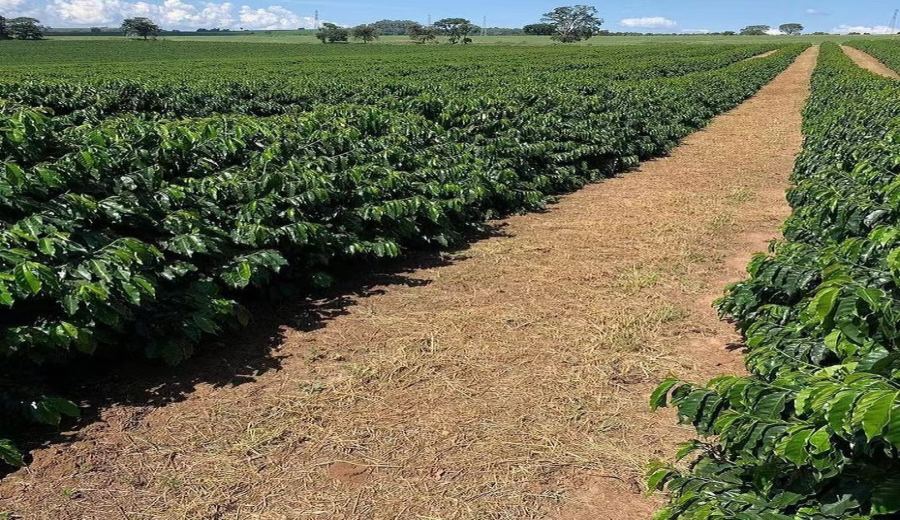
Introduction:Brazil is the world’s largest coffee-producing country, and its beans are renowned for their low acidity, rich body, and balanced flavor profile. They are commonly used as the base in espresso blends, yet Brazil also offers many high-quality single-origin beans worth exploring. This article will delve into the history of Brazilian coffee, the characteristics of its major growing regions, common varieties and processing methods, and analyze its classic nutty and chocolatey notes. Finally, we’ll provide practical pour-over brewing tips and flavor evaluations to help you better understand this iconic coffee.
As the world’s top coffee producer, Brazil holds a position in the coffee world akin to that of tea in Chinese culture. While many people encounter Brazilian coffee primarily in espresso blends, its single-origin offerings also showcase unique charm. Starting with the historical development of Brazilian coffee, this article will guide you through the distribution of major producing regions, classic cultivated varieties, common processing methods, and the flavor characteristics of low acidity, nutty and chocolatey aromas, and a smooth, balanced body. We’ll also share useful pour-over advice and tasting insights. Whether you’re a beginner or searching for a daily drinker that’s neither too sour nor too bitter, you’ll find valuable information here.
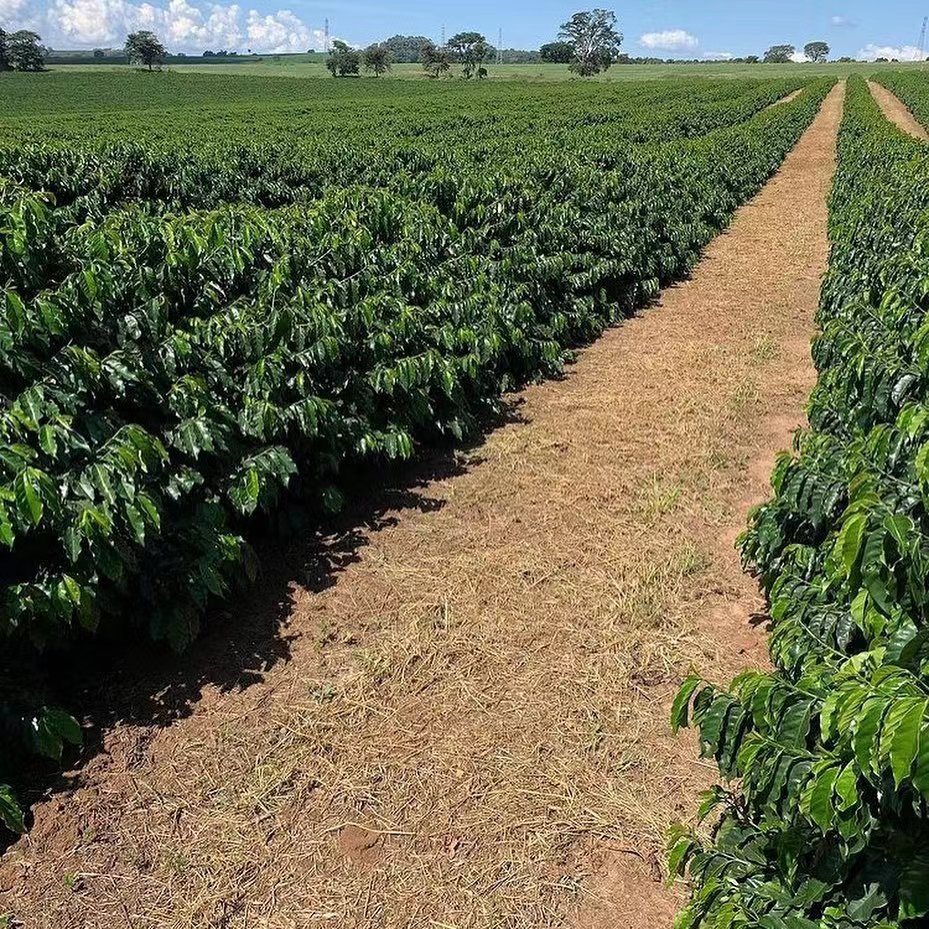
Brazil consistently ranks as the world’s leading coffee producer, and coffee holds a significance for this South American giant much like tea does for Chinese life. Many coffee enthusiasts rarely encounter Brazilian single-origin beans in daily life; more often, they experience Brazilian coffee as the base in espresso or milk-based drinks like lattes. However, specialty Brazilian beans from regions like Cerrado or Minas have gradually gained recognition in the single-origin market in recent years, earning favor among many coffee aficionados.
The reason Brazilian coffee is frequently used in blends is closely tied to its flavor profile. People often ask, “What kind of coffee should I choose if I want one that’s not too sour or bitter?” The answer is often Brazilian coffee. As a representative of classic American beans, Brazilian coffee excels in balance, often exhibiting aromas of roasted peanuts, nuts, caramel, and chocolate, with a smooth and rich body. Upon tasting, its pronounced nuttiness is immediately apparent, and its overall profile is harmonious and stable, making it a foundational bean in blends. For those who dislike sour or overly bitter flavors, it’s an exceptionally friendly choice.
Next, let’s take a look back at the remarkable history of Brazil as a coffee powerhouse.
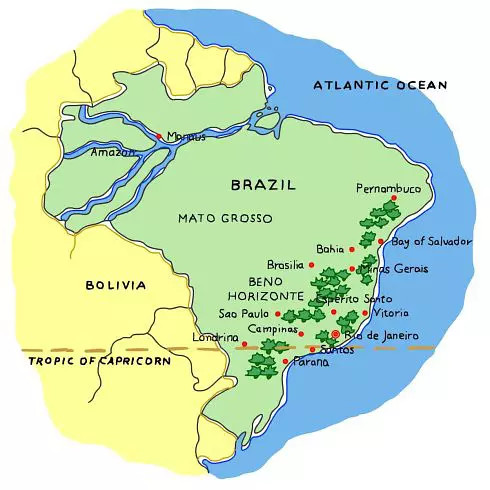
The history of coffee cultivation in Brazil is filled with legend. According to records, coffee was introduced to Brazil in the 1720s from French Guiana. At the time, a Portuguese officer named Francisco de Mello Palheta managed to bring coffee seeds to Brazil through his friendly relationship with the wife of the governor of French Guiana. Soon after, coffee rapidly expanded across Brazil, moving from the northern regions southward to states like São Paulo and Paraná. However, the higher-latitude Paraná region, often hit by frost in winter, suffered significant crop losses.
By the 1970s and 1980s, Brazilian farmers gradually shifted cultivation to warmer, frost-free regions like Minas Gerais and Bahia in the northern part of São Paulo state—areas that are now major sources of specialty coffee.
Before 1990, Brazil’s coffee industry was heavily regulated by the government, with measures such as minimum price guarantees, but this also led to issues of overproduction. After 1990, with the implementation of free-market policies, the former Brazilian Coffee Institute (IBC) came under the management of a nonprofit national economic association. It no longer intervened in market pricing, allowed producers and exporters to trade directly, and required exporters to register according to law. Coffee remains a vital pillar of Brazil’s economy and is still the world’s largest coffee exporter.
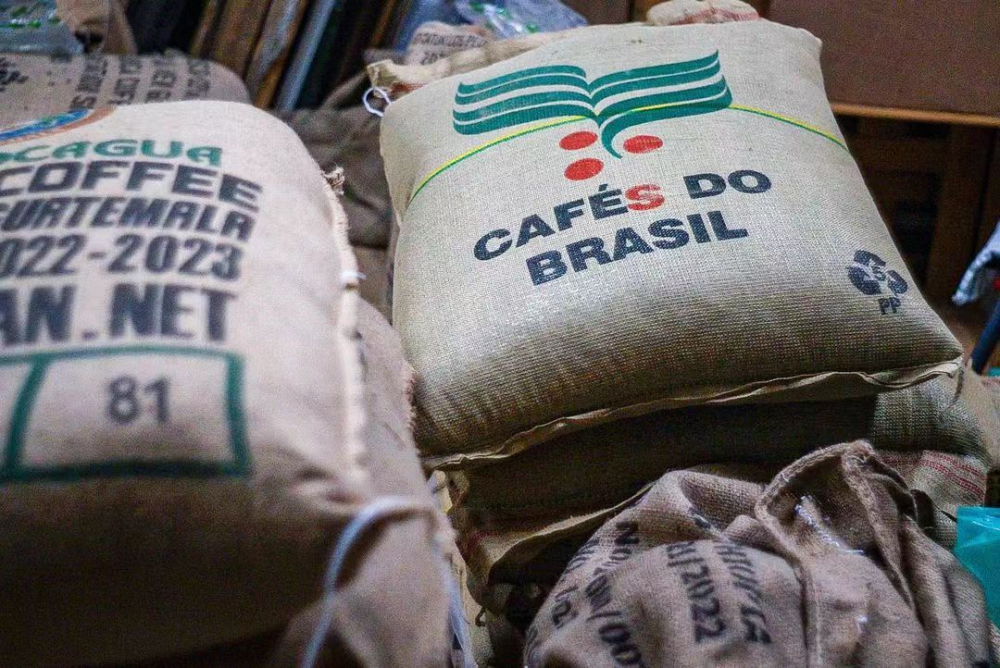
Brazil’s coffee-growing regions are primarily concentrated in the central-southern part of the country, spanning seven states and encompassing about 14 major producing areas. These include: Sul de Minas, Minas Mountains, Chapada de Minas, Matas de Minas, Mogiana, Centro-Oeste de São Paulo, Montanhas do Espírito Santo, Conilon Capixaba, Cerrado, Planalto da Bahia, Atlântico Baiano, Paraná, and Rondônia. Among these, Cerrado and Sul de Minas are regarded as the representative regions for Brazilian specialty coffee.
Compared to other Central and South American coffee-producing countries, Brazil’s overall elevation is relatively low, the terrain is flatter, and there is a lack of significant microclimatic variation. Most cultivation is done using unshaded, sun-exposed farming methods, resulting in Brazil’s distinctive “soft bean” style—low acidity, prominent nutty and chocolatey notes, a rich body, and occasionally slight woody or earthy undertones. However, it generally lacks the high-toned acidity and citrusy brightness commonly found in African beans.
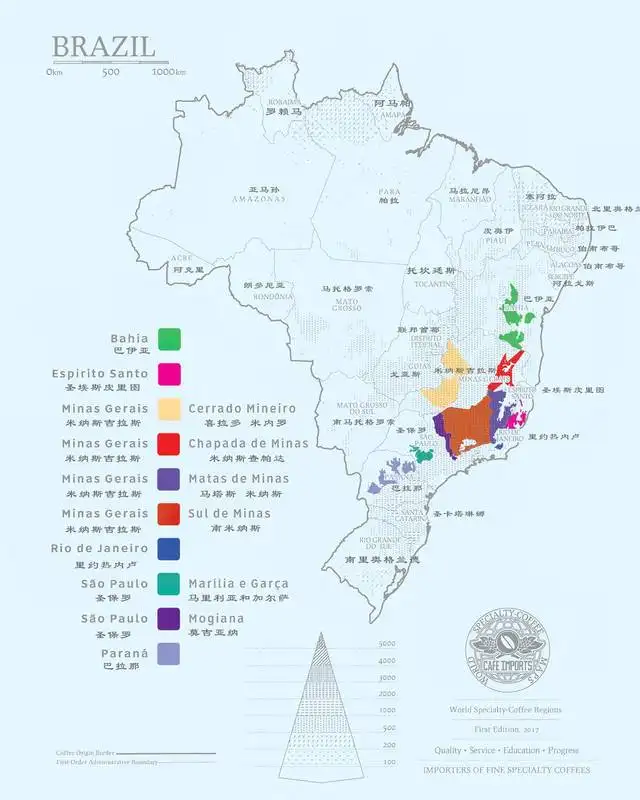
Among the many producing regions, Cerrado is one of the most representative. Located in central Brazil, this inland plateau region sits at an altitude of approximately 850 to 1200 meters. It has a dry climate with distinct wet and dry seasons, significant day-night temperature variations, and fertile soil—ideal conditions for coffee cultivation. Cerrado coffee is known for its rich body, high cleanliness, and pronounced nutty and caramel aromas, making it an essential base in many espresso blends.
Another important region is Sul de Minas, with an average altitude between 700 and 1200 meters. Its hilly terrain makes it one of the first areas in Brazil to commercially cultivate coffee. Due to its significant day-night temperature differences and diverse microclimates, this region is especially well-suited for cultivating Bourbon and Yellow Bourbon varieties, and it serves as a key source of specialty Brazilian coffee.
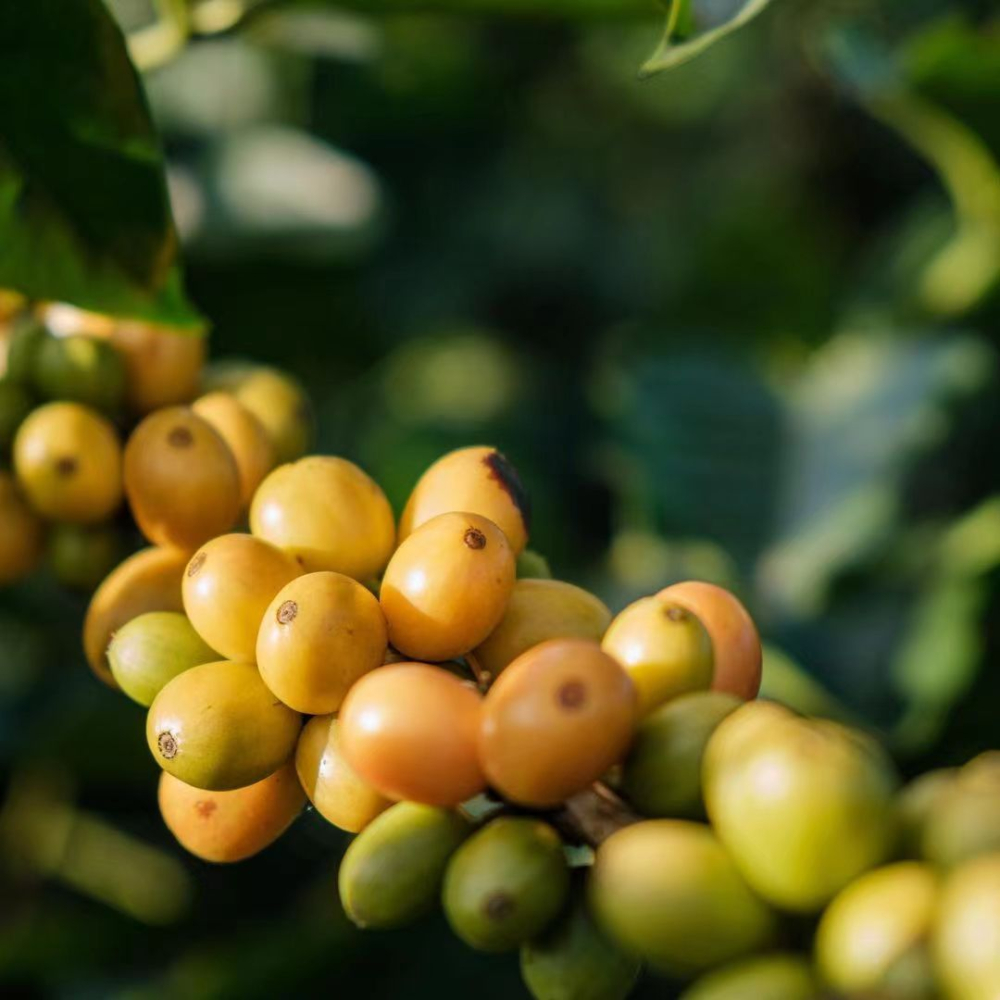
In terms of varieties, the most widely planted in Brazil include Red Bourbon and Yellow Bourbon. Red Bourbon, a mutation of Typica, is celebrated for its prominent aroma, bright acidity, and a slightly wine-like finish. Its fruits ripen red and is one of the most extensively grown varieties in Brazil. Yellow Bourbon, another mutation of the Bourbon family, turns orange-yellow when ripe and is typically grown at higher altitudes. It exhibits a softer acidity, with flavors of nuts and chocolate, and presents a clean, bright overall profile.
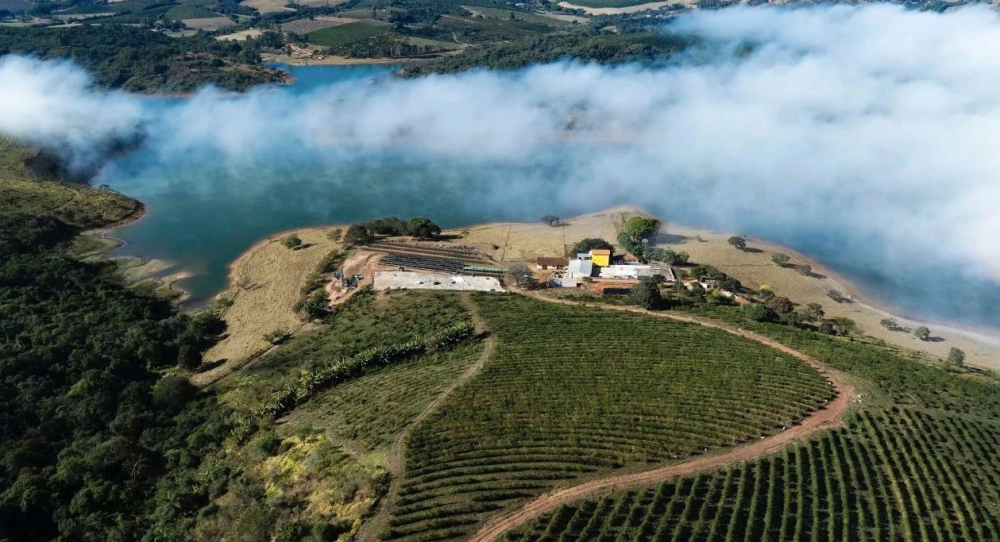
When discussing Brazilian coffee, one cannot overlook its unique processing methods. Compared to the common washed or natural processes in other regions, Brazil has developed the Pulped Natural (semi-washed) method to adapt to its dry climate. This process involves removing the outer skin and pulp of the coffee cherry while retaining some of the mucilage, followed by a short period of sun drying. This greatly reduces fermentation time and risk, helping to enhance the coffee’s cleanliness and sweetness while preserving rich nutty and caramel aromas.
The Pulped Natural process typically includes: first removing underripe cherries to ensure uniform ripeness, then stripping the skin and pulp while retaining the mucilage for brief fermentation and drying. Throughout the process, temperature and humidity are carefully controlled to avoid mold or over-fermentation. Compared to traditional natural processing, this method significantly improves the stability and consistency of the coffee’s flavor, making it a common practice in Brazilian specialty coffee.
For brewing recommendations, using freshly roasted coffee beans is key to experiencing its full flavor. It’s generally advised to choose beans roasted within five days and to brew them between four to seven days post-roast, when the flavors are most vibrant. If grinding, brew immediately to prevent rapid flavor loss; if buying whole beans, enjoy the optimal experience of grinding and brewing just before use.
For Brazilian coffee, we recommend using a KONO filter. Set the water temperature to around 88°C, with a coffee-to-water ratio of 1:15, and grind size set to 75% passing through a Chinese No. 20 sieve (roughly between medium-fine and medium-coarse). A specific approach can be a staged extraction: start with a 30-second bloom using twice the coffee weight in water (about 30 grams), then pour in a circular motion until reaching 125 grams for the first pour. Continue pouring to 225 grams before stopping, with a total extraction time of about two minutes. These parameters help fully highlight the nutty, chocolatey, and subtle citrus notes of Brazilian coffee, delivering a round and balanced mouthfeel.
In summary, Brazilian coffee holds a notable place in the global coffee market thanks to its stable and layered flavor profile. Whether you prefer pour-over, French press, or espresso, you can find your ideal flavor combination in Brazilian beans. If you enjoy coffee that is rich, low in acidity, and features nutty and chocolatey tones, start with a single-origin bean from Cerrado or Sul de Minas to experience the charm of South American coffee.
The above content is compiled by CoffeeHunters, a coffee news website.


