







Introduction:As the birthplace of coffee, Ethiopia is renowned for its distinctive floral and fruity aromas and bright acidity, making it a top choice for many newcomers to specialty coffee. This article will take you on an in-depth exploration of Ethiopia’s major coffee-growing regions—from the washed brightness of Yirgacheffe to the sun-dried intensity of Sidamo—analyze the evolution of well-known varieties such as Huila, and provide practical pour over parameters to help you more precisely appreciate the diverse charm of Ethiopian coffee.
As the globally recognized birthplace of coffee, Ethiopian beans are famed for their vivid floral and fruity notes and vibrant acidity, making them an ideal entry point for many coffee enthusiasts into the world of specialty coffee. Compared to the pricey Panamanian Geisha, Ethiopian coffee not only delivers equally outstanding acidity but also comes at a more accessible price, allowing more people to enjoy high-quality coffee flavors.
The country is home to multiple coffee-growing regions, and due to variations in climate, altitude, and soil conditions, beans from each area possess unique characteristics. This article will systematically introduce Ethiopia’s main coffee-producing areas, focusing on analyzing typical flavor profiles such as the washed elegance of Yirgacheffe and the sun-dried richness of Sidamo, while exploring the development history of the Huila variety. It also offers medium-to-light roast and pour over recommendations tailored to Ethiopian coffee, helping you better unlock the potential of these beans.
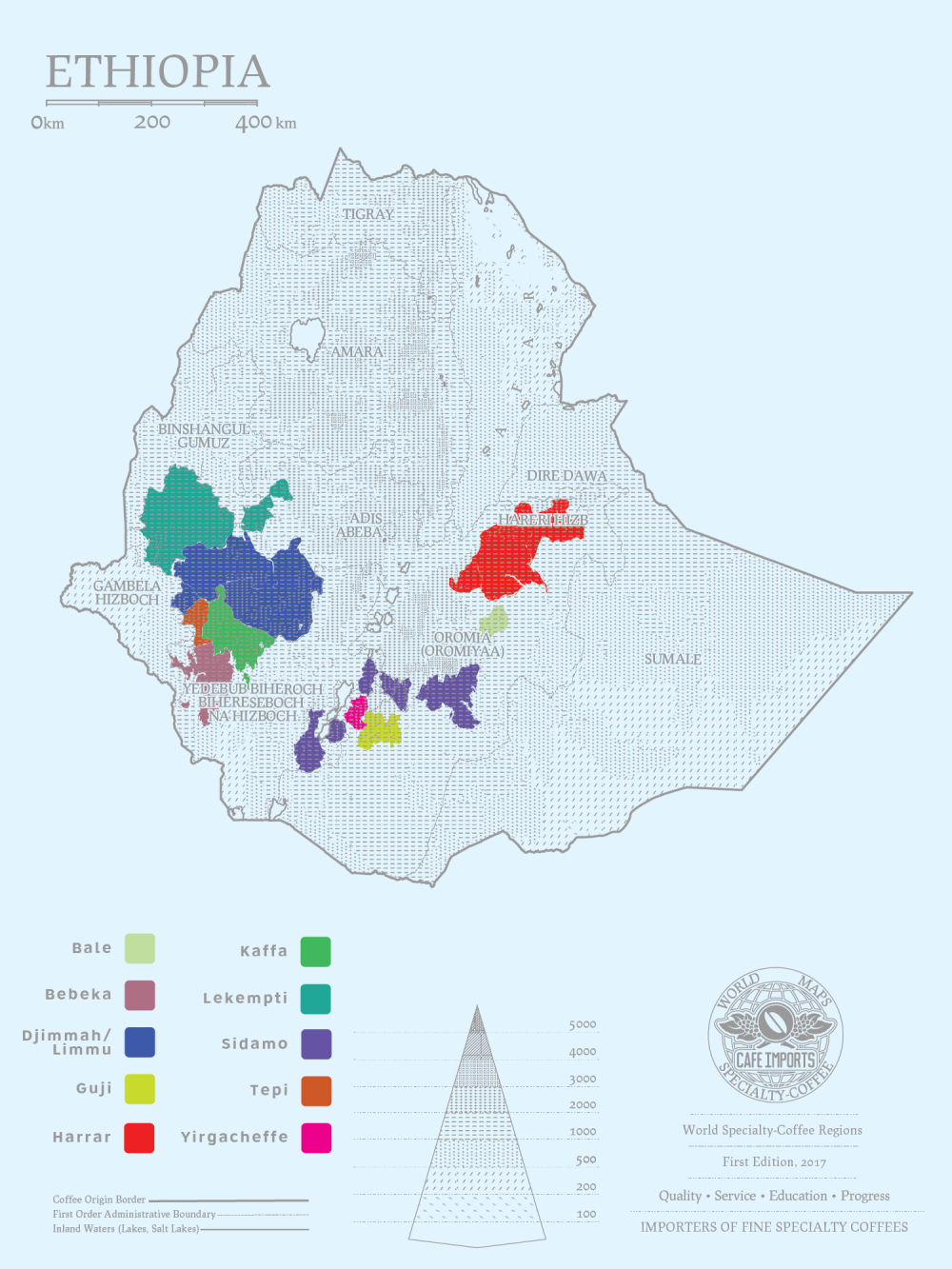
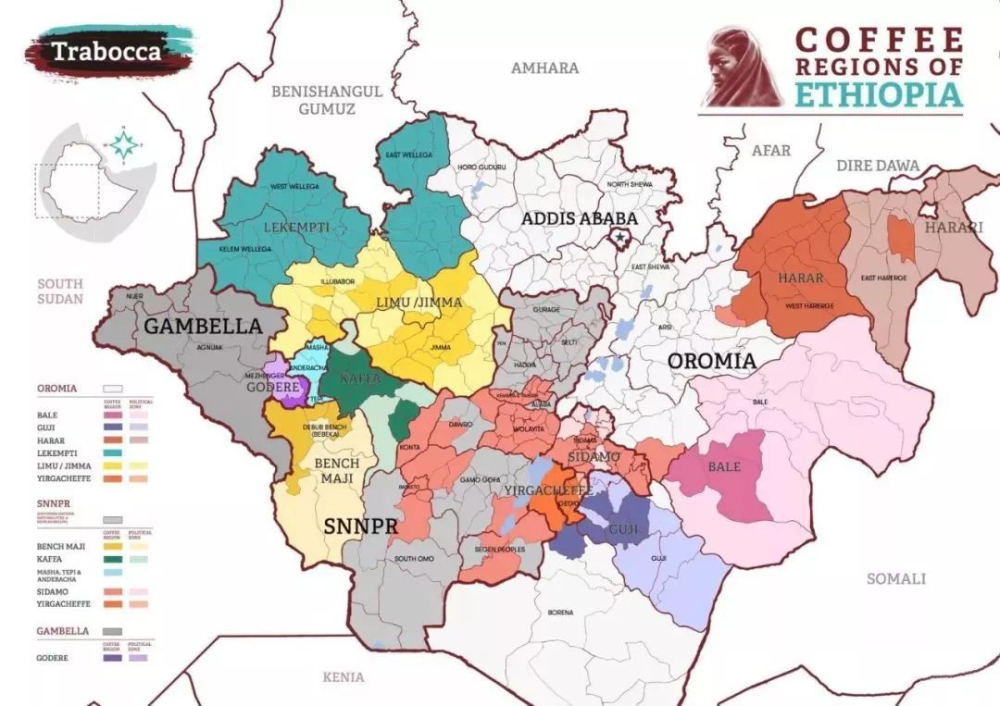
Compared to Panamanian Geisha, which can cost hundreds of yuan per cup, Ethiopian coffee delivers astonishing fruit acidity and layered complexity at a far more reasonable price—this is one of the reasons it has become a preferred entry option for many into specialty coffee. While Ethiopia’s coffee regions are divided in detail, slight differences in definitions by various organizations have led to numerous regional maps. Common areas such as Yirgacheffe, Sidamo, and Harrar all produce distinct-flavored coffees thanks to their unique natural conditions.
Among these regions, Sidamo coffee enjoys both domestic and international renown, with the Sidama Zone officially becoming Ethiopia’s tenth region in 2020—though the Sidamo growing area still encompasses parts of the Sidama Zone and the Southern Nations, Nationalities, and Peoples' Region. The region’s coffee is known for its diverse processing methods and rich fruitiness, especially its sun-dried beans, which often feature intense berry and creamy profiles.
Though Ethiopia has many coffee-growing regions, the most prominent ones can be grouped into: Yirgacheffe, Sidamo, Harrar, Bale, Guji, Lekempti-Gimbi, Jimma-Limmu, Bebeka, Kaffa, and Teppi. Among these, Yirgacheffe and Sidamo are global stars in the coffee market, with highly distinctive and recognizable flavor profiles.
Traditionally, Yirgacheffe is mostly processed using the washed method, showcasing elegant floral notes and clean acidity, while Sidamo commonly employs sun-dried processing, highlighting rich berry flavors and sweetness. It’s worth noting that in earlier Ethiopian green bean grading systems, sun-dried beans generally received lower grades, but with advancements in processing techniques, many Grade 1 sun-dried beans are now available, rivaling the quality of washed beans.
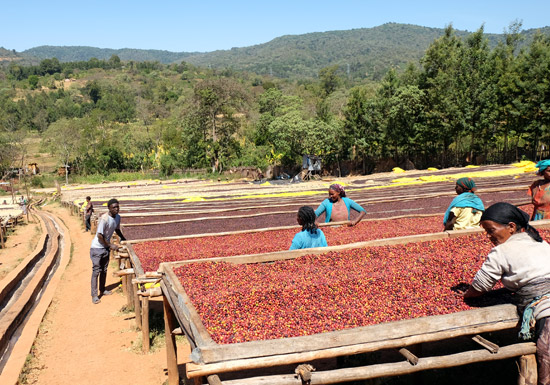
The washed process was introduced to Ethiopia from Central and South America in the last century. This method removes the coffee cherry’s skin, pulp, and mucilage, leaving only the seed to dry, thus more purely expressing the inherent flavor characteristics of the coffee. As a result, Yirgacheffe’s washed beans can present unique white floral notes and delicate mouthfeel, making them a popular item in the market. Their fresh flavors once attracted a large number of buyers—even leading to non-Yirgacheffe beans being passed off as such—which eventually prompted Yirgacheffe to split from the Sidamo region and become its own designated area.
The Yirgacheffe region includes several well-known villages and cooperatives, such as Kochere, Konga, Wush Wush, and Gedeb, each of which, due to microclimates and processing differences, can exhibit subtle flavor variations even when using the same washed method. For example, Kochere washed beans often feature prominent citrus notes, with a refreshing mouthfeel and a green-tea-like finish, while Gedeb tends to show more pronounced sweetness, clear citrus aroma, acidity akin to orange juice, and a later-stage body reminiscent of black tea.
In contrast, Sidamo coffee is known for its wilder flavor profile, especially its sun-dried beans, which frequently carry intense berry, creamy, and tropical fruit aromas. Many coffee lovers, after getting familiar with washed Yirgacheffe, often turn to exploring Sidamo’s sun-dried offerings for a richer taste experience. Among them, the Huila coffee bean has become a notable representative of Sidamo sun-dried coffee in recent years.
The Huila series originated in 2017 when a sun-dried lot from Buku Abel washing station in the Hambela area won the TOH (Top Ten of Hambela) competition. The brand name was given by domestic industry players, meaning “the foremost of flowers,” with the aspiration of one day rivaling Panamanian Geisha. The series is updated annually, named “Huila X.0,” with the 2022 release being Huila 6.0. Flavor profiles may vary slightly between batches due to climate or slight adjustments in processing.
According to actual cupping experiences, a well-known roaster’s Huila 6.0 exhibited distinct berry, honey, and passionfruit notes, with outstanding sweetness, while another non-branded sun-dried lot from the same harvest season emphasized citrus, honey, and orange blossom, with strong juiciness and a bright, lively mouthfeel. This variation reminds us that even within the same region and processing method, different batches can display completely different flavor profiles.
To fully showcase Ethiopian coffee’s bright and vibrant acidity, a medium-to-light roast is recommended to help preserve more floral, fruity aromas and acidity. For brewing, it is suggested to use a Hario V60 filter cone, with water at 90°C, a 1:15 coffee-to-water ratio, and a grind size roughly equivalent to 80% passing through a Chinese standard No. 20 sieve—that is, a medium-fine grind. The specific steps are as follows: start with a 30-second bloom using 30 grams of hot water, then pour in a circular motion from the center outward until reaching 125 grams; once the water level drops, continue pouring to 225 grams, with total extraction time controlled around 2 minutes—effectively drawing out the coffee’s layers and aromas.
The above content is compiled by CoffeeHunters, a coffee news website.


