








Introduction:Kenyan coffee is renowned for its bright acidity and rich fruity flavors, and the key to these characteristics lies in the unique attributes of its growing regions, grading system, and washed processing method. This article provides an in-depth analysis of Kenya’s coffee grading standards, the features of its main varieties, and an exploration of the distinctive K72 washed process. Additionally, by comparing two AB-grade coffees from different altitude regions, it illustrates how geographical conditions influence the final flavor profile — an essential guide for anyone looking to deeply understand Kenyan specialty coffee.
As a major origin of fine coffee in East Africa, Kenyan coffee has always been celebrated for its vibrant acidity and juicy fruitiness. However, many consumers tend to define Kenyan beans solely by a “tomato-like” flavor, which is just one possible expression. In truth, the true charm of Kenyan coffee lies in its full-bodied, layered fruit flavors and bright acidity — qualities that have made it a favorite among pour over enthusiasts worldwide.
This article offers a comprehensive look at the many facets of Kenyan coffee, including its major growing regions, bean grading criteria, trading models, flagship varieties such as SL28 and SL34, and the most representative K72 washed process. Furthermore, we compare two AB-grade coffees from the Nyeri and Muranga regions, examining everything from roasting and cupping to pour over performance to show how altitude subtly shapes the direction of a coffee’s flavor.

When Kenyan coffee is mentioned, many people immediately think of a sweet-tart flavor reminiscent of cherry tomatoes, but this oversimplified label tends to overlook the diversity of Kenyan coffee. In reality, its most prominent characteristics are its rich juiciness and lively acidity. Due to differences in altitude, microclimate, and soil, coffees from various regions — even within the same grade — can exhibit distinctly different flavor profiles.
Kenyan coffee cultivation is primarily concentrated at high altitudes ranging from 1,500 to 2,100 meters. Such elevation results in slower bean development and more complex flavor formation. The region experiences two main harvest seasons each year: the primary season from October to December, and the secondary season from June to August. To ensure only fully ripe cherries are picked, farmers often need to patrol steep slopes more than seven times, reflecting both extremely high harvesting standards and significant labor investment.
The sale of Kenyan coffee mainly occurs through two channels: approximately 85% of production is sold via public auctions conducted by the Nairobi Coffee Exchange (NCE), commonly known as the central auction system; the remaining 15% is sold through the so-called “second window,” i.e., direct trade. The NCE holds auctions every two weeks, always on Tuesdays. Twelve days before each auction, agents submit green coffee samples to the venue for buyers to cup and evaluate. The entire process is rigorous and transparent, with auctions typically running from 9:30 AM to 4–5 PM, attracting numerous participants and intense competition.
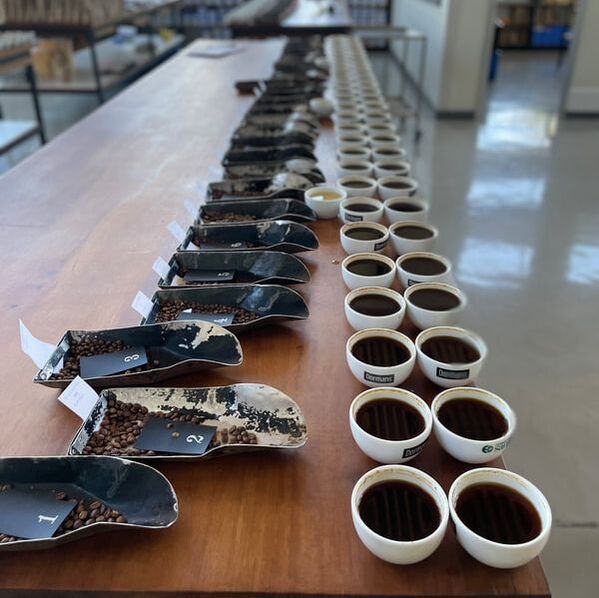
Kenyan coffee beans are classified into several grades based on bean size and physical characteristics after processing. The main grades include:
- AA Plus (AA+): Among AA-grade beans, those with the highest cupping scores
- AA: Beans sized between 17 and 18 screens, the most common high-grade on the market
- AB: Beans sized between 15 and 16 screens, the most produced and offering good value
- C: Smaller than AB-grade beans
- TT: Light beans sorted by air classification from AA or AB grades
- T: Light beans sorted by air classification from C-grade
- E (Elephant bean): A rare, oversized peaberry resulting from two beans fusing during growth
- PB (Peaberry): A single round seed formed due to abnormal development, not necessarily linked to flavor
Kenya’s coffee-growing regions can be divided into six main areas: Thika, Kirinyaga, Mt. Kenya West, Nyeri, Kiambu, and Muranga. Among these, Nyeri and Kirinyaga are known for their consistently high-quality coffee. Both are located at high altitudes, making them ideal for cultivating premium varieties like SL28 and SL34. The significant diurnal temperature variation also aids in the accumulation of flavor compounds.
Located in the highlands around Mount Kenya, Nyeri has an average elevation exceeding 1,500 meters, along with fertile soil and excellent climatic conditions, making it the birthplace of many top-tier Kenyan coffees. Kirinyaga, situated on the slopes of Mount Kenya at elevations between 1,300 and 1,900 meters, is famed for its layered, full-bodied coffee with intense flavors. Together with Nyeri, it stands as one of the two flagship regions for Kenyan specialty coffee.
In terms of variety, Kenyan coffee primarily focuses on SL28 and SL34. SL28, developed in 1935 from drought-resistant strains in Tanganyika, boasts excellent drought tolerance but is somewhat susceptible to disease. Its bean shape is similar to Bourbon — round and plump. Genetic analysis shows that SL28 belongs to the Bourbon genetic group. SL34, selected in the late 1930s by the Scott Agricultural Laboratories in Kenya, is said to originate from a tree known as the “French Missionary.” Its beans are slightly oval and flatter, resembling Typica, and genetically it is part of the Typica family.
One of the most talked-about aspects of Kenyan coffee is its unique K72 washed process. Unlike typical washed processing that involves fermentation for only 24 to 48 hours, the K72 method breaks fermentation into three cycles of 24 hours each, totaling 72 hours. This extended, low-temperature fermentation enhances the coffee’s clarity and cleanliness, while delivering brighter acidity and richer fruitiness. It is a key reason why Kenyan coffee stands out in the international market.
Below, we compare two actual AB-grade coffees — one from the Gachatha Cooperative in Nyeri and one from the Muranga Factory — both using the SL28 and SL34 varieties and processed via K72, yet exhibiting distinct flavor profiles due to differences in altitude.
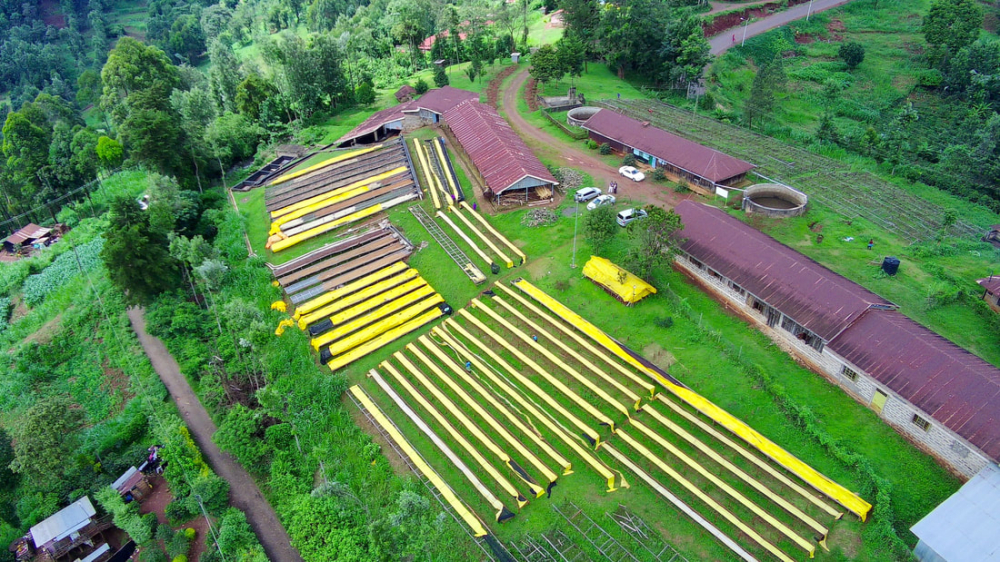
Kenya Gachatha Cooperative AB Coffee Bean
Region: Kenya Nyeri Gachatha Cooperative
Altitude: 1,825 meters
Variety: SL28 & SL34
Processing Method: K72 Washed
Kenya Muranga AB Coffee Bean
Region: Kenya Muranga Factory
Altitude: 1,400 meters
Variety: SL28 & SL34
Processing Method: K72 Washed
In terms of roasting and cupping performance, the high-altitude Gachatha coffee exhibits a richer acidity and fruit profile, including layers of citrus, plum, berries, and honey. In contrast, the lower-altitude Muranga displays stronger flavors of dark plum, caramel, and nuts. This clearly demonstrates how altitude significantly affects the rate of coffee ripening and sugar accumulation.
Finally, for brewing recommendations, using a V60 dripper with water at 90°C, a 1:16 coffee-to-water ratio, and a medium-fine grind (approximately 77% extraction through a #20 sieve) will fully highlight the sweet-acid balance and delicate mouthfeel of Kenyan coffee — a brewing reference suitable for both beginners and advanced enthusiasts.
The above content is compiled by CoffeeHunters, a coffee news website.


