







Introduction:Geisha coffee is world-renowned for its distinctive floral and fruity aromas, but did you know? Although both the Geisha from Ethiopia’s Gesha Village and Panama’s Hacienda La Esmeralda share the same name, they differ greatly in terms of varietal origins, growing environments, and flavor profiles. This article will take you through the migration history of the Geisha variety, compare the differences in altitude, processing methods, and cupping characteristics of the Red Label Geisha from these two renowned regions, and provide practical Hario V60 pour over recommendations to help you better appreciate the unique charm of these two top-tier Geishas.
Geisha (Geisha) coffee captivates countless coffee enthusiasts with its delicate floral notes and vibrant fruitiness, but many people wonder upon their first taste: why do the Geishas from Ethiopia’s Gesha Village and Panama have such distinctly different flavor profiles? In fact, although both share the name “Geisha,” they have very different historical backgrounds and varietal evolution paths.
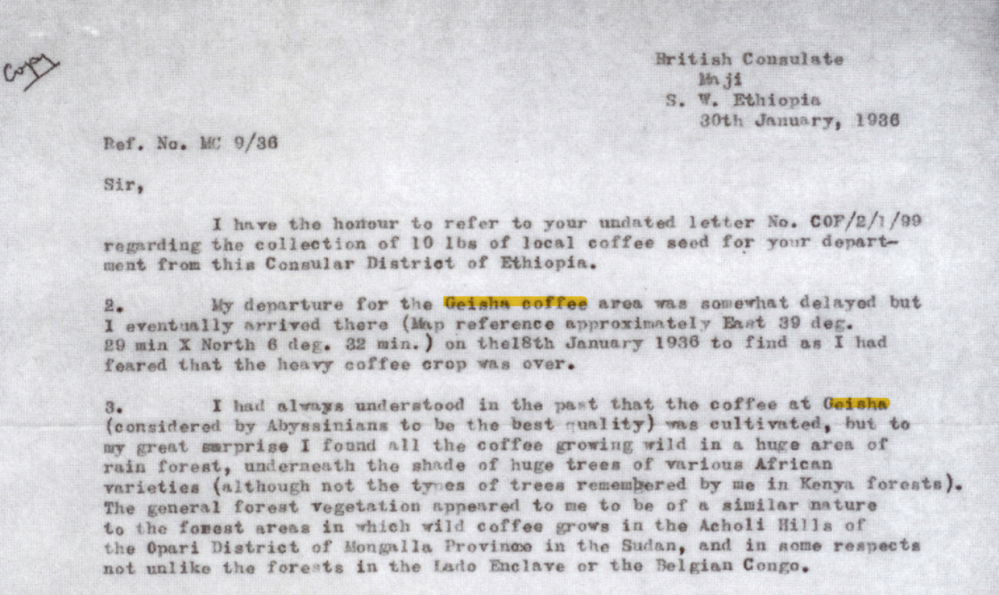
The Geisha variety can be traced back to the Gesha Mountains in southern Ethiopia. After 1929, European explorers ventured deep into the jungles of the region to collect coffee seeds. In 1931, these seeds were sent to the Magi Consulate plantation in Kenya, under British administration. By 1936, British officer Colonel Wali was tasked with collecting 10 pounds of wild coffee seeds from Ethiopia. These seeds were recorded and shipped to Kenya for the first time under the name “GEISHA” (not GESHA). To this day, the origin of this spelling remains uncertain, with speculation that it may have been influenced by local pronunciation.
Over the following decades, these seeds spread to places such as Tanzania and Costa Rica. In 1953, the Costa Rican Coffee Genetic Resources Center (CATIE) received the VC496 cultivar from Tanzania and renumbered it as Geisha T2722. In 1963, Mr. Don Pachi of Panama introduced these seeds to the Boquete region, but at the time, the market favored high-yield varieties like Caturra and Catuai. Geisha, with its low yield and susceptibility to wind damage, was long overlooked.
The turning point for Geisha came in 2004 when Panama’s Hacienda La Esmeralda stood out in the Cup of Excellence competition (BOP). That year, Daniel’s cupped batch of Geisha exhibited distinct aromas of jasmine, citrus, peach, and blueberry, completely changing the world’s perception of Geisha and establishing its status in the specialty coffee industry.
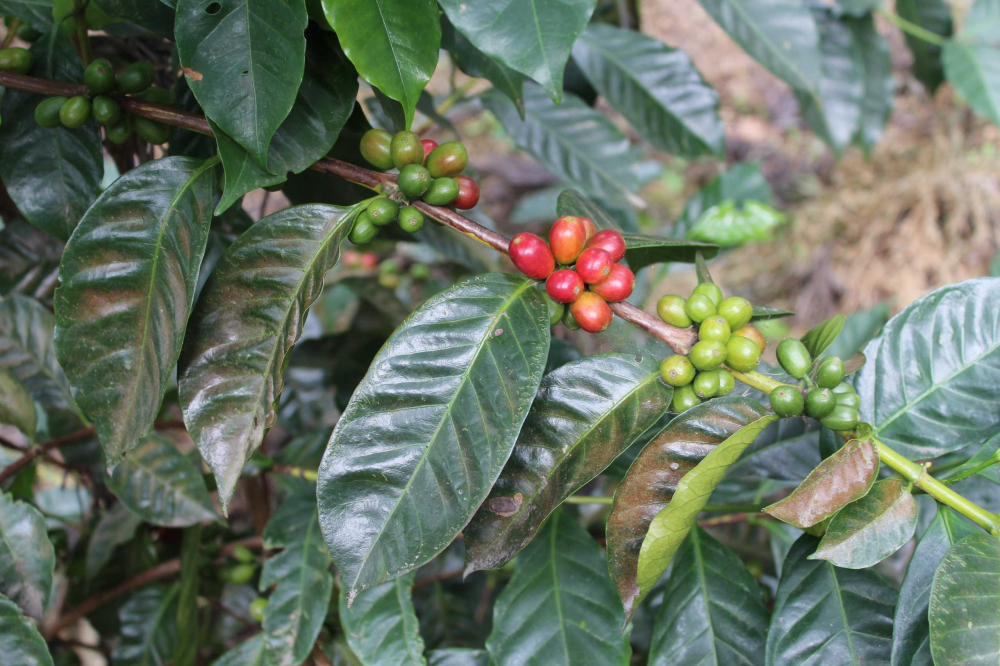
As for Ethiopia’s Gesha Village, it is the result of another journey of roots. In 2009, documentary filmmaker Adam Overton and photographer Rachel Samuel, in collaboration with expert Willem Boot, ventured deep into the Gori Gesha forest in the Bench Maji region and discovered the native Geisha variety, subsequently founding the Gesha Village Coffee Estate. The Geisha grown here is considered closer to the original genotype and shows significant differences compared to the Panamanian version.
In terms of regional grading, Gesha Village follows a strict system, categorizing its coffees into auction, gold, red, green, and Chaka lots. Among them, the Red Label Geisha accounts for about 15% of annual production, grown at altitudes between 1900 and 2069 meters, with the Gori Gesha variety, processed using the natural (sun-dried) method. Its cupping scores often exceed 88 points (according to SCA standards). While its flavor intensity is slightly lower than the Gold Label, it still boasts high complexity and excellent cost-performance.
In contrast, the Red Label Geisha from Panama’s Hacienda La Esmeralda selects batches grown at altitudes of 1600 to 1800 meters with cupping scores above 90, sourced from the Mario lot. The processing method mostly employs slow natural drying, emphasizing the concentration and transformation of flavor layers. This Geisha is known for its berry-like juiciness, rich red floral aroma, and long-lasting honey-like finish, making it the “Geisha archetype” in the hearts of many coffee lovers.
In terms of roasting and pour over recommendations, to highlight the bright acidity and delicate aromas of Geisha, a medium-light roast is generally recommended. Due to the lighter roast level, the release of flavor compounds is more subtle, so it is advised to use a finer grind (e.g., 80% passing through a 20-mesh sieve according to Chinese standards), water temperature around 90°C, and brew with a Hario V60 filter cone. Its 12 long ribs help stabilize flow rate and improve extraction uniformity.
In practice, you can use 15 grams of coffee grounds, with a 1:15 coffee-to-water ratio. Start by pouring 30 grams of hot water for a 30-second bloom, then pour in a circular motion with a thin stream centered to reach 125 grams, wait for the water level to drop, and continue pouring to 225 grams. The total extraction time should be controlled to around 2 minutes. These parameters help fully showcase the fruitiness, florality, and balanced acidity-sweetness of the Geisha.
In summary, the Red Label Geisha from Panama’s Hacienda La Esmeralda excels with its intense berry aromas, rich juiciness, and honey-like sweetness, while the Red Label from Ethiopia’s Gesha Village highlights a light citrus tone, tropical fruit aromas, and overall balanced mouthfeel. The reason these two Geishas have such different flavors lies not only in the influence of regional microclimates and processing methods, but more fundamentally in their significant genetic differences — one being a native variety long adapted to its local environment, the other a strain that has undergone multiple relocations and selective breeding.
The above content is compiled by CoffeeHunters, a coffee news website.


