







Introduction:Jamaica Blue Mountain coffee is world-renowned, but counterfeit products flood the market, making it difficult for consumers to distinguish between genuine and fake. This article details the three key factors for identifying authentic Blue Mountain coffee: price range, dedicated wooden barrel packaging, and the official Certificate of Origin. It also delves into the CIB's grading standards, explaining why Blue Mountain No. 1 is considered top-tier quality. Additionally, we discuss the flavor profile and roasting essentials of Blue Mountain No. 1 to help you make more accurate judgments when selecting and tasting.
Jamaica Blue Mountain coffee is celebrated worldwide for its delicate and balanced flavor and rarity. However, the market is often riddled with imitations or mislabeled products, making it hard for consumers to identify truly premium coffee from the Blue Mountain region. If you want to verify whether your coffee is authentic, consider these three key aspects—price, packaging, and certification—and understand the reasoning behind their authenticity checks.
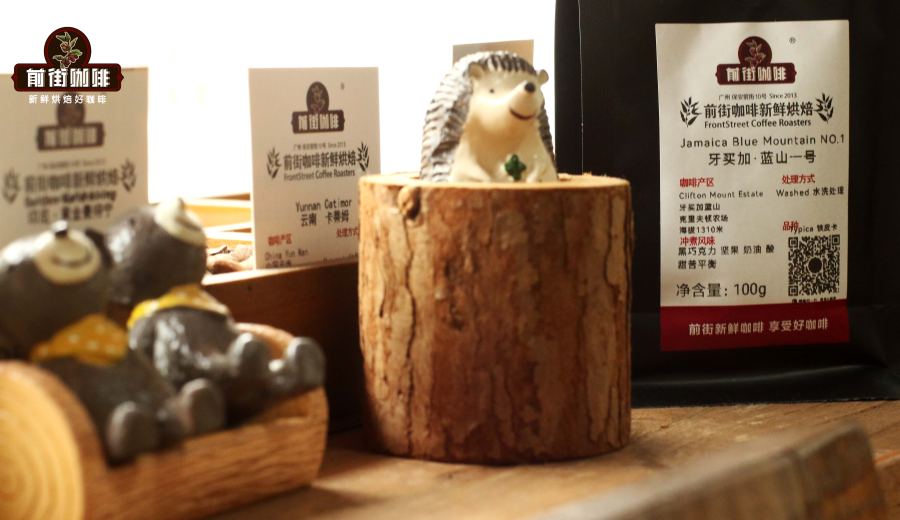
First, in terms of pricing, due to the extremely limited production of Blue Mountain coffee, coupled with the challenging terrain of the plantations and high labor costs, its price has always remained high. Generally speaking, the market price for 100% authentic Jamaica Blue Mountain No. 1 roasted beans ranges from 150 to 300 yuan per 100 grams. If the price is too low, it is very likely not from the orthodox Blue Mountain growing region. For example, a price of about 158 yuan per 100 grams is already reasonable and relatively affordable, especially for coffee enthusiasts wanting to try the authentic Blue Mountain flavor.
Second, authentic Jamaica Blue Mountain coffee is always packaged in dedicated wooden barrels for export. This is a practice explicitly mandated by the Jamaican government to maintain the quality of the coffee beans during transportation and to prevent mixing with beans from other regions. Therefore, when purchasing Blue Mountain coffee beans, it is recommended to first confirm whether the seller can provide the whole barrel of Blue Mountain wooden barrels, or at least verify that the packaging source is orthodox. If the merchant cannot show information about the wooden barrels, what you’re buying is likely an imitation or a blend.
Third, when buying Blue Mountain coffee, be sure to check whether it comes with a Certificate of Origin issued by the Jamaica Coffee Industry Board (CIB) or an authorized estate. This certificate is the key document proving that the coffee beans come from the Blue Mountain region and meet the official grading standards. Especially for direct buyers of green beans, this certificate is an indispensable guarantee of quality. Before purchasing, it is advisable to request relevant proof from the seller to ensure that the Blue Mountain coffee you are buying is authentic.
Currently, the majority of Blue Mountain coffee available on the market belongs to the 'Blue Mountain No. 1' grade. This is the highest grade in the Blue Mountain coffee classification system, and its evaluation criteria are established by the Jamaica Coffee Industry Board (CIB), using multiple scientific indicators for strict screening.
The CIB’s evaluation covers key factors such as green bean size, appearance color, uniformity, defect rate, moisture content, and cupping performance. Before export, all Blue Mountain green beans must go through professional cupping and grading procedures. Based on bean size, Blue Mountain coffee is divided into No. 1, No. 2, No. 3, and Blue Mountain Peaberry grades. Among them, only those beans that pass through a 17-mesh sieve or larger, have a defect rate below 3%, a moisture content of about 13%, and exhibit cupping qualities of rich aroma, smooth mouthfeel, mild acidity, and lingering sweetness can be rated as the top-tier Blue Mountain No. 1.
It is worth mentioning that to ensure Blue Mountain coffee is not affected by moisture during transport, Jamaica still insists on using traditional handmade wooden barrels as the shipping vessels for green beans. These barrels are not only a symbol of Blue Mountain coffee but also a crucial part of quality assurance. Therefore, when you see products advertised as Blue Mountain coffee, don’t hesitate to ask whether they were shipped in dedicated wooden barrels to further confirm their authenticity.
In terms of roasting and flavor performance, the roasting strategy for Blue Mountain No. 1 usually aims for a medium to dark level, designed to fully bring out its natural chocolate and nutty aromas while retaining its characteristic gentle acidity and delicate sweetness. This roasting method helps balance the overall flavor profile, making the coffee layers richer and more harmonious. For coffee lovers who prefer classic flavor profiles, Blue Mountain No. 1 is undoubtedly an ideal choice for experiencing the essence of Blue Mountain coffee.
In summary, if you want to taste truly premium coffee from the Jamaica Blue Mountain region, it is recommended to make a comprehensive judgment based on price, wooden barrel packaging, and the Certificate of Origin. Understanding the grading standards and flavor characteristics of Blue Mountain No. 1 will help you find the most trustworthy authentic Blue Mountain coffee among many choices.
The above content is compiled by CoffeeHunters, a coffee news website.


