







Introduction:There is a wide variety of Arabica coffee bean cultivars, ranging from the classic Typica to the uniquely flavored Geisha. Each has its own distinct history and flavor profile. This article will take an in-depth look at the five most popular Arabica coffee bean varieties on Taobao, including their origins, cultivation characteristics, and typical flavor expressions. With practical examples of both washed and natural processing methods, it helps readers find the beans that suit their taste—whether you're a beginner or an advanced pour over enthusiast, there's something to gain.
Many people often see packaging labeled “100% Arabica” or “selected Arabica coffee beans” when choosing coffee. However, Arabica is not the proprietary brand of any one company but rather the most predominant type of coffee variety globally. This article selects five highly acclaimed Arabica coffee bean varieties on the market: Ethiopian Heirloom, Typica, Bourbon, Caturra, and Geisha. From their historical backgrounds, cultivation traits, to flavor profiles, it takes you deep into the unique qualities of these classic coffee varieties.
Ethiopian Heirloom
In Ethiopia, the term “Heirloom” generally refers to a large number of coffee varieties that have evolved naturally over time without commercial purification. Since local smallholder farmers often interplant various types of coffee trees on the same land and many of these varieties have not been strictly classified, they are collectively referred to as Heirloom. These coffee beans typically exhibit pronounced citrus acidity paired with a refreshing sweetness akin to green tea, offering a rich and bright flavor complexity. Due to being a mix of multiple varieties, the beans often vary in size.
Take the Yirgacheffe Gedeb Cooperative in Ethiopia as an example. This producing area sits at an altitude between 2000 and 2100 meters and uses the washed processing method. It presents a complex flavor profile of citrus, black tea, floral notes, creaminess, caramel, and almonds—perfectly suited for coffee lovers who prefer a bright and fresh taste.
Typica
Typica is one of the oldest existing Arabica varieties. Its top leaves are bronze-colored, and the coffee beans are typically oval or slightly pointed in shape. This variety is known for its elegant flavor and balanced acidity and sweetness. However, it is relatively susceptible to pests and diseases, has lower yields, and demands higher environmental conditions. Nevertheless, due to its classic genetic lineage, many top-tier coffees from renowned regions—such as Jamaica Blue Mountain, Sumatra Mandheling, and Hawaiian Kona—originate from the Typica family.
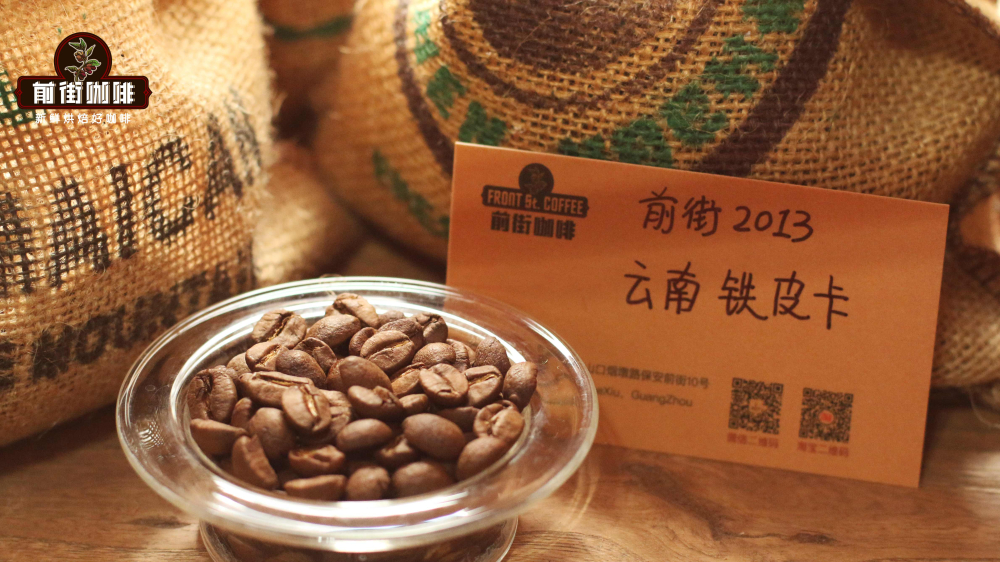
For instance, the 2013 vintage Typica produced in Lincang, Yunnan, China, is grown at an altitude of about 1300 meters. Using the natural processing method, it showcases sweetness notes of nuts, brown sugar, dried apricot, and cantaloupe, with a gentle black tea aftertaste. It is ideal for those who enjoy a mellow and full-bodied flavor.
Bourbon
The Bourbon variety was first discovered in Brazil in the 1930s and is believed to be a hybrid mutation resulting from red-fruited Bourbon and a yellow-fruited Typica variant. Though this variety offers excellent sweetness and complex flavors, it has relatively low yields and is less resistant to climate and inclement weather, so it is mostly found in high-altitude regions. Bourbon grown at high altitudes often exhibits intense sweetness and balanced taste.
The Yellow Bourbon coffee produced by Fazenda Rainha in the Mogiana region of Brazil is grown at altitudes between 1400 and 1950 meters. Processed using the natural method, it releases aromas of nuts, creamy peanuts, cane sugar, and fermented fruits—suitable for consumers who prefer sweet and rich flavors. It is also a classic choice among many pour over enthusiasts.
Caturra
Caturra is a single-gene mutation of Bourbon, first discovered in Brazil in 1937. Compared to Bourbon, Caturra has stronger disease resistance and higher yield potential. The plants are shorter, making them easier to harvest. Additionally, Caturra can grow without shade trees and is suitable for high-density planting, though its yield may fluctuate every two years. In terms of flavor, Caturra is quite similar to Bourbon but with greater adaptability.
Caturra coffee from Huila, Colombia, is grown at altitudes between 1500 and 1800 meters. Using the washed processing method, it displays layers of nuttiness, dark chocolate, caramel, and mild fruit acidity—making it a top choice for many fans of Central and South American flavor profiles.
Geisha
Geisha is a genetic mutation of Typica, originating from Ethiopia’s Gesha Forest. After decades of cultivation, it was introduced to Panama in the 1960s and successfully planted and promoted by Hacienda La Esmeralda. In 2004, Geisha gained international fame at the Best of Panama (BOP) competition, where its distinctive floral, citrusy sweetness, and tea-like characteristics set multiple auction records.
Geisha coffee from the Boquete region of Panama is grown at an altitude of about 1600 meters. Processed via the washed method, it exudes intense jasmine and citrus freshness. Upon tasting, one can perceive the sweetness of melon and tropical fruits, with a juice-like crispness and exceptionally high sweetness. It is a classic variety not to be missed by advanced pour over players and specialty coffee aficionados.

The above content is compiled by CoffeeHunters, a coffee news website.


