







Introduction:The use of honey as a natural sweetener in coffee has long been a topic of debate. This article delves into the historical background, nutritional properties, and practical considerations—including temperature control, proportion recommendations, and flavor harmony—when combining honey with coffee. It also offers different application methods for pour over and milk-based coffee, allowing you to enjoy not only the rich taste of coffee but also the gentle sweetness and added health benefits of honey.
Many coffee enthusiasts commonly reach for sugar, milk, or other familiar additives when customizing their brew, but if you're looking to try something different, honey is also a natural sweetening option worth considering. However, many still have questions such as "Can I add honey to coffee?", "Is it healthy to do so?", or "Will it clash with the flavor?". This article provides a comprehensive exploration—from history and nutrition to practical usage—of the possibilities of pairing honey with coffee.
Adding honey to coffee is not a modern innovation, but rather one of the traditional beverage-mixing practices with a history spanning hundreds of years. As early as 1684, Polish soldier Franz Georg Kolschitzky helped Austria successfully defend against the Ottoman army and was richly rewarded with a large amount of coffee beans. He opened a coffeehouse in Vienna and, to cater to local tastes, filtered out the coffee grounds from Turkish coffee using a cloth bag, then flavored it with honey, cream, and spices—creating a beverage that became very popular. This shows that the combination of honey and coffee has deep historical roots.
The main components of honey are glucose and fructose, accounting for about 70%, along with proteins, inorganic salts, and various organic acids. Not only is it sweet, but it also carries a subtle floral aroma. As a natural product containing a variety of trace nutrients, honey is also considered to have certain health-promoting qualities as a sweetener. Therefore, adding honey to coffee not only enhances sweetness but may also bring additional layers of flavor and health benefits.
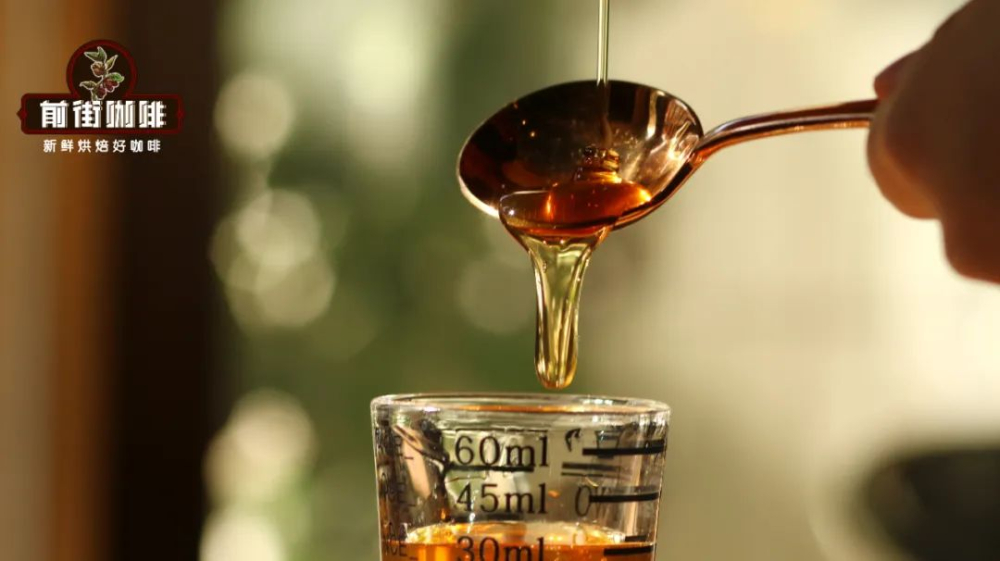
To achieve an ideal pairing between honey and coffee, selecting the right coffee beans and brewing method is especially important. For pour over coffee, it is recommended to choose medium-roast beans with prominent aroma and balanced flavor—such as single-origin beans with nutty profiles—that can complement the mild sweetness of honey. Additionally, pay attention to water temperature when dissolving honey, as excessively high temperatures can destroy heat-sensitive nutrients in honey such as enzymes, vitamins, and polyphenols, and may even cause the honey to turn sour or alter its taste.
Research indicates that the optimal water temperature for dissolving honey should be controlled between 40 to 55°C, and should not exceed 60°C. However, the typical brewing temperature for pour over coffee is around 90°C, and the temperature after brewing often ranges from 65 to 75°C or even higher. Therefore, it is advised to let the coffee cool down slightly before adding honey, in order to fully preserve its flavor and nutritional value. For example, allow the brewed coffee to sit for about 6 to 8 minutes until it cools down, then add approximately 2 teaspoons of honey and stir gently to enjoy a mellow coffee infused with the aroma of honey.
As for milk-based coffee drinks such as lattes, cappuccinos, or flat whites, since milk already has a certain level of sweetness, the proportion of honey added needs to be more carefully controlled to avoid becoming overly sweet or cloying. Practical testing has shown that the recommended ratio of honey to coffee liquid is 1:2—that is, one part honey to two parts espresso—so that it can enhance the sweetness without overpowering the original flavors of the coffee and milk.
When making milk-based coffee, it is recommended to use blends characterized by nutty and chocolatey notes, such as those combining Yunnan small-seed variety beans with Brazil’s Cerrado region, offering a soft mouthfeel and rich aroma that complements the gentle flavor of honey. In practice, start by extracting 40 grams of espresso using 20 grams of coffee grounds, then mix 180 milliliters of oat milk with 20 grams of honey in a milk pitcher, froth to create a fine and velvety foam, and control the temperature at 50 to 55°C. Finally, combine the foam with the espresso to complete a well-rounded honey oat milk cappuccino.

In summary, the pairing of honey and coffee not only has a long history but also offers creative and healthful value in modern coffee beverages. By paying attention to water temperature, selecting the appropriate type of coffee bean, and getting the proportions right, you can enjoy the rich flavor of coffee while experiencing the unique sweetness and complexity that honey brings—crafting your own distinctive coffee experience.
The above content is compiled by CoffeeHunters, a coffee news website.


