







Introduction:Honey processing is a coffee post-harvest method that falls between washed and natural processes, widely used in Central American regions such as Costa Rica. By controlling the amount of mucilage retained and the sun-drying methods, it can be further categorized into black honey, red honey, and yellow honey types, each significantly influencing the final flavor. This article systematically compares the differences among these three honey-processed beans — from bean appearance and roast profiles to cupping performance — to help you master bean selection and brewing essentials.
Among specialty coffee post-harvest techniques, honey processing (Honey Process) is a balanced approach that combines the cleanliness of washed processing with the intense flavors of natural processing, and it is especially popular in water-scarce regions like Costa Rica. The key to this process lies in retaining the sticky mucilage layer — also known as “honey” — that remains on the seed’s surface after the outer fruit pulp is removed. Depending on how much mucilage is scraped off, the duration of sun drying, and the frequency of turning the beans, honey processing can be divided into black honey, red honey, and yellow honey, and even extended variations like orange honey and white honey. This article will delve into the characteristics of these three common honey processing methods, offering coffee enthusiasts a practical reference guide through bean appearance, roast parameters, and actual cupping flavor profiles.
Honey processing originated from Brazil’s pulped natural method and was later adapted by farmers in countries like Costa Rica and El Salvador based on local climate and resource conditions. Traditional washed processing uses large amounts of water to completely rinse away the mucilage. However, in some high-altitude or water-scarce growing areas, farmers choose to retain part or all of the mucilage for sun drying, giving rise to the unique processing method known as honey processing. This technique not only reduces water consumption but also enhances the coffee's sweetness and complexity due to the interaction between the natural sugars and enzymes in the mucilage and the seeds during the drying process.
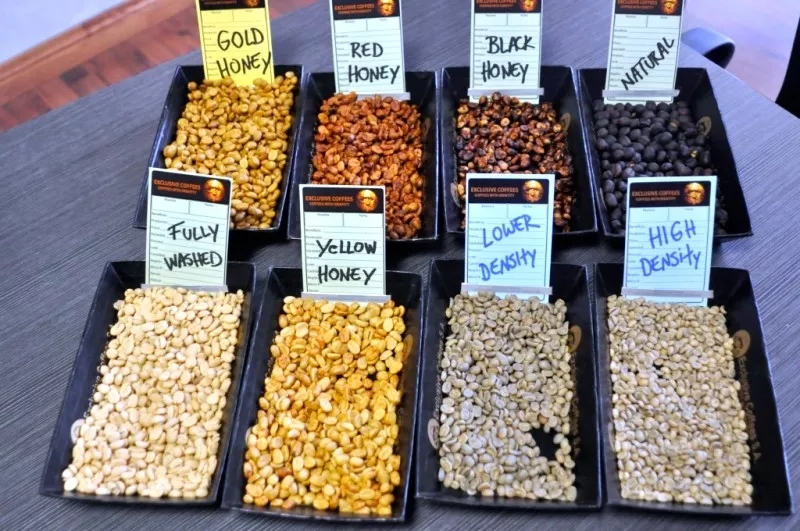
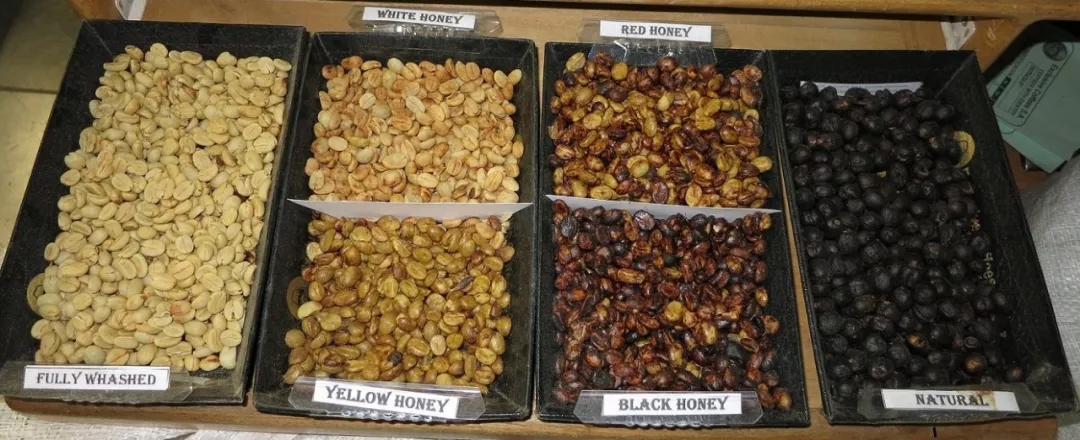
The classification of honey processing is mainly based on the amount of mucilage retained, with common grades including black honey, red honey, and yellow honey. Some regions further divide them into orange honey, white honey, or even adjust based on the thickness of the drying spread and the frequency of turning. Generally speaking,black honey retains almost all of the mucilage, requiring the longest drying time, typically more than 14 days, during which excessive sunlight is shielded to allow for slow sugar conversion, resulting in intense fermentation aromas and deep fruity notes.Red honey removes about 25% of the mucilage, with a drying time of around 12 days, occasionally using shaded structures, and presents a flavor profile that balances intensity with freshness.Yellow honey removes about 40% of the mucilage, receives the most sunlight, and has the shortest drying time, around 8 days, exhibiting a relatively clean and distinctly citrus-forward character.
In some regions, depending on the drying spread thickness and turning frequency, beans with similar mucilage retention ratios may still be classified under different colored honey processes. For example, even when retaining 20% to 30% mucilage,yellow honey may dry longer if spread thickly and turned infrequently, while white honey dries faster if spread thinly and turned frequently. These subtle differences are reflected in the final coffee flavor profile. Additionally, recent innovations like "raisin honey process" use special drying techniques to impart unique flavors such as rose, raisin, blueberry, and orange, suitable for various brewing methods including pour over, French press, and cold brew.
In this article, we use three common beans from Costa Rica — black honey, red honey, and yellow honey — as samples. We compare their differences from raw bean appearance, roast curves, to actual cupping performance, helping readers more intuitively understand how different honey processes affect coffee flavor, and offering practical advice for daily selection and brewing.
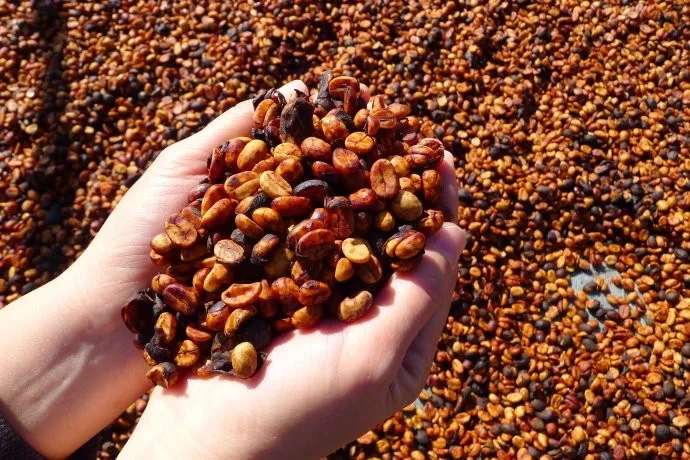
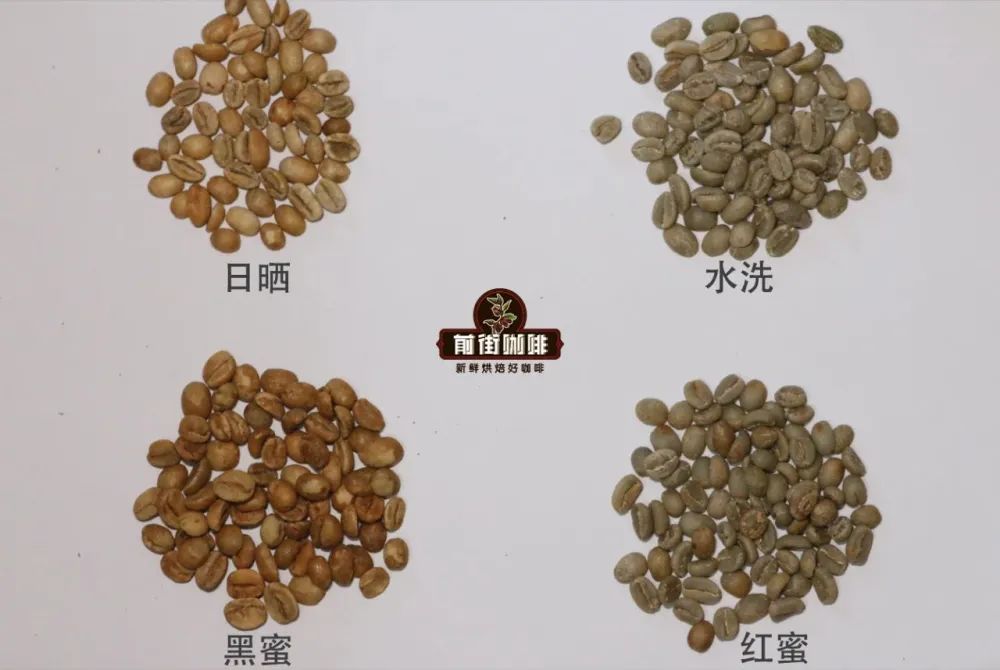
By observing the raw bean appearance of these three honey-processed beans, one can get an initial sense of how mucilage retention affects their color and aroma.Black honey beans, due to the high amount of retained mucilage, undergo noticeable enzymatic action during drying, resulting in uneven bean color often showing a mix of dark and light brown-green hues, along with intense fermentation aromas and refreshing pear-like fruity notes;Yellow honey beans, having had more mucilage removed and drying more quickly, have a more uniform appearance, mostly yellow-green, with light grassy and rice-like aromas;Red honey falls in between, with slightly darker and more uniform bean color, and aromas that combine mild fermentation notes with grassiness. These appearance and aroma characteristics are often important clues for identifying the type of honey processing.
In terms of roast performance, different honey-processed beans also show their own unique traits. Taking common roast parameters as an example:Yellow honey reaches the yellowing point at about 5 minutes 30 seconds, first crack starts at 8 minutes 46 seconds at 184°C, with the first crack development lasting about 2 minutes 30 seconds before dropping at 196°C. The Agrton bean color value is 66.9, and Roast Delta is 15.5;Red honey reaches the yellowing point slightly earlier at around 5 minutes 10 seconds, first crack starts at 8 minutes 40 seconds at 185°C, with the first crack development phase lasting 2 minutes 35 seconds before finishing at 197°C. The Agrton bean color value is 63.6, and Roast Delta is 12.3;Black honey reaches the yellowing point the fastest at about 5 minutes 05 seconds, first crack starts at 8 minutes 50 seconds at 183.6°C, with the first crack development lasting about 2 minutes before dropping at 195.8°C. The Agrton bean color value is 76.7, and Roast Delta is 13.4. These values reflect that black honey, due to its high sugar content, requires more attention to balancing caramelization reactions during roasting, while yellow honey, due to quicker drying and a relatively firmer bean structure, allows for slight adjustments in the roast curve to highlight its fresh characteristics.
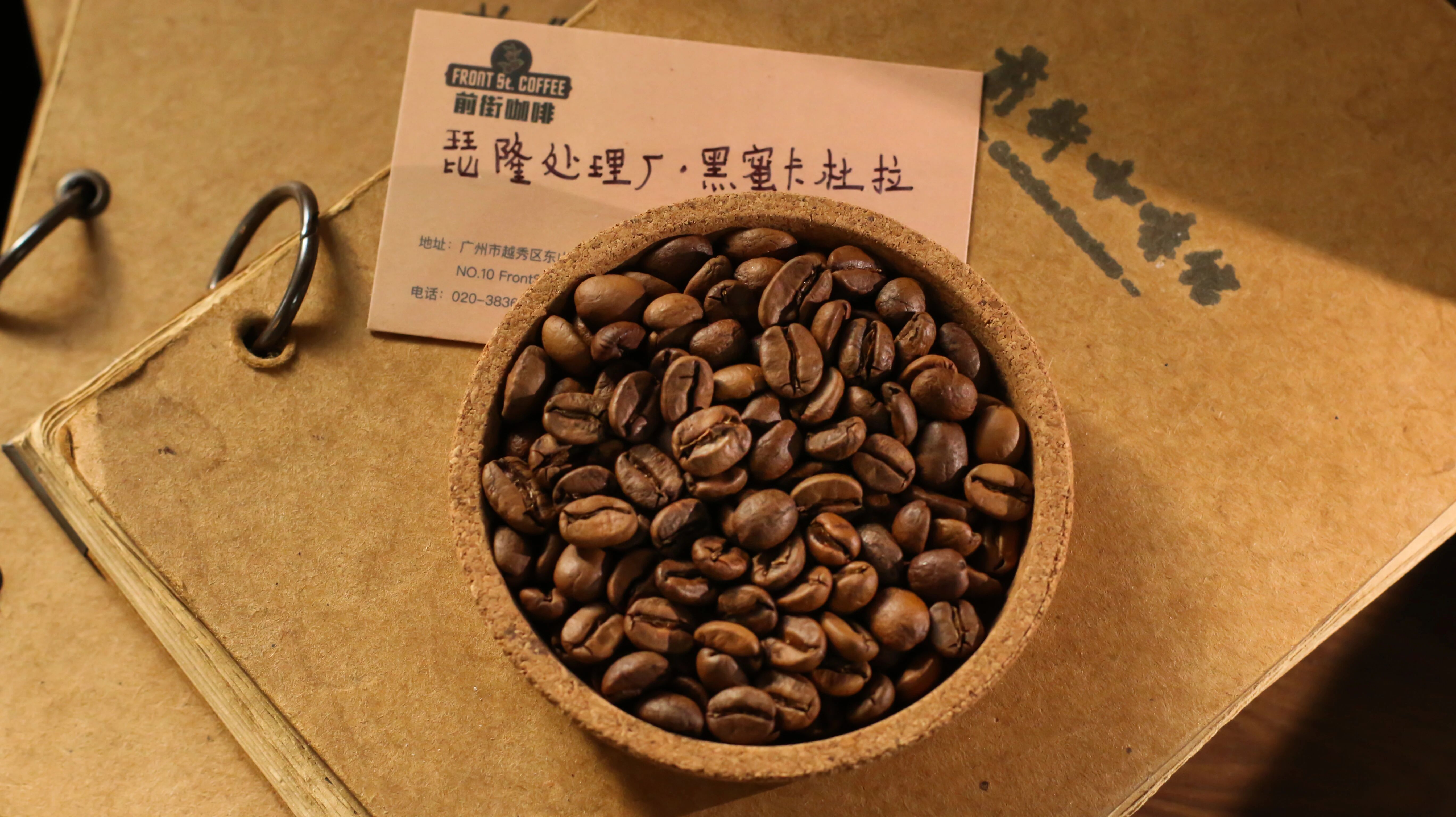
During the cupping stage, we evaluated the flavors at 8 hours post-roast, using 11.3 grams of coffee grounds with a grind size passing 75% through a standard Chinese No. 20 sieve, water temperature at 94°C, pouring 200 ml of water, breaking and scooping the crust after 4 minutes, and conducting flavor assessment.In the yellow honey cupping, a faint fermented fruity aroma was present, with the main notes during aspiration being citrus, cocoa, nuts, honey, and caramel, delivering an overall clean and straightforward taste with relatively simple layers;Red honey exhibited intense fermented wine-like aromas, with identifiable flavors including pineapple, sweet orange, nectarine, grape, cream, raisin, and maple syrup, showcasing notable sweetness and well-defined layers;Black honey possessed the strongest fermented aromas, including bold jackfruit, raisin, and wine notes, and delivered a complex cup with plum, citrus, raisin, caramel, and spice flavors during aspiration, featuring a balanced acidity and sweetness with a long-lasting aftertaste. Overall, black honey displayed the richest and most layered flavors, red honey offered a balanced profile with outstanding sweetness, and yellow honey stood out with its clean citrus notes and subtler fermentation aromas.
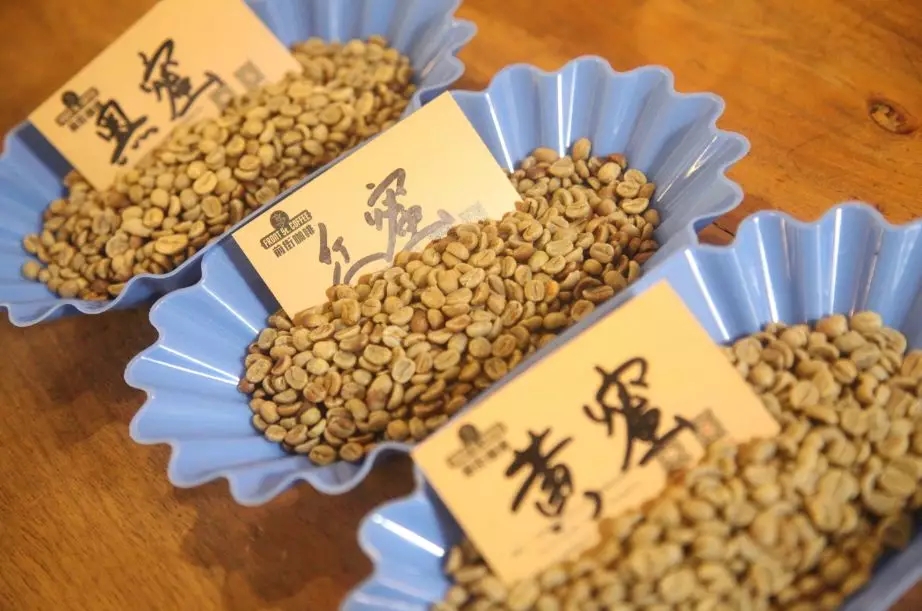
In summary,black honey, with the highest mucilage retention, offers the most intense fermentation aromas and rich flavor layers, making it ideal for coffee lovers who enjoy deep fruitiness and sweetness;red honey, while slightly less intense than black honey in aroma and flavor, still delivers excellent sweetness and balanced fruit notes;yellow honey features light fermented fruit aromas and a citrus-forward profile, suiting those who prefer a cleaner and more refreshing taste. Regardless of which honey-processed bean you choose, understanding its processing traits and roast performance can help you fine-tune your brewing parameters to achieve the optimal flavor expression.
The above content is compiled by CoffeeHunters, a coffee news website.


