







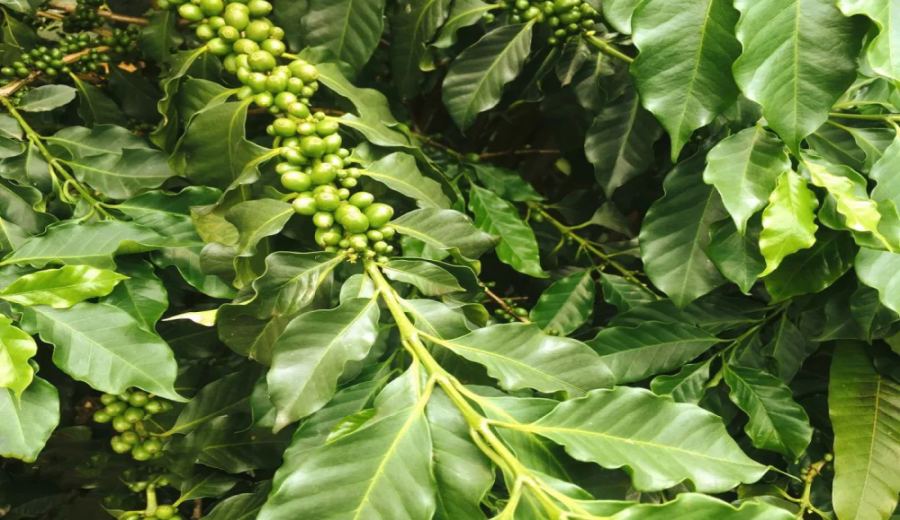
Introduction:Dehong Prefecture is one of the earliest regions in China to introduce coffee. Its unique geographical and climatic conditions have given rise to the distinctive Yunnan small-grain coffee. This article delves into the historical background, planting scale, processing techniques, and pour-over flavor characteristics of the Dehong producing area, while also providing practical bean selection and brewing parameters to help coffee enthusiasts gain a more comprehensive understanding of this important Chinese coffee region.
The Dehong Dai and Jingpo Autonomous Prefecture, as one of the pioneers in China’s coffee introduction history, benefits from its high altitude, suitable temperatures, and abundant rainfall, nurturing Yunnan small-grain coffee with distinct flavors and rich aromas. Since its first trial planting in Ruili in 1914, Dehong coffee has gradually developed from small-scale experiments into a complete industrial chain that integrates cultivation, deep processing, and market sales. It is now an indispensable part of China’s specialty coffee landscape.
Looking back at the planting history of Dehong coffee, as early as 1914, coffee seeds were introduced from neighboring Myanmar and successfully trial-planted in the Ruili area. However, for decades thereafter, due to various factors, coffee cultivation was not widely promoted. It was not until after the reform and opening-up period, especially in 1998 when the Yunnan Provincial Government issued the “Opinions of the Yunnan Provincial People's Government on Accelerating the Development of the Coffee Industry” (Yun Zheng Fa [1998] No. 116), which clearly outlined a policy direction to vigorously develop the coffee industry, that coffee planting in Dehong Prefecture truly entered a phase of rapid growth.
Currently, coffee planting in Dehong Prefecture is primarily driven by the local leading enterprise, Hougu Company. By 2016, the coffee planting area in Dehong had reached 220,000 mu, accounting for approximately 20% of the national total. It is not only the only region in China that hosts the “Ministry of Agriculture Ruili Coffee Germplasm Resource Garden,” but also gathers numerous coffee research and technology development institutions. The coffee planting in this region directly benefits about 60,000 households, or nearly 300,000 farmers, driving an agricultural output value of 1 billion yuan and an industrial output value that exceeds 1.5 billion yuan, forming a complete supply chain from the field to the consumer market.
In terms of processing technology, Dehong coffee relies mainly on Hougu Company as the primary force in processing and technology R&D. Since 2004, the company has initiated the R&D of coffee-related products and invested in building an instant coffee powder production line in 2007. To date, Hougu has constructed five primary processing plants, with an annual processing capacity of up to 80,000 tons of fresh coffee cherries, and boasts a fully developed coffee bean primary processing system. In 2008, its first instant coffee pure powder production line, with an annual capacity of 3,000 tons, officially went into operation, marking Dehong coffee’s official entry into the deep processing field.
Between 2009 and 2011, Hougu further invested in constructing a large-scale instant coffee production line with an annual capacity of 10,000 tons. This project is located in the Padizone of Mangshi Industrial Park, covering a total area of 240 mu, with a total investment of 463 million yuan, including 300 million yuan in fixed asset investment. The production line includes three different processes for making instant coffee, capable of producing 2,000 tons of spray-dried instant coffee, 4,000 tons of freeze-dried instant coffee, and 4,000 tons of agglomerated granulated instant coffee. It also features a canned coffee beverage production line with an output of 300 cans per minute, showcasing Dehong’s strong capabilities in coffee deep processing technology.
The product line of Hougu Company includes coffee beans, instant coffee powder, and its well-known “Hougu” series of three-in-one instant coffee. The company has successively obtained multiple international and domestic quality and sustainability certifications, such as ISO9001:2008 International Quality Management System, GAP (Good Agricultural Practice), 4C (Common Code for the Coffee Community), UTZ (Sustainable Coffee Certification), HACCP (Food Safety Management System), Green Food, and Organic Food Conversion Certification, ensuring the high quality and market competitiveness of its products.
In terms of sales distribution, Dehong coffee has made significant progress both domestically and internationally since 2010. Domestically, sales are primarily concentrated in first-tier and emerging first-tier cities such as Shanghai, Beijing, Shenzhen, and Hangzhou, where it enjoys strong consumer popularity. Internationally, its products are exported to 23 countries and regions, including Germany, the United Kingdom, Spain, South Korea, Singapore, Japan, and the United States, demonstrating the potential and influence of Chinese coffee in the global market.
In terms of pour-over flavor, Yunnan small-grain coffee from the Dehong producing area typically exhibits bright fruit acidity, medium body, and rich caramel and nutty notes. Common flavor descriptions include layers of citrus, red cherry, honey, roasted almonds, and chocolate. It is suitable for medium-light to medium roasting to highlight its inherent flavor characteristics. For pour-over enthusiasts, it is recommended to use a medium-fine grind (similar to fine sugar grains), with a water-to-coffee ratio controlled between 1:15 and 1:16, and a water temperature between 90°C and 93°C. Employing a pulse pouring technique can effectively bring out its elegant fruity aroma and mellow sweetness.
The above content is compiled by CoffeeHunters, a coffee news website.


