







Introduction:Civet coffee (Kopi Luwak), commonly known as cat poop coffee, is acclaimed as one of the most expensive coffees in the world, renowned for its unique fermentation process and rare production volume. But is this Indonesian-origin coffee considered specialty coffee? What about its true flavor profile, the counterfeit products on the market, and the animal ethics concerns? This article delves into the production process, flavor profile, authenticity identification, and reasonable alternative options for Kopi Luwak, providing a comprehensive reference for selecting beans.
Civet coffee, scientifically named Kopi Luwak, originates from Indonesia and has long been regarded as an extremely rare coffee item, even categorized as part of the specialty coffee segment by some markets. The most fascinating aspect of this coffee lies in its unique production process involving natural fermentation through the civet’s digestive tract, which imparts aromas and flavors to the beans that are distinctly different from traditional processing methods. Compared to the commonly found Mandheling coffee in Indonesia, it shares a similar foundational tone but adds layers of complex fermentation, resulting in a smoother mouthfeel and significantly reduced earthy and off-flavors.
Extremely limited production— it is estimated that only about 400 kilograms are produced globally each year. Precisely because of this, its price has remained consistently high, placing it among the world’s most expensive coffees. However, precisely due to its rarity and high price, the market is flooded with various counterfeit products, including commercially produced versions made from civets kept in captivity and force-fed, which not only greatly diminish in flavor but also raise numerous animal welfare controversies.
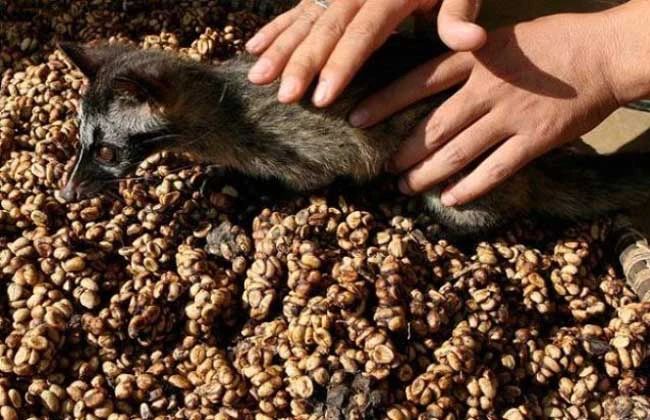
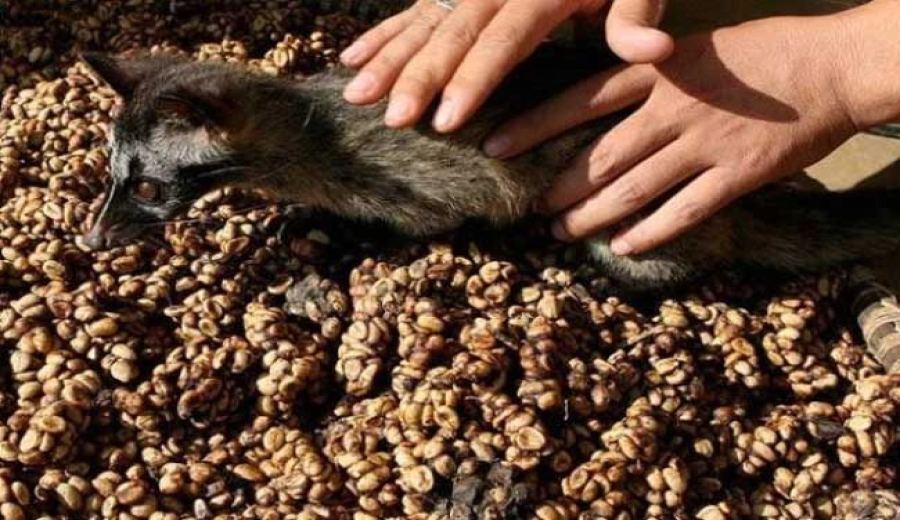
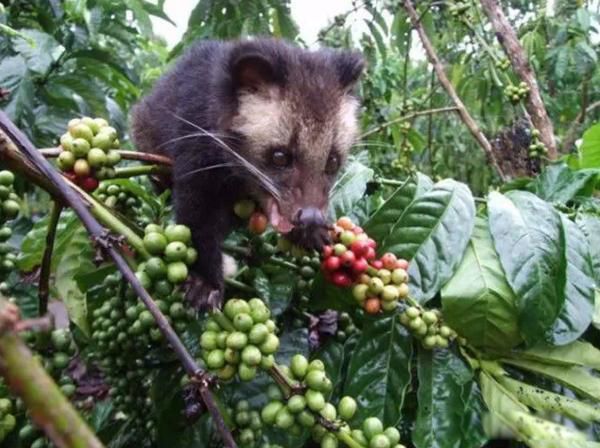
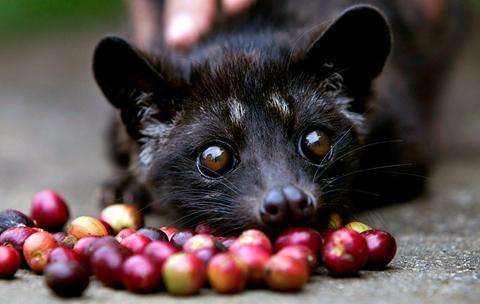
The production process of Kopi Luwak is truly peculiar. Civets (locally called Luwaks) are wild omnivorous animals skilled at using their sense of smell to select ripe and sweet coffee cherries. After consuming the coffee fruit, they digest only the pulp during the digestive process, while the hard coffee beans remain undigested. These beans then undergo enzymatic action in the intestines and natural fermentation within the body, eventually being excreted in feces. This process not only removes some acidic and astringent impurities but also, due to contact with secretions inside the civet’s body, imparts a unique layer of aroma.
These feces containing coffee beans must be manually collected by workers in the jungle, with reports stating that around 1,300 feces need to be screened to obtain 100 beans that meet the standards. Traditional washed or natural processing methods are entirely replaced, giving Kopi Luwak a distinctive profile that is low in acidity, rich and full-bodied, with a faint hint of mint in the aftertaste. Its mouthfeel is thick like syrup, smooth on entry, with a rich array of sweet layers, and even a uniquely hard-to-replicate cool sensation in the finish.
However, civets are naturally untamable animals with limited population sizes, and their natural food intake is small, with only about 30% of the beans in their excrement being retrievable. Coupled with losses during washing, sorting, and roasting, the actual amount of Kopi Luwak that can be circulated each year is extremely limited. For this reason, the authenticity of the many commercially available products labeled as “cat poop coffee” is often questionable.
Currently, many so-called cat poop coffees on the market are actually produced by force-feeding coffee cherries to civets kept in captivity. This not only deprives the animals of freedom but also causes them to exhibit abnormal behaviors due to prolonged stress, including aggression toward each other or self-harm. The coffee beans produced under such artificial farming conditions have long lost the essence of natural selection and fermentation, with most of their flavor reduced to mere marketing gimmicks, and their quality is far from that of genuine Kopi Luwak.
So, what is so unique about the flavor of Kopi Luwak? Through natural fermentation and special processing, its flavor profile often features herbal and nutty notes, with a rich and smooth mouthfeel, a long aftertaste, and a refreshing finish. However, it’s important to note that while these flavors are unique, they are not irreplaceable. Many other specialty coffees from different regions on the market can also showcase rich and diverse flavor layers without involving animal ethics issues.
For example, Panamanian Geisha is famed for its vibrant citrus and floral notes, Ethiopian Huila exhibits bright berry and black tea tones, Brazilian coffee is known for its nutty and chocolate flavors — all are high-quality and easily accessible choices. If you prefer Indonesian flavors, consider well-known local producing areas’ Mandheling, especially the multiple-handpicked Golden Mandheling, whose nutty-chocolate profile and full-bodied mouthfeel are also widely praised by coffee enthusiasts.
If you still wish to try Kopi Luwak, understanding the correct brewing method is also crucial. To fully showcase its richness and herbal characteristics, it is recommended to usemedium-dark roast, and brew with aKONO filterat88°C water temperature,a 1:15 coffee-to-water ratio. Specific parameters can be set as follows:15 grams of coffee grounds,grind size (75% passing through a #20 sieve), usinga three-stage extraction— first with30 grams of water for a 30-second bloom, then pouring in increments of125 grams and 225 grams, with total extraction time controlled toexactly 2 minutes. This method helps to steadily release flavors and avoid over-extraction or interference from impurities.
In summary, civet coffee (Kopi Luwak) holds a unique place in the coffee world due to its distinctive production process and extreme rarity. However, its high price, scarce production, and animal ethics controversies mean it may not be the top choice for every coffee enthusiast. There are many high-quality, flavorful, and easily accessible specialty coffee beans on the market that can equally satisfy the pursuit of flavor depth and brewing enjoyment. When choosing coffee, in addition to flavor, one should also rationally consider the production methods behind it and its sustainable value.
The above content is compiled by CoffeeHunters, a coffee news website.


