








Introduction:Brazil is the world’s largest coffee-producing country, and its beans are renowned for their full body, low acidity, and chocolatey profile, often serving as the base in espresso blends. This article delves into Brazil’s coffee grading system, major growing regions, and the evolution of processing methods. It also compares the role of Brazilian beans versus Colombian beans in blends, explores the single-origin characteristics of Queen Estate Yellow Bourbon, and examines the practical logic behind classic blend recipes—offering a comprehensive understanding of the key traits of Brazilian coffee.
As the world’s top coffee-producing nation, Brazil’s beans are known for their low acidity, rich nuttiness, and chocolatey notes, making them an indispensable base for many espresso blends. However, compared to regions like Colombia, Brazilian beans are less commonly found as single origins, a reality closely tied to its history, regional characteristics, and processing methods. This article provides a thorough analysis of Brazil’s coffee grading logic, the distribution of its main producing areas, the features of its three primary processing methods, and a comparison of its application differences with Colombian beans in blends. It also introduces the single-origin performance of Queen Estate Yellow Bourbon, along with real-world examples of classic blend formulations, helping readers gain deeper insight into the unique value of Brazilian coffee.
Brazil’s coffee cultivation history dates back to the late 18th century. In 1727, coffee was introduced to Brazil’s Port of Belém from Guyana, subsequently flourishing in southeastern coastal regions such as São Paulo, Paraná, Espírito Santo, and Minas Gerais. From the late 18th century to the 1920s, Brazil’s coffee production once accounted for 75% of the global total and long served as the country’s primary source of foreign exchange, earning it the title “Coffee Kingdom.” However, after the 1929 Great Depression, global coffee demand plummeted, severely impacting Brazil’s coffee industry. Although industrialization later reduced coffee’s economic significance, Brazil remains the world’s largest coffee producer and exporter to this day.
The flavor profile of Brazilian coffee is dominated by the traits of “soft beans.” Due to generally lower-altitude growing regions, the lack of distinct microclimates, and predominantly flat cultivation without shade, these beans exhibit low acidity, a full body, and pronounced nutty and chocolatey sweetness. Additionally, some beans carry subtle woody or earthy notes, forming a stark contrast to the floral and citrusy profiles often found in African beans. This flavor profile makes Brazilian coffee an ideal base for espresso, providing a stable and rich mouthfeel foundation.
Brazilian coffee is categorized into five primary grades based on the body and sweetness of its soft beans: extremely soft, soft, slightly soft, harsh, and iodine-like. These grades are closely tied to regional distribution—for example, the extremely soft grade mainly comes from South Minas, Cerrado, Mogiana, and Bahia’s Diamond Highlands; the soft grade is found in Bahia, Minas Gerais’ southeastern mountainous forests, and Paraná; the slightly soft grade mostly originates from eastern and northeastern Minas Gerais; the harsh grade is common in Paraná’s low-altitude areas and Espírito Santo’s Serra do Caparaó; while the iodine-like grade is concentrated in Espírito Santo’s plains and Minas Gerais’ southeastern lowlands. Notably, in recent years, regions such as South Minas, Cerrado, Mogiana, and Bahia’s Diamond Highlands have gradually demonstrated potential for specialty coffee.
In terms of processing methods, Brazilian coffee primarily employs natural (sun-dried), pulped natural (semi-washed), and washed methods, with the specific choice determined by the region’s humidity and climate conditions to achieve the most desirable flavor profile. While many still associate Brazil with the natural method, it’s worth noting that prior to the 1990s, crude sun-drying often resulted in earthy and woody off-flavors, negatively impacting the overall quality image. After 1990, Brazil developed the pulped natural method, which not only shortened processing time but also effectively enhanced fruitiness and sweetness while significantly reducing the risk of unwanted flavors, making it more suitable for single-origin coffee. Farms across the country select the processing method best suited to local environmental conditions to suppress mold growth and ensure consistent bean quality.
Brazil cultivates a diverse range of coffee varieties, including both Arabica and Robusta. Among them, Arabica varieties are characterized by their softness, low acidity, mild sweetness, and balanced profile. Although their single-origin flavors may not be as prominent as those from certain other regions, they serve as an ideal base for blends, effectively balancing stronger-flavored beans like Mamba or Goba blends. Currently, Brazil’s main varieties include Red Bourbon, Yellow Bourbon, Mundo Novo, and Catuaí, with others like Caturra, Acaia, Obatã, Aramosa, and Laurina also being cultivated and researched. The Campinas Agricultural Research Institute in São Paulo is a key hub for coffee variety improvement in Brazil, and the widely grown Catimor variety is the result of collaboration between Portuguese and Brazilian scientists.
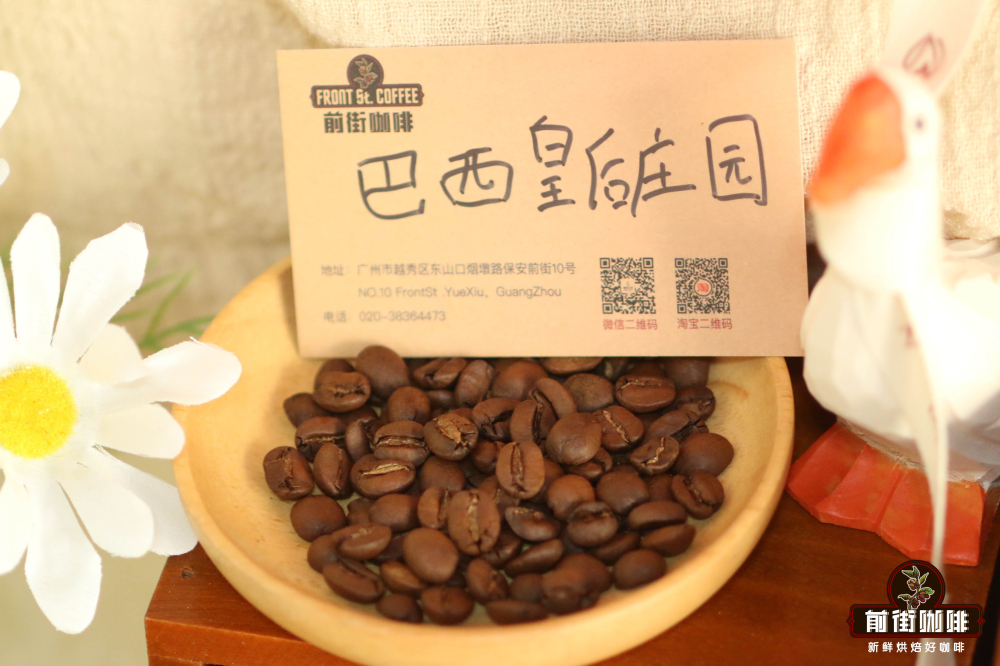
Take Queen Estate Yellow Bourbon as an example. This estate is located in the Mogiana region, at elevations between 1,400 and 1,950 meters, and is managed by the Carvalho Dias family. These beans are of the Yellow Bourbon variety and processed using the natural method, with green bean moisture content at around 9.9%, offering a solid texture and emerging aromatics. A certain café’s roasting strategy involves starting at 200°C, initially using high heat and a small air vent for rapid dehydration. Once dehydration is complete, they switch to medium heat and medium airflow to promote Maillard reactions, controlling the roast to finish at the tail end of first crack. The final roast results in pronounced sweetness, a background hint of lemon aroma, and a late-stage emergence of dark chocolate notes. The overall mouthfeel is rounded and lively, fully showcasing the traits of Brazilian beans.
For extraction parameters, it’s recommended to use a Hario V60 dripper, with water temperature controlled at 88–90°C, a coffee-to-water ratio of 1:15, and a medium grind size. The extraction process is divided into three pouring phases: the first phase involves 30 grams of water for a 30-second bloom; the second phase pours up to 125 grams, then pauses until the water level drops near the bed surface, followed by pouring up to 225 grams to finish; finally, the dripper is removed just before the water level exposes the bed, with a total extraction time of about 2 minutes. Under these parameters, Brazilian beans exhibit sugarcane-like sweetness, black tea and nutty flavors, paired with noticeable chocolate aroma, resulting in a clean and delicate mouthfeel.
Brazilian beans are commonly found in blended coffees primarily due to their high production volume, relatively affordable pricing, and ability to provide a stable, full-bodied foundation. In the specialty coffee market, Brazilian beans may not be the mainstream single origin, but they play a crucial role in espresso blends, complementing beans from other regions to create balanced and broadly appealing flavor profiles. For example, classic espresso blends often use Brazilian beans as a base, paired with Mandheling or Robusta to enhance crema and layered mouthfeel.
Blended coffee refers to the combination of single-origin beans from different regions, varieties, or processing methods in specific proportions, aiming to integrate the strengths of each bean to create a more balanced and layered taste. Blends can be divided into pre-blend (mixed before roasting) and post-blend (mixed after roasting). The former emphasizes flavor integration between beans, while the latter allows for differentiated roasting tailored to each bean’s characteristics, with proportions adjusted according to the recipe. Successful blending requires a deep understanding of each bean’s acidity, sweetness, bitterness, aroma, and body to achieve the desired flavor outcome.
Take a blend of Brazilian and Colombian beans as an example. Colombian beans from the Huila region, grown at elevations of about 1,500–1,800 meters, are mostly Bourbon and Caturra varieties processed using the washed method. They feature a plump bean shape and high density, with nutty, chocolatey, and caramel aromas, moderate acidity, and rich sweetness. In contrast, Brazilian beans from the Cerrado region, grown at around 1,000–1,300 meters, are mostly Bourbon varieties processed via the pulped natural method. They have a softer texture and thinner body, suiting medium roasting to enhance nutty and milk chocolate notes. When blended, they deliver a sweet and smooth mouthfeel, with espresso showing gentle acidity, nutty aftertaste, and moderate crema—making them suitable for all types of espresso-based drinks.
The above content is compiled by CoffeeHunters, a coffee news website.


