







Introduction:The Yirgacheffe Kochere washed coffee is renowned for its delicate citrus acidity and silky sweetness, making it a top choice for many coffee enthusiasts exploring Ethiopian flavors for the first time. This article delves into its unique aromatic profile and cupping characteristics by examining the growing region’s geography, altitude conditions, and processing methods. It also includes practical pour over recommendations and extraction parameters to give you a comprehensive understanding of this high-altitude micro-lot specialty coffee bean.
Among Ethiopia’s many coffee-growing regions, Yirgacheffe is undoubtedly a star on the international market, and the Kochere micro-region is considered the essence of this terroir. According to the classification by the Ethiopia Commodity Exchange (ECX), Kochere has been established as an official coffee-producing region in its own right. Its coffees exhibit highly distinctive aroma profiles and flavor layers. The washed coffees produced here often feature bright citrus acidity, soft silky sweetness, and rich floral and fruity notes, making them a favorite among specialty coffee buyers and roasters.
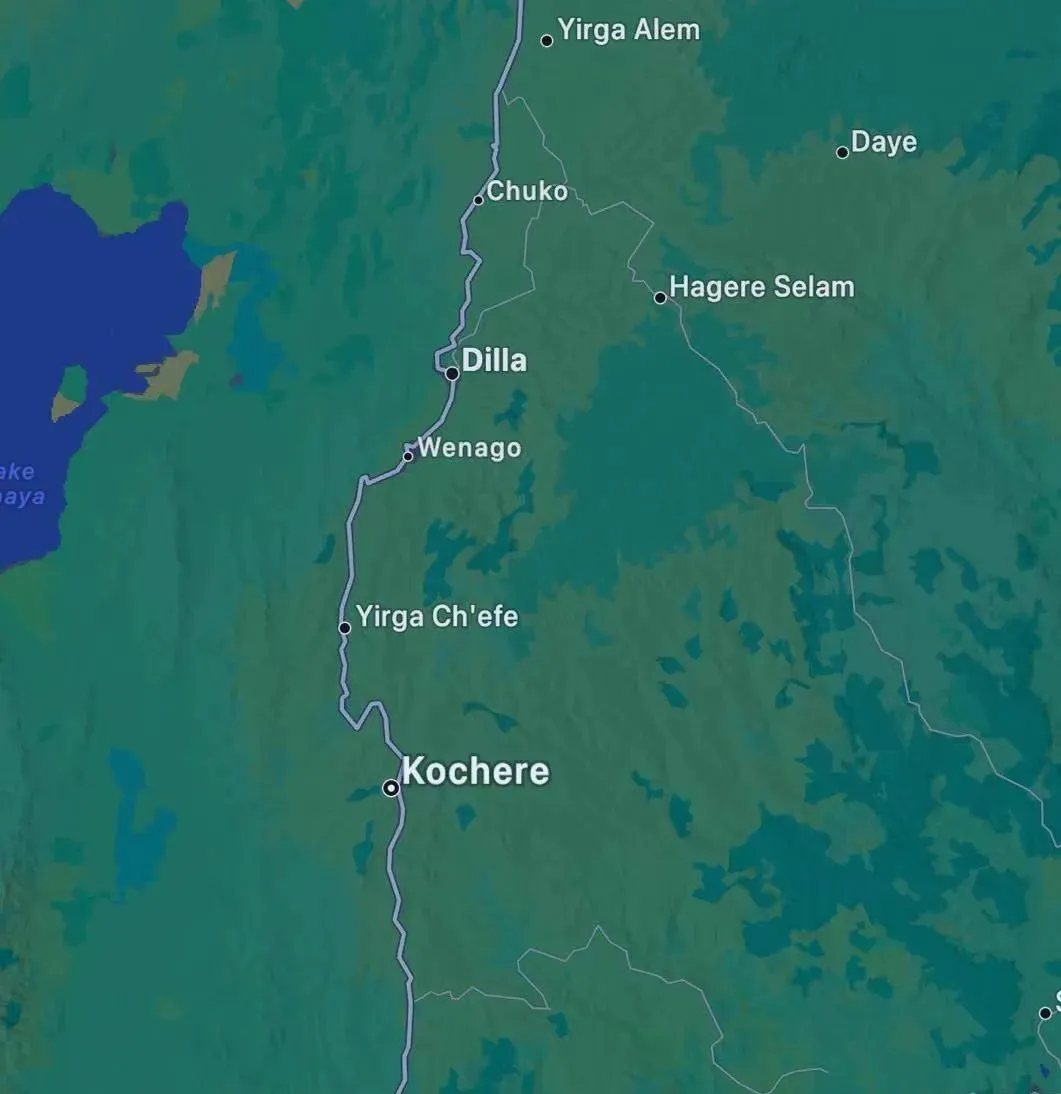
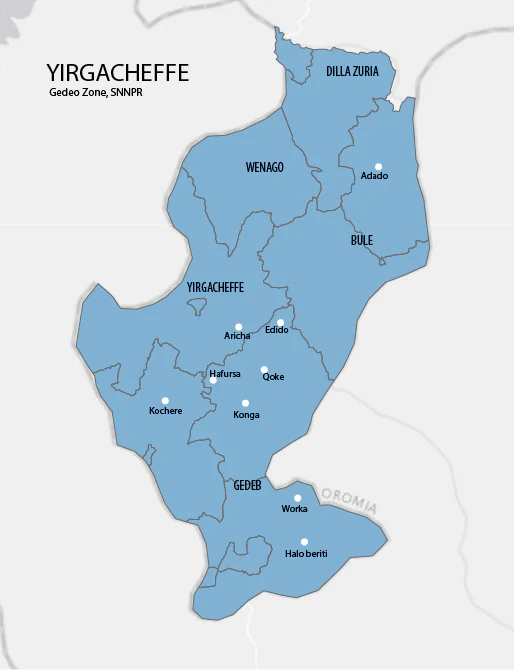
 Located approximately 25 kilometers southeast of Yirgacheffe, Kochere sits at an overall altitude between 1,650 and 1,800 meters, representing a classic high-altitude cultivation environment. It is not only one of the three well-known micro-regions of Yirgacheffe but also a key driver of local economic development thanks to its premium coffee production. According to the renowned coffee review website Coffee Review, Kochere washed beans have even been awarded scores as high as 94, a testament to their outstanding quality. Kochere belongs to the Gediyo area within Ethiopia’s Southern Nations, Nationalities, and Peoples' Region (SNNPR) and is also a significant part of the Yirgacheffe producing region. Moreover, the area can be further divided into multiple micro-regions, with some batches even named after specific villages (such as Chelelektu), processing stations (like the Alim washing station), or terrain areas (such as Banko Gutiti). This detailed regional classification reflects the current trend toward coffee traceability and helps enhance annual flavor consistency and market value.
Coffee production in the Kochere region primarily follows a model where smallholder farmers deliver their harvests to cooperatives for unified processing. Take Chalalacktu village, for example—this settlement with a population of around 100,000 people relies almost entirely on the coffee industry for its economic livelihood. Thanks to the stable income from coffee, the region enjoys a relatively high standard of living, with not only well-established basic medical facilities but also higher education institutions. Coupled with advanced washed coffee processing equipment, Kochere has been able to maintain a consistently high level of coffee quality over the years, especially in terms of cleanliness and sweetness. Its profiles often come with complex aromas of molasses and citrus, leaving a lasting impression.
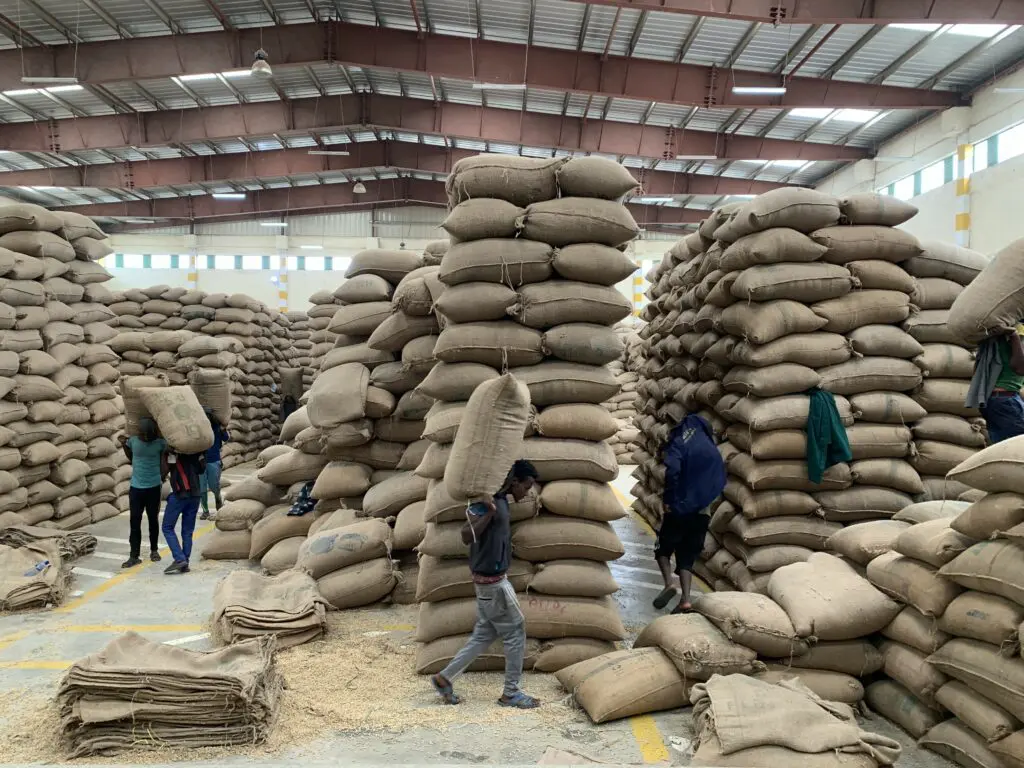
 Regarding processing methods, Kochere washed coffee primarily employs the Washed Process. This technique involves initially floating the coffee cherries to remove unripe or overripe beans, followed by mechanical removal of the fruit pulp. The beans, still coated with mucilage, are then placed in water tanks for fermentation. Once the mucilage is broken down, the beans are thoroughly washed, followed by multiple rinsing and soaking steps. Finally, the moisture content is controlled at around 12% before drying, and the outer parchment layer is removed. Compared to the natural (sun-dried) method, the washed process demands more equipment and water resources, but its advantages lie in significantly reducing the percentage of defective beans, improving the consistency and stability of green beans, while preserving a clear and bright acidity along with a distinctive “washed profile.” This is precisely what enables Kochere coffee to showcase its vibrant citrus and refreshing floral notes.
If you wish to experience Kochere’s unique flavors firsthand, consider seeking out well-known G1-grade lots. These high-grade green beans typically offer clean and refreshing lemon aromas, accompanied by layered notes of jasmine, cantaloupe, citrus, ginger, and spiced tea. For pour over brewing, it is recommended to use a medium-light roast, with a water temperature of 90–93°C, a grind size around medium-fine (e.g., passing through a BM 18–20 mesh sieve), and a total extraction time of about two minutes—to fully highlight its citrus acidity and tea-like finish.
In addition to Kochere itself, the Gedeb Cooperative, also part of the larger Yirgacheffe region, is another gem worth noting. This cooperative, formed by 300 smallholder farmers, was originally under the Worka Cooperative but gained distinction for its exceptional coffee quality and eventually developed independently. The washed coffee produced by Gedeb grows at even higher altitudes, ranging from 1,900 to 2,300 meters, and uses the Ethiopian heirloom variety. Also processed using the washed method, it often exhibits complex cupping profiles including citrus, green tea, plum, floral, and honey notes. Many drinkers describe its flavor as being as clear and bright as lemon tea, with elegant acidity and a tea-like lingering sweetness. It is suitable for brewing via pour over, drip bags, cold brew, French press, or siphon brewers.
In terms of flavor expression, the dry aroma of Gedeb washed beans often features pronounced citrus and lemon notes, while the wet aroma releases floral and berry sweetness, with a faint hint of caramel warmth. Upon tasting, the first impressions are clear citrus paired with a gentle creamy texture. As the temperature drops, berry, black tea, and caramel sweetness gradually emerge, with a long-lasting citrusy sweetness lingering in the aftertaste. The overall profile is balanced and layered, often receiving high marks for flavor consistency during cupping evaluations.
The above content is compiled by CoffeeHunters, a coffee news website.


