








Introduction:Flat White is renowned for its intense coffee aroma and delicate microfoam. What exactly sets it apart from a latte? This article delves into the origins of the Flat White, the golden ratio of espresso to milk, the ideal thickness and temperature of the milk foam, and compares the suitability of whole milk, low-fat milk, and skim milk. With professional-grade parameters and practical tips, help you master the key techniques of this classic Italian-style milk coffee, whether you're enjoying it in a café or making it at home.
Flat White is a milk coffee that emphasizes showcasing the inherent flavor of coffee. Compared to the commonly seen latte, it uses more espresso and less milk, with a thinner layer of foam. This beverage originated in either Australia or New Zealand, and there is still regional debate about its birthplace. However, there's no denying that it has become one of the classics beloved by specialty coffee enthusiasts worldwide.
The most distinctive feature of making a Flat White lies in the way milk is poured—not mixed by swirling, but rather injected in a thin stream from the center. This method preserves the coffee's crema on the surface, forming a beautiful white ring in the center of the drink. This is not only a visual focal point but also key to the layered mouthfeel.

To successfully make a high-quality Flat White, you first need to understand its basic components: the ratio of espresso to milk, the thickness of the foam, and temperature control. Generally, a Flat White uses more espresso than a latte, but about 100 milliliters less milk overall, and the foam layer is also relatively thinner. This ensures that each sip offers a fusion of coffee crema and delicate microfoam.
Taking a common recipe as an example, it’s recommended to use 40 milliliters of espresso (usually a double shot), paired with 140 milliliters of whole fresh milk. This ratio ensures that the aroma of the coffee isn't overwhelmed by excessive milkiness while still delivering the smooth texture that milk provides. The ideal foam thickness is about 5 millimeters—far thinner than the 1-centimeter layer of a latte or the 1.5-centimeter layer of a cappuccino. This design helps you taste both the foam and the full coffee crema from the very first sip.

The choice of milk is crucial for the performance of a Flat White. Whole fresh milk is recommended due to its higher fat and protein content, which allows for the creation of dense and stable microfoam, along with a richer mouthfeel and sweeter taste. While low-fat or skim milk can still be used, the stability and fineness of the foam are often compromised, requiring more skilled technique to achieve the desired result.
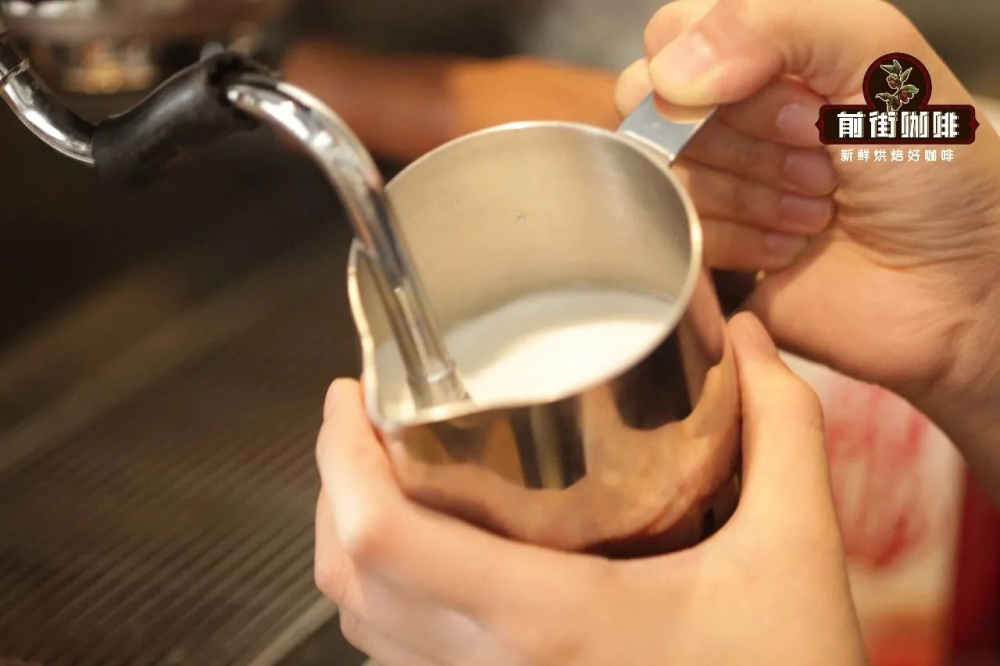
The recommended temperature for steaming milk is between 50 and 60 degrees Celsius, with the optimal range being 55 to 65 degrees. If the temperature is too low, the lactose in the milk cannot fully release its sweetness; if it exceeds this range, proteins can easily denature excessively, leading to a loose or even grainy foam structure. In addition, attention must be paid to the use of the steam wand during steaming—start by purging to remove excess water, then submerge the steam tip just below the milk surface, and create a stable whirlpool motion until the milk becomes fine and free of large bubbles.

Foaming milk can be divided into two stages: initial frothing, followed by further texturing. Texturing refers to refining the initially formed coarse foam into a finer and more uniform consistency using the vortex action of the steam wand. During operation, insert the steam wand about 1 centimeter into the foam layer, ensuring all steam holes are submerged in the milk, and continue rotating in a single direction until the foam surface is smooth, with no noticeable large bubbles and a slight sheen.
When choosing milk, whole milk—with its high fat and protein content—is able to form more stable and dense foam, making it the top choice for making Flat Whites. However, low-fat and skim milk are not out of the question; they just require more precise temperature control and foaming technique. For example, low-fat milk is more prone to producing large bubbles during steaming, so it’s advisable to pay closer attention to the steam intensity and angle to minimize bubble formation.

In summary, making an outstanding Flat White hinges on mastering the golden ratio of espresso to milk, precisely controlling the thickness and temperature of the foam, and adjusting the frothing method based on the characteristics of the chosen milk. Through continuous practice and observation, you too can replicate café-quality Flat Whites at home and enjoy that unique coffee aroma and silky smooth mouthfeel.
The above content is compiled by CoffeeHunters, a coffee news website.


