







Introduction:Did you know that Yunnan once primarily cultivated Typica, only to later be replaced by Catimor? This article delves into the evolution of coffee varieties in Yunnan, analyzes the pros and cons of Catimor, and highlights the reasons why the industry continues to grow Typica in Baoshan. In addition to sharing the market dynamics of 2021, it also provides a roast profile for washed Typica and a V60 pour over brewing guide to help you fully showcase this bean’s nutty, chocolatey, and gently acidic flavor profile.
The evolution of Yunnan coffee varieties is a history intertwined with climate, market demand, and technological development. Many assume that Yunnan has always grown Catimor, but the earliest introduced variety was actually Typica. So why did this once-dominant variety gradually give way to Catimor? The industry’s choice to continue cultivating Typica in Baoshan and showcasing its original flavors through washed processing reflects a commitment to quality and regional identity. This article will explore the variety transition, analyze market trends, and detail the roast and V60 pour over parameters for Typica, enabling you to brew a balanced and layered cup at home.
 Many people are surprised to hear that “the earliest coffee planted in Yunnan was Typica”: “Nowadays, almost all you see is Catimor—where did Typica go?” This question strikes at the heart of Yunnan’s coffee industry transformation. From small-scale trial planting to large-scale shifts in cultivation, the change was driven not just by the characteristics of the varieties themselves, but also by factors such as market demand, cultivation difficulty, and disease resistance. This article will help you understand why Typica, once the “star variety,” gradually faded from the mainstream stage.
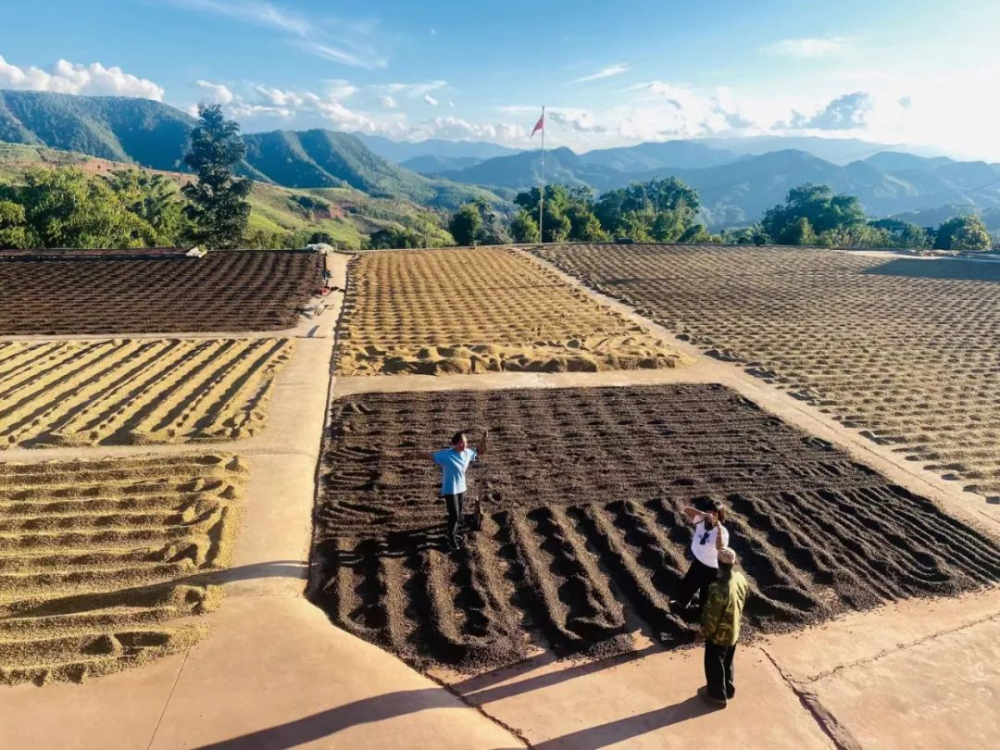
Looking back to January 2021, the Yunnan coffee market was on an upward trend. Most producing regions were in the peak harvest season, with only low-altitude areas nearing the end of their harvests, leading to a steady increase in parchment bean production. Many large suppliers chose to hold beans, expecting prices to rise further, while some farmers and companies opted to sell at reasonable prices due to funding needs. On the demand side, with the Spring Festival approaching, restocking demand intensified, and some clients actively replenished inventory. However, major buyers remained cautious due to concerns about logistics and cost risks. Overall, the market’s trading pace accelerated, and average prices across all grades continued to climb.
 So why did Typica eventually become marginalized in the market? As an early-introduced variety, Typica offers a clean and bright flavor with balanced acidity and high clarity. However, it also has clear drawbacks. It requires higher altitudes, has relatively low yields, weak disease resistance—especially to leaf rust—and these factors caused it to lose competitiveness in an environment focused on yield and economic returns. In contrast, Catimor, a hybrid of Arabica and Robusta, brought stronger disease resistance, higher yields, and richer crema, making it the preferred choice for most estates in Yunnan.
However, Catimor is not without flaws. Though its flavors are bold and pronounced, it generally lacks cleanliness, has weaker complexity, and though it has good body, it often carries off-flavors. To mask these shortcomings, some processors employ intense processing methods to enhance flavor expression, but this also makes it difficult to appreciate the unique regional characteristics that Yunnan coffee should offer. The industry believes that such “symptomatic” solutions are not sustainable, and that only by returning to the essence of the variety can a true regional flavor identity be established.
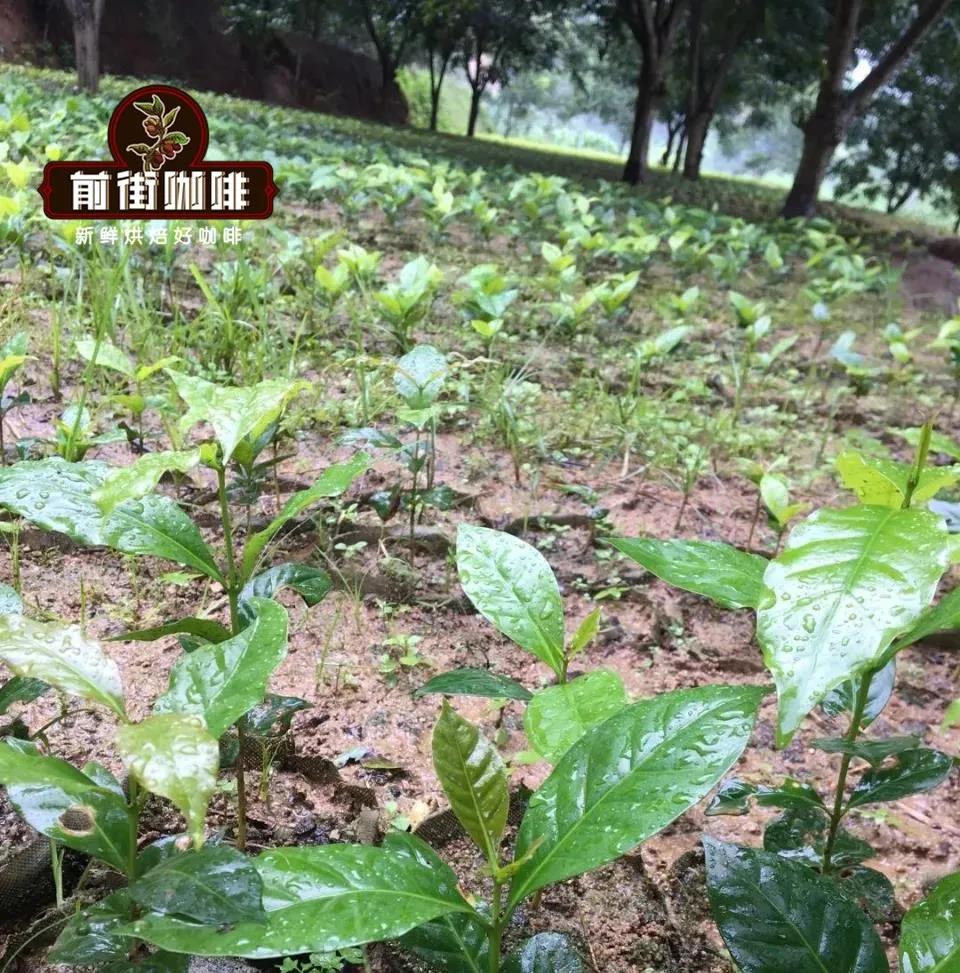
Interestingly, a few estates still choose to persist with Typica cultivation, and one of them is located in Baoshan, Yunnan. With an average annual temperature of about 21.5°C, peaking at 40.4°C, and almost no frost, Baoshan is widely recognized as suitable for growing Arabica. The Typica grown here is known for being rich yet not bitter, aromatic with pronounced fruity notes. The Typica grown in Baoshan is cultivated at altitudes between 1450 and 1550 meters and processed using the washed method, aiming to present the purest regional flavors.
Why choose washed processing? The team experienced firsthand the unpredictable nature of the rainy season in Yunnan—brief sunshine followed immediately by sudden showers. This unstable climate makes washed processing the best method to maintain flavor purity and consistency. By removing the mucilage layer, washed processing reduces impurities and unwanted flavor interference, allowing the intrinsic characteristics of the coffee to shine through more clearly—it’s an ideal way to explore regional flavors.
Regarding roasting, we used the Yangjia 800N small roaster to carefully process this Typica, which was introduced in 2013. The charge temperature was set to 200°C, with the fan set to 3. After one minute, the heat was adjusted to 160°C. At 1 minute and 32 seconds after the turn point, the beans turned yellow at 5 minutes and 40 seconds, at which point the grassy notes had dissipated and the temperature was around 149°C. Subsequently, the heat and fan settings were gradually reduced until the first crack began at 8 minutes and 37 seconds, with the beans finally dropping at 196°C. This resulted in ideal caramelization and aroma development.
 For brewing, we recommend using a V60 dripper with 15 grams of coffee grounds and a 1:15 coffee-to-water ratio (you can adjust to 1:16 if you prefer a cleaner flavor). Water temperature should be controlled at 89°C to soften the acidity. The grind size is medium (approximately 75% passing through a #20 sieve). Specifically, start with a 30-gram bloom for 30 seconds to allow the coffee grounds to fully expand into a “hamburger” shape. Then, in the second phase, pour 125 grams of water using gentle circular motions, maintaining a pour height of about 4 cm and a flow rate of about 4 grams per second. When the water level drops to half the bed height, proceed to the third phase, pouring a total of 225 grams. Finally, wait for the dripping to finish, with a total extraction time of approximately 2 minutes and 1 second. This process fully highlights Typica’s nutty profile, gentle acidity, and black chocolate aroma, with a lingering aftertaste of subtle black tea and brown sugar warmth.
The above content is compiled by CoffeeHunters, a coffee news website.


