







Introduction:Kenyan coffee is renowned for its bright acidity and complex layered flavors, qualities that stem from its rigorous grading system and meticulous cultivation and processing methods. This article delves into the essence of Kenyan coffee, exploring everything from colonial-era variety selection and the E to T grading standards, to the flavor profiles of its major producing regions and the Nairobi auction system. Practical pour over parameters and roasting recommendations are also provided to help you master the core characteristics of this East African coffee powerhouse.
Kenyan coffee has carved out a unique space in the global specialty coffee market with its intense and full-bodied fruity acidity. This distinctive flavor profile is not only a result of its exceptional geographical conditions but also closely tied to its strict grading system and refined cultivation and processing framework. This article provides a comprehensive overview of the development of Kenyan coffee—from its introduction during the early colonial period, to the successful breeding of the SL28 and SL34 varieties at the Scott Laboratories, and the establishment of the AA, AB, and PB grading standards in 1938. We’ll break down the specific meanings and flavor characteristics of each grade. Additionally, we’ll explore the flavor differences across key producing regions such as Nyeri, Kirinyaga, and Thika, analyze the coexistence of large estates and smallholder cooperatives, and examine the two main trading mechanisms: the Nairobi Coffee Exchange auctions and direct trade.
The history of coffee cultivation in Kenya is relatively short, with the crop not being introduced until the early 20th century. At that time, Kenya was still a British colony, and the colonial government actively promoted coffee farming to boost foreign exchange earnings, shipping the harvested beans to London for export. In 1922, Kenya established the Scott Agricultural Laboratories (the origin of the SL in SL28 and SL34), dedicated to the research and improvement of coffee varieties. Over the following decade, researchers carefully selected SL28 and SL34 from 42 coffee varieties as the most suitable for local growing conditions. These two varieties not only laid a solid foundation for Kenya’s coffee industry but also still account for 90% of its coffee acreage today.
The Kenyan government places great emphasis on the sales aspect of the coffee industry. In 1931, the Kenya Planters Cooperative Union and the Kenya National Coffee Board were established to guide the development of the coffee industry from both grassroots and official levels. In 1937, the Nairobi Coffee Exchange was officially inaugurated, marking the launch of Kenya’s coffee auction system. This “quality beans, quality price” mechanism provides a clear benchmark for market pricing. In 1938, the Kenyan government formally enacted the coffee grading system—namely the familiar AA, AB, PB, and other grades—which has since served as the standard for evaluating the quality of Kenyan coffee.
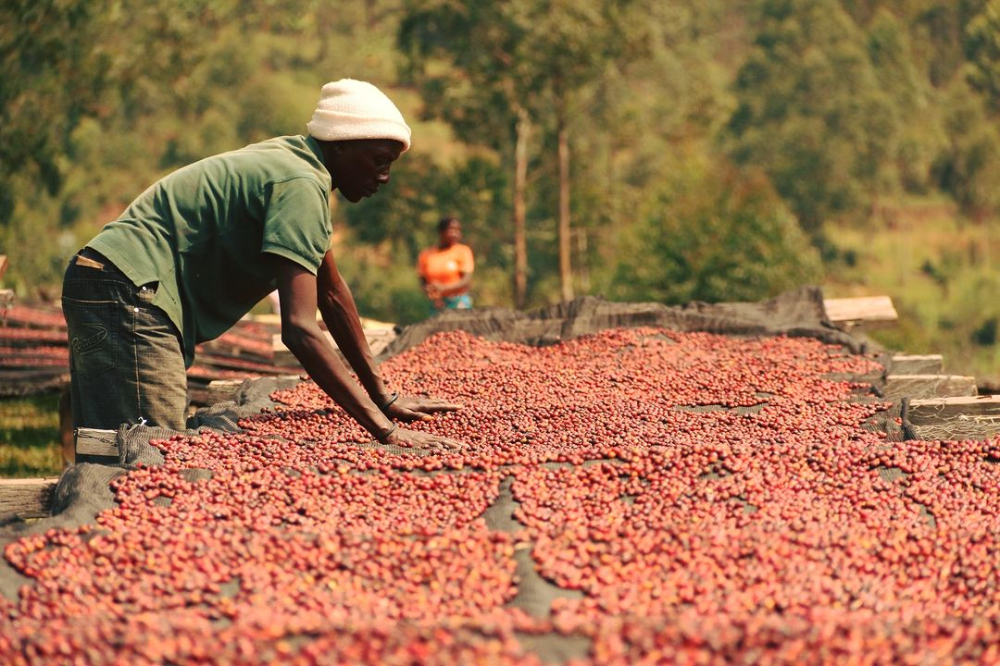
Kenyan coffee is primarily grown on the plateaus north and east of Nairobi. These regions feature loose, fertile, acidic volcanic red soils, abundant sunlight, and excellent drainage, with altitudes ranging between 1,400 and 2,000 meters. The higher the altitude, the more pronounced the day-night temperature variation, resulting in a longer growth cycle, denser bean density, and more intense flavors compared to lower-altitude areas. Coffee typically flowers after rainfall, mainly in March and April, with fruits ripening progressively from May to July and a second ripening period occurring in September and October—allowing for two harvests per year.
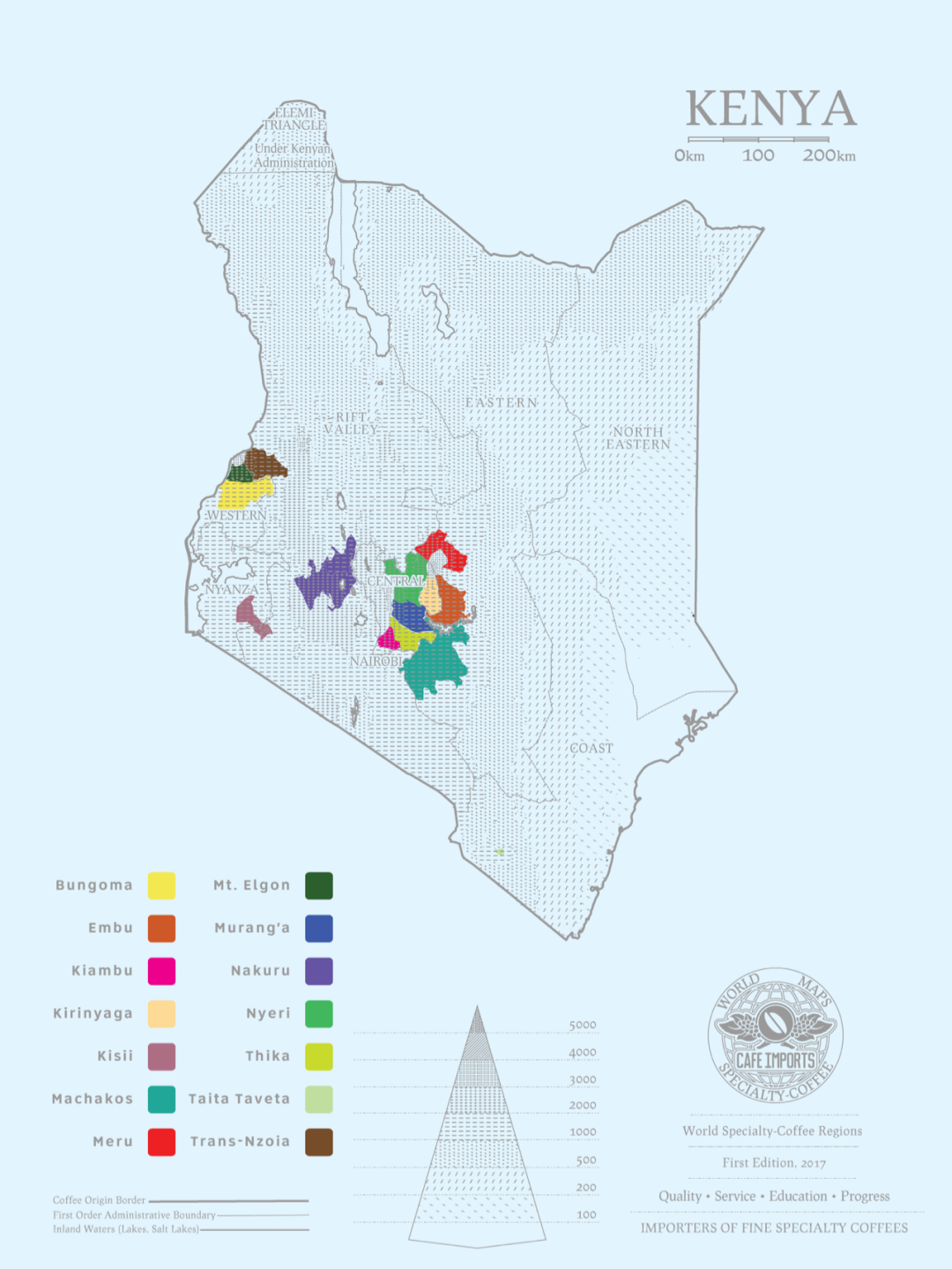
Kenya’s coffee-growing regions are mainly concentrated in the central and western parts of the country. The central regions include Kiambu, Nyeri, Kirinyaga, Muranga, Embu, Machakos, Ruiri, and Thika; the western regions comprise Kisii and Bungoma, located on Mount Elgon. Each region boasts distinct coffee flavor profiles. For example, Kiambu and Muranga exhibit bright and full-bodied acidity; Nyeri is celebrated for its vibrant citrus and floral notes paired with berry-like robust acidity; Kirinyaga also features bright and bold acidity, complemented by delicate sweetness; Embu offers a more balanced flavor with a long finish; Machakos stands out with pronounced acidity, fine texture, and a lingering aftertaste; while Kisii and Bungoma are characterized by fruity sweetness, gentle acidity, and nutty undertones.
Kenya’s coffee cultivation model is primarily composed of two entities: large estates and agricultural cooperatives. There are approximately 3,000 large estates, accounting for 25% of Kenya’s coffee-growing land, while the remaining 75% belongs to 270 cooperatives formed by around 700,000 smallholder farmers. Since the 1960s, smallholder cooperatives have begun building shared processing facilities, enabling them to handle coffee harvesting and processing similarly to large estates. This model helps farmers focus on cultivation and production.
Common coffee varieties in Kenya include SL28, SL34, and Ruiru11. Established in 1922, the Scott Agricultural Laboratories selected SL28 and SL34 from 42 coffee varieties through multi-generational breeding. SL28 belongs to the Bourbon genetic group, known for its bright profile and rich acidity, while SL34 has a lineage closer to Typica, with a gentler acidity than SL28. Together, SL28 and SL34 make up 90% of Kenya’s coffee production. Ruiru11 is a hybrid variety bred to resist the global outbreak of coffee leaf rust. Although it boasts strong disease resistance, its flavor quality is inferior to that of SL28 and SL34.
Kenya’s coffee grading system is primarily based on bean size and cupping results. From highest to lowest, the grades are E, AA or AA+, AB, C, PB, TT, and T. The E grade (elephant bean) does not refer to the common Maragogype but rather to abnormally developed beans where two seeds intertwine to form an oversized particle, typically measuring 18 mesh (one mesh equals 1/64 inch) or larger, though they are quite rare. AA-grade beans measure approximately 17–18 mesh (about 6.7–7.1 mm) and are the grade most commonly referenced in the specialty coffee world, though this only reflects their size. AB-grade beans are a mix of A-grade (6.80 mm) and B-grade (6.20 mm), measuring about 15–16 mesh (approximately 6.0–6.4 mm). C-grade beans are around 14–15 mesh (about 5.6–6.0 mm), while PB-grade beans are small round beans, accounting for about 10% of all coffee beans. TT-grade beans are lightweight beans sifted from AA and AB, and T-grade beans are lighter ones from the C-grade. Additionally, MH/ML-grade beans are generally not exported and are reserved for domestic consumption.
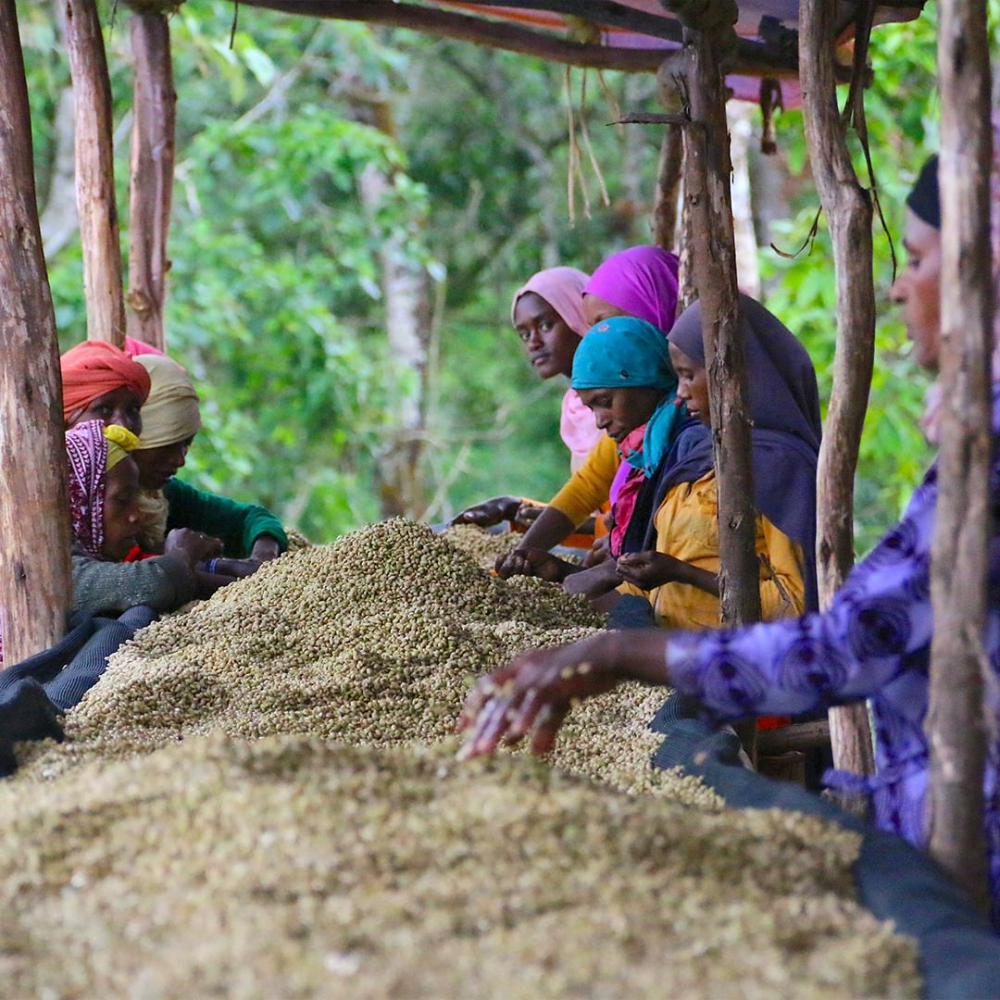
For AA and AB grades, some exporters further classify beans based on cupping results, from highest to lowest as TOP, PLUS (+), and FAQ—but these are not officially recognized Kenyan grading tiers. Auctions are the primary method of trading Kenyan coffee. Since the establishment of the Nairobi Coffee Exchange in 1937, auctions have become increasingly widespread. Most coffee beans, uniformly graded and inspected by the Kenya Coffee Board, are sold at auction through an agent system, where 50 licensed agents send sample beans to clients for cupping and bidding. Starting in 2006, Kenya also allowed 32 independent marketing agents to directly engage with foreign buyers without going through auctions, provided they meet standards for quality, storage, and bank guarantees. Currently, about 85% of coffee beans are traded via the auction system, with the remaining 15% traded through direct trade models.
Kenya’s coffee trade operates mainly through two models: the Nairobi Coffee Exchange auction (central auction system) and direct trade (often referred to as the “second window”). The auction system, established in the 1930s, has long been the dominant method of trading Kenyan coffee, held every Tuesday. Direct trade allows farmers to negotiate prices directly with foreign buyers (such as roasters or importers), typically before or during the harvest season, enabling high-quality coffee producers to earn greater income.
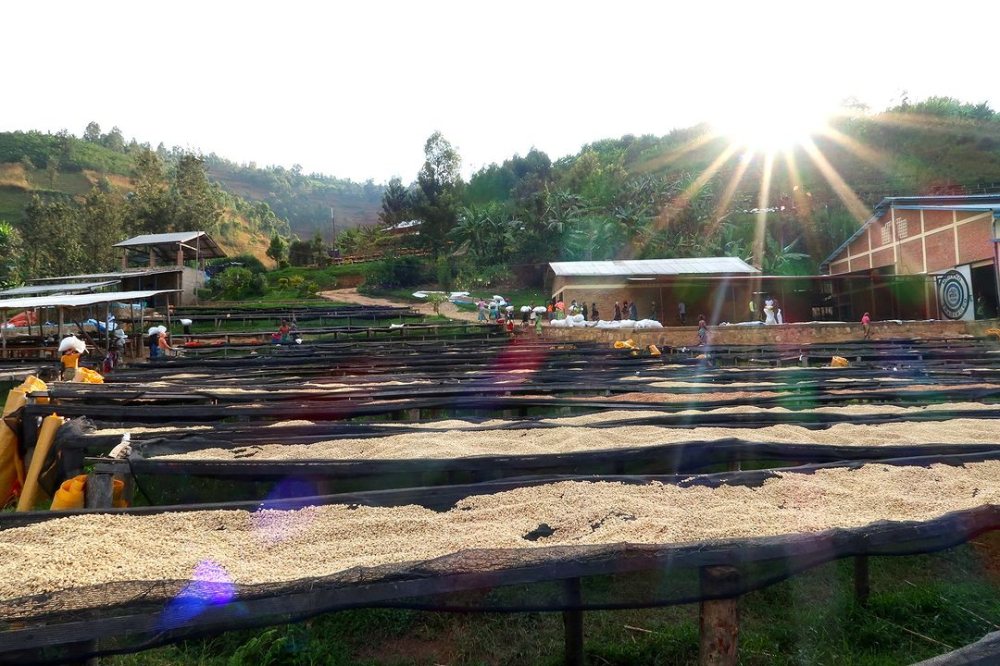
The Kenyan Asaliya coffee beans are produced by the Asali washing station in the Thika region, grown at elevations of 1,550–1,750 meters, processed using the washed method, and made from the SL28 and SL34 varieties. This coffee offers a rich flavor profile, including notes of tomato, Asian pear, black plum, brown sugar, plum, and cherry tomato. A light roast is recommended to highlight its bright and mellow acidity. For pour over, use a V60 filter, water at 90°C, 15 grams of coffee, a 1:15 coffee-to-water ratio, and a grind size similar to fine sugar (80% passing through a Chinese standard No. 20 sieve). The brewing steps are: bloom with 30 grams of water for 30 seconds, then pour in a slow circular motion until reaching 125 grams, pause when the water level drops near exposing the coffee bed, then continue pouring to 225 grams and stop. Total brew time is about 2 minutes. The wet aroma carries notes of ripe tomato and floral scents; the cup opens with cherry tomato and black plum flavors, featuring bright acidity, a clean and rich mouthfeel, prominent sweetness in the mid-palate, and a finish of berry notes and brown sugar sweetness, accompanied by a hint of green tea aroma.
The above content is compiled by CoffeeHunters, a coffee news website.


