







Introduction:Many coffee beginners, upon their first encounter with Mandheling, are often struck by its intense, bitter roastiness. However, upon closer tasting, one may also detect a subtle acidity that is not immediately obvious. This seemingly contradictory flavor profile is actually closely related to factors such as roast level, processing method, and brewing technique. This article will delve into the origins of the name “Mandheling,” explore the characteristics of Indonesia’s wet-hulling process, analyze how roast levels influence its flavor profile, and provide recommended pour over parameters for PWN Golden Mandheling to help you better capture the potential of this classic bean.
Many people’s most memorable impression upon first trying Mandheling is its strong, bitter roastiness—so much so that they come to believe this is how Mandheling is supposed to taste. However, after drinking it multiple times and becoming more familiar with its characteristics, they might be pleasantly surprised to discover a hint of subtle acidity hidden within. This seems at odds with the common perception of Mandheling as being “heavy on bitterness, light on acidity.” In fact, the acidity of Mandheling green beans is not inherently low; it is significantly influenced by roast depth, processing methods, and brewing techniques. Understanding these factors is key to truly appreciating the layered flavors of Mandheling.
The name “Mandheling” actually has an interesting historical anecdote behind it. It is said that during World War II, a Japanese officer drank a uniquely flavored cup of coffee at a café in Indonesia. Curious, he asked the shop owner what kind of coffee it was. Due to a language misunderstanding, the owner thought the officer was asking where he was from, and replied “Mandailing.” After the war, the officer, relying on his memory, asked an Indonesian supplier to ship 15 tons of coffee beans to Japan. The shipment was met with great acclaim, and the name “Mandheling” has been used ever since.
When it comes to Indonesian Mandheling, what stands out the most is its rich cocoa sweetness, accompanied by distinctive herbal, grass jelly, and earthy aromas. These unique flavor characteristics are inseparable from the region’s signature wet-hulling process. Compared to the more common washed or natural processing methods seen in other regions, wet-hulling is an innovative technique developed by Indonesian coffee farmers to adapt to the area’s rainy climate and limited sunlight.
The wet-hulling process generally follows these steps: First, the outer skin of the harvested coffee cherry is removed, leaving the parchment-covered beans, which are then soaked in water tanks for a short fermentation period. Next, the attached mucilage is washed off, and the beans undergo initial sun drying. When the moisture content drops to around 30–50%, and the beans reach a semi-hard, semi-soft state, a hulling machine is used to remove the outer protective layer of the seed, significantly shortening the subsequent drying time. Finally, the moisture content is controlled to around 12–13%, completing the entire process.
Because wet-hulling removes the seed’s protective husk earlier in the process, exposing the beans directly to air, it not only speeds up drying but also increases the risk of mold and defects. As a result, Indonesian Mandheling often exhibits unique complex aromas such as herbs, earth, and grass jelly—traits that have become important markers of its flavor identity.
For many, the first impression of Mandheling’s flavor profile might be low acidity, full body, and a caramel-like sweetness. However, in terms of the beans’ inherent qualities, Mandheling actually has considerable potential for acidity. With a moderate roast level—such as medium-light to medium-dark—the fruit acids transition noticeably from bright acidity to a softer, gentler acidity. As the roast deepens further, the acidity gradually diminishes, giving way to a heavier body and richer notes of caramel and chocolate.
Most Mandheling on the market is dark roasted, mainly for two reasons: first, its processing method and variety characteristics tend to result in relatively higher defect rates, and dark roasting can effectively mask these flaws; second, Mandheling was initially popularized by the Japanese market, where consumers generally prefer coffee with a bold, steady flavor. However, with the rise of the specialty coffee trend, more and more roasters are experimenting with light roasts of Mandheling to showcase its inherent acidity and fruity notes, breaking the public’s single perception of it as merely “bitter.”
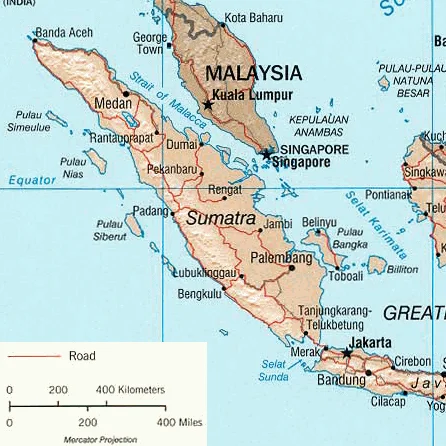
Among the many Mandheling-growing regions, Golden Mandheling from northern Sumatra, Indonesia, has long been regarded as the benchmark for quality. These beans, carefully selected by Indonesia’s PWN company, are strictly chosen for their size (18+ screen) and quality—with fewer than 3 defects per 300g sample—and undergo three rounds of manual sorting to ensure each bean meets high standards. This rigorous process results in Golden Mandheling having a cleaner flavor profile and more pronounced sweetness.
For this dark-roasted PWN Golden Mandheling, the following pour over parameters are recommended to fully showcase its rich character: use a KONO filter cone, with a water temperature of 88°C, a dose of 15 grams, and a brew ratio of 1:15. The grind size can be referenced to approximately 70% extraction through a Chinese standard No. 20 sieve—a range that balances extraction efficiency and flavor expression.
In practice, start by pouring 30 grams of hot water for a 30-second bloom. Then, using a slow, thin stream, begin pouring from the center and spiral outward to reach 125 grams. When the water level is about to expose the coffee bed, continue pouring in a circular motion until the total volume reaches 225 grams, with the overall brew time controlled to around 2 minutes. The advantage of the KONO filter cone lies in its smooth walls and 12 short ribs at the bottom, which allow the filter paper to adhere tightly to the cone, reducing airflow and thus extending the contact time between water and coffee grounds—helping enhance body and concentrate flavor.
If unexpected acidity appears during extraction, it may be related to low water temperature or too fast a flow rate. It’s important to note that water temperature directly affects the release of flavor compounds: the higher the temperature, the more rich flavor compounds can be extracted; conversely, too low a temperature can cause acidity to stand out excessively. In addition, brew time and flow rate are also crucial—acidity typically extracts first, and if pouring is too fast, only the early-stage acidic and sweet compounds may be drawn out, missing the deeper caramel and nutty tones. Therefore, it is recommended to use a 15-gram dose as a baseline, and with the KONO filter cone, aim for a 2-minute extraction time to fully realize the potential of a dark-roasted Mandheling.
The above content is compiled by CoffeeHunters, a coffee news website.


