







Introduction:Jamaica Blue Mountain No.1 coffee beans are renowned for their rarity and high quality, yet many people still have only a vague understanding of their grading system and true origins. This article delves into the grading standards of Blue Mountain coffee, the environmental background of its growing regions, the history of the Clifton Estate, and offers practical medium-dark roast pour over recommendations along with flavor profiles to help you fully understand this top-tier coffee and make confident purchasing decisions.
In the minds of coffee enthusiasts, Blue Mountain coffee is often synonymous with "premium," but very few truly understand its grading and origin story. In Jamaica, the official body "Jamaica Coffee Industry Board" classifies coffee beans into three major grades based on cultivation altitude: Blue Mountain, High Mountain, and Prime. Among them, Blue Mountain No.1 is not only the highest grade within the Blue Mountain category, but also particularly precious due to its strict specifications.
According to regulations, Blue Mountain No.1 green beans must be 17/18 mesh in size, with a defect rate no higher than 2%. It is precisely because of such stringent screening that the yield of Blue Mountain No.1 is extremely limited, and its price is relatively high. If you’ve seen it in specialty coffee shops, you’ve likely been struck by its eye-catching price tag.
Many novice coffee drinkers may already know a bit about the characteristics of beans from regions like Yirgacheffe or Sidamo, but the allure of Blue Mountain coffee is often well-known even before one delves deep into the specialty coffee scene. This classic coffee from Jamaica, unlike the bright acidity commonly found in African beans, presents a more balanced, rich flavor with nutty undertones, making it highly favored by seasoned coffee aficionados.
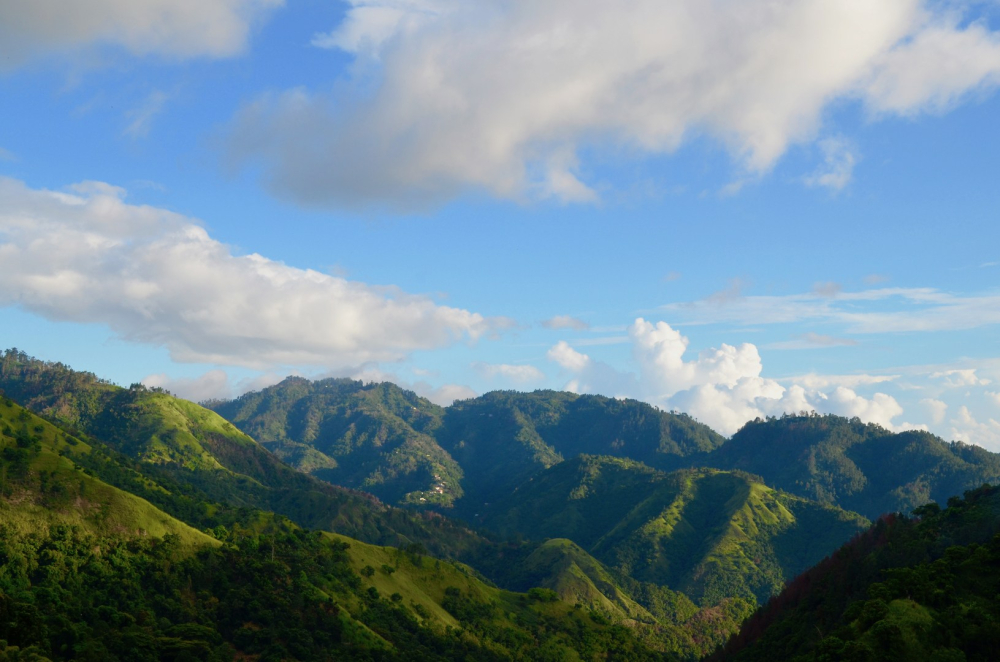
When talking about Blue Mountain coffee, one must mention its birthplace — the Blue Mountains. This mountainous region located in the northeast of Jamaica, thanks to an exceptional combination of geographical location and climate conditions, fosters one of the few environments in the world capable of producing premium coffee. The name "Blue Mountain" comes from the unique blue hue reflected between the sunlight on the mountains and the sea, making the entire range appear as if enveloped in a layer of blue mist.
The history of coffee cultivation in Jamaica dates back to the early 18th century. At that time, European colonial expansion brought coffee cultivation techniques and varieties to the island. In 1728, Sir Nicholas Lawes, then Governor of Jamaica, specifically introduced descendants of Typica variety from Martinique, and conducted trial plantings at the foothills of the St. Andrews area. Only after successful trials were they gradually expanded to the Blue Mountain region.
The Jamaica Coffee Industry Board maintains extremely strict quality requirements. Although there are several coffee-growing regions across the country, only beans grown at altitudes above 1000 meters can be called "Blue Mountain coffee." Those grown between 500 to 1000 meters are classified as "High Mountain coffee," and those below 500 meters as "Prime coffee." Within the Blue Mountain grade, it can be further subdivided into four categories: No.1, No.2, No.3, and Peaberry, with Blue Mountain No.1 being the highest grade.
In addition to altitude and variety requirements, Blue Mountain No.1 beans must also be 17/18 mesh in size, with an overall defect rate strictly controlled below 2%. As a result, the annual yield of Blue Mountain No.1 beans that meet these criteria is extremely small, contributing to its rare and prestigious status in the market.
It’s worth mentioning that the market often sees deep-roasted beans marketed as having "Blue Mountain flavor" or as "Blue Mountain blends." Though priced high, these may not actually come from Jamaica’s Blue Mountains. Some merchants exploit consumers’ fascination with Blue Mountain, using appearance or roasting techniques to mimic its characteristics. But genuine Blue Mountain No.1 has official certification and origin documentation. Additionally, Jamaica is one of the few countries in the world that exports green beans in wooden barrels, which can also serve as one of the criteria for authenticity.
Currently, many of the top-tier Blue Mountain No.1 beans on the market come from the Clifton Mount Estate. This historic estate located in the Blue Mountains has been cultivating coffee since the late 18th century and is one of the oldest coffee farms in the area. In its early days, the estate was once owned by a gentleman who lost his beloved. To avoid being reminded of his loss, he briefly rented out the land to travelers on a short-term basis, before gradually transitioning into a coffee plantation.
Entering the 20th century, Clifton Mount Estate once became one of the largest coffee estates in Jamaica, but later fell into obscurity due to management issues. It wasn’t until 1978, when the Sharp family took over and recommitment to operations, that it began to revive. In 1984, they actively rehabilitated and expanded the cultivation area. The family was dedicated to improving coffee quality, and after 2003, engaged in extensive exchanges with major global coffee-growing regions. They refined traditional washed processing methods and built BMCP, the largest specialized processing facility in the area.
In terms of quality control, the estate performs outstandingly, having been awarded the honor of "Best Coffee Estate" by the Jamaican Ministry of Agriculture in the 2017/2018 season. Industry insiders have previously compared Blue Mountain No.1 beans from various estates across the Blue Mountains, and ultimately concluded that the quality of beans from this estate stands out exceptionally.
For this Blue Mountain No.1 coffee bean, it is recommended to use a medium-dark roast to bring out its rich nutty character and balanced sweet, sour, and bitter flavors. For actual pour over brewing, it is advised to use a KONO filter, with water temperature controlled at 88°C, 15 grams of coffee grounds, a 1:15 coffee-to-water ratio, and grind size approximately 75% through a Chinese No. 20 sieve. Specific steps are as follows: start with a 30-second bloom using 30 grams of hot water, then slowly pour in a thin stream in circular motions from the center outwards up to 125 grams. When the water level in the filter is about to drop below the coffee bed, continue pouring up to 225 grams, with total extraction time around 2 minutes.
Brewed with these parameters, the Blue Mountain No.1 offers pronounced flavors upon entry, with intense nutty aromas, a perfectly balanced sweet-sour-bitter profile, a rich mouthfeel, and a long-lasting aftertaste — making it a classic choice for experiencing the true essence of Blue Mountain.
The above content is compiled by CoffeeHunters, a coffee news website.


