







Introduction:As a key specialty coffee-producing region in Africa, Rwanda boasts unique-flavored Bourbon coffee varieties, thanks to its high-altitude terrain, fertile volcanic soil, and abundant sunshine. This article delves into the variety background, regional distribution, processing methods, and flavor profiles of Rwandan washed coffee, offering insights into how this “Land of a Thousand Hills” showcases layers of berries, citrus, and green tea through refined washed processing techniques. It’s an essential beginner’s guide for coffee enthusiasts who enjoy pour over coffee and exploring nuanced flavor profiles.
Rwanda enjoys uniquely favorable geographical and climatic conditions, where temperate and tropical highland climates intersect, with most coffee farms locatedat elevations between 1700 and 2000 meterson high mountain slopes, creating an ideal environment for growing Arabica beans and earning the country its reputation as the “Land of a Thousand Hills.” The high altitude results in significant day-night temperature variations, which not only slow down the ripening process of coffee cherries but also promote sugar accumulation and the development of flavor compounds.
The country’s main coffee-growing regions are concentrated in the south and west. Due to differences in terrain and microclimates, each area exhibits distinct flavor profiles. In the south, such as in Huye and Nyamagabe, the higher altitudes often produce coffee with brightfloral and citrus notes; the Nyamasheke region near Lake Kivu in the west, with its abundant water sources and pronounced day-night temperature differences, typically yields coffee withfull body and intense aromas, featuring vibrant flavors reminiscent of berries and fruit juices. The eastern Ngoma Lakes area offers chocolate and fruity notes, while the north is characterized by citrus, nuts, and caramel aromas. Each region’s flavor characteristics are closely tied to its local soil, altitude, and traditional processing methods.
Over 90% of Rwanda’s coffee trees are of the Bourbon variety and its derivatives, which were originally introduced from Latin America. These varieties exhibit excellent disease resistance and stable yield performance. Unlike some Latin American countries that have gradually reduced Bourbon cultivation due to its lower disease resistance, Rwanda has successfully preserved and optimized this variety, making it a cornerstone of the country’s specialty coffee. Even among globally renowned Brazilian Red Bourbon, Colombian Pink Bourbon, and Yellow Bourbon, Rwandan Bourbon stands out for its unique regional adaptability and consistently high-quality potential, attracting attention from many roasters and coffee connoisseurs.
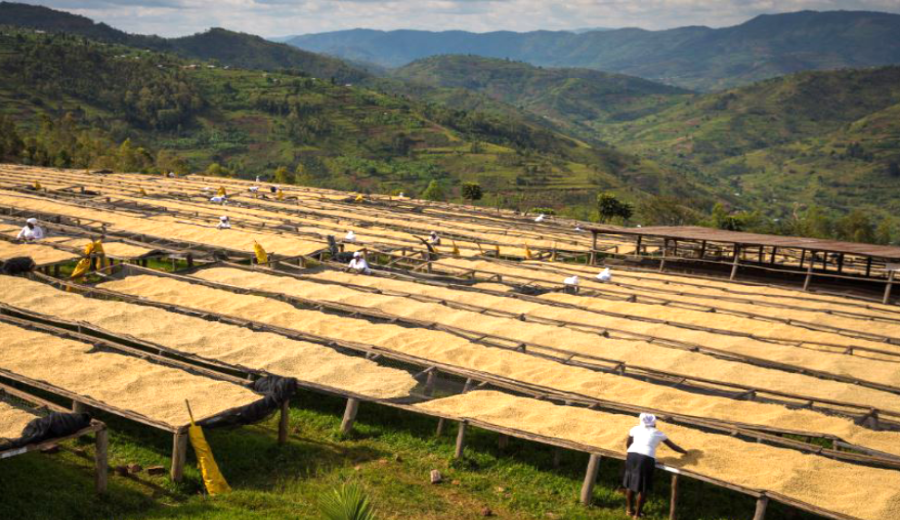
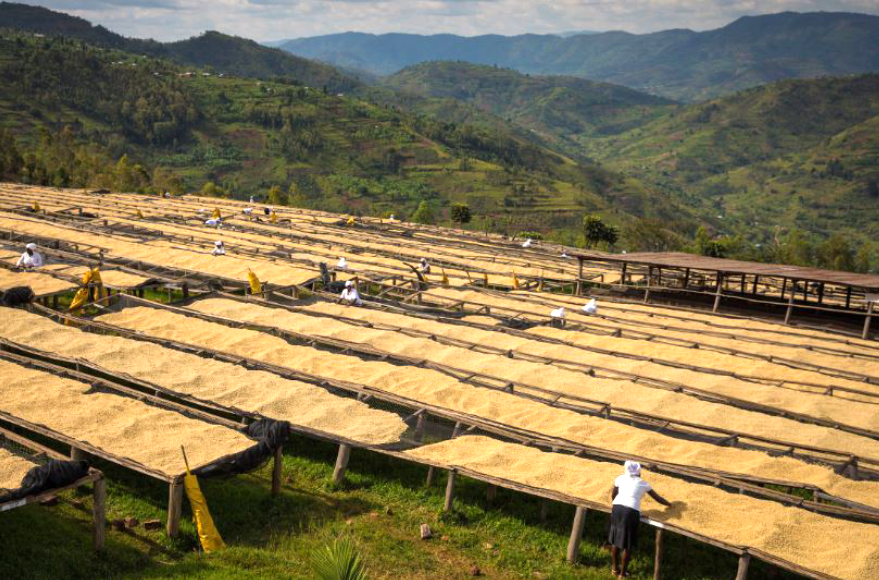
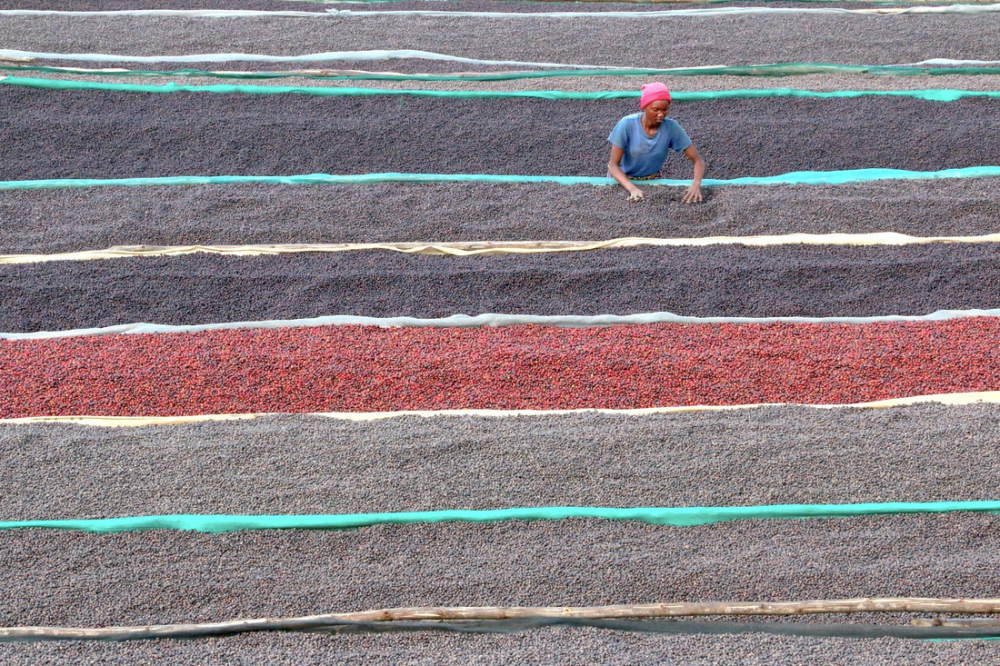
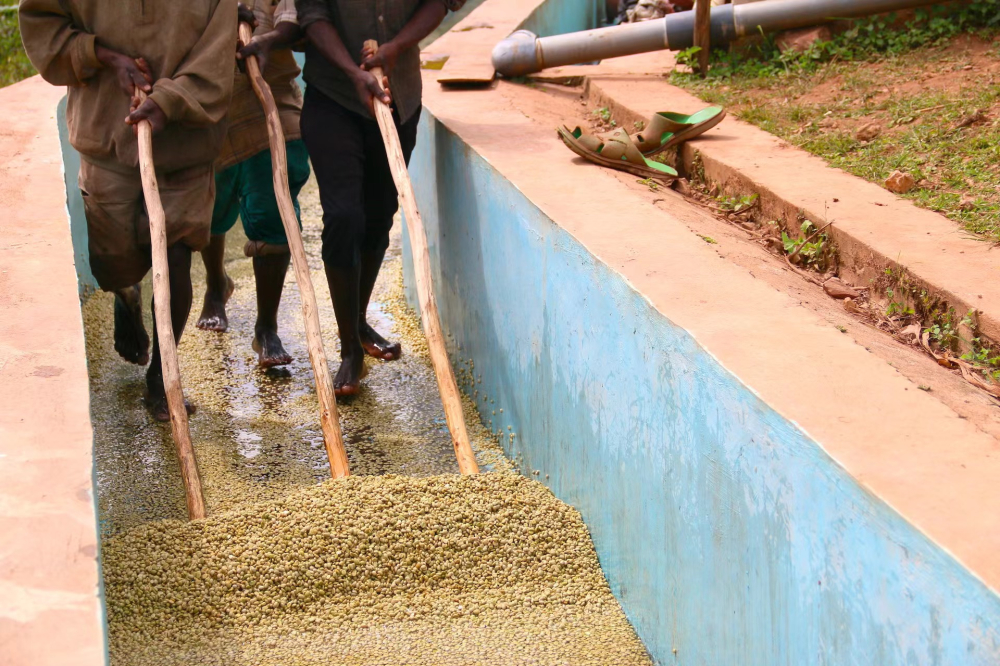
In terms of processing methods, Rwanda predominantly employs refinedwashed processing, which effectively highlights the coffee’s clean acidity and delicate flavor profile. The general process begins with the selection of ripe red cherries, followed by floatation to remove unripe or defective beans. The skin and pulp are then mechanically removed, after which the mucilage-covered beans undergo controlled fermentation for approximately12 to 36 hoursat regulated temperatures to naturally break down the sticky mucilage layer. The fermented beans are thoroughly rinsed with clean water to remove residual mucilage, and the parchment-covered green beans are then spread on raised drying beds or cement patios for15 to 22 days of sun dryinguntil their moisture content is steadily reduced to11% to 13%, ensuring bean quality and stability during subsequent roasting.
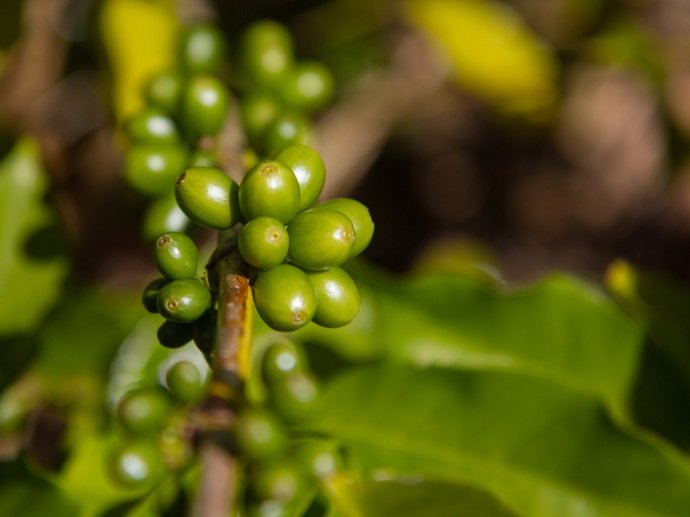
Notably, Rwandan coffee farmers pay meticulous attention to detail during processing. From the harvesting stage, only fully ripe red coffee cherries are selected to ensure that only the highest-quality fruits proceed to further processing. Industry insiders point out that washed processing imparts brighter, cleaner acidity, higher clarity, and a more consistent and easily recognizable overall flavor profile, making it an ideal choice for exploring the intrinsic characteristics of a region’s terroir. As such, when recommending coffees from Rwanda or other regions, washed beans are often the first choice, helping to deeply understand how the specific climate and cultivation conditions of an area influence its final flavor expression.
If you’ve already sampled numerous offerings from well-known regions such as Ethiopia and Kenya, consider turning to Rwanda to experience the unique charm of its washed Red Bourbon. This specialty-grade coffee, produced in the western Nyamasheke region at an altitude of approximately1500 to 1700 meters, is processed using the washed method and showcases the classic traits of the Bourbon variety, combined with layers of complexity imparted by the local microclimate.
Rwanda · Washed Red Bourbon Coffee Beans
Origin: Rwanda
Region: Nyamasheke
Altitude: 1500~1700 meters
Variety: Red Bourbon
Processing Method: Washed
Flavor Profile: Berries, Apple, Green Tea, Apricot
To fully highlight the delicate flavors of this coffee, a medium-light roast profile was used, and cupping was conducted within8 hours of roastingto capture the optimal flavor window. During cupping, the dry aroma clearly reveals the refreshing scents of apple and green tea, accompanied by subtle floral notes, creating a fresh first impression. After hot water is poured, the aromas of berries and green tea further unfold, enriching the overall aromatic complexity.
Upon tasting, the first impression is a bright berry acidity with sweet undertones, which quickly transitions as the acidity evolves, allowing the clean sweetness of apple and apricot to take center stage on the palate. The finish lingers with echoes of green tea and apple, resulting in a balanced, layered cup with exceptional clarity — a high-quality coffee suitable for everyday pour over brewing and in-depth tasting, allowing one to fully appreciate the beauty of Rwanda’s high-altitude terroir and washed processing craftsmanship.
The above content is compiled by CoffeeHunters, a coffee news website.


