







Introduction:Delve into the evolution of Yunnan’s small-grind coffee varieties—from early Typica to today’s dominant Catimor—and explore their differences in acidity, bitterness, and flavor. This article also details the historical background of Yunnan coffee’s three planting waves and provides pour over parameters for sun-dried Typica to help you more precisely appreciate this specialty coffee with notes of citrus, berries, and a lingering black tea finish.
As the birthplace of coffee cultivation on the Chinese mainland, Yunnan has gradually secured a place in the global specialty coffee market since the first coffee tree was planted in Zhukula Village, Binchuan County, in 1904. Over a century of development, the region’s coffee has transitioned from a single variety to large-scale cultivation of Catimor, and now toward a renaissance in specialty production—each step reflecting the evolution of local climate, market demand, and farming techniques. The often-discussed “acidity” and “bitterness” when tasting Yunnan coffee are actually greatly influenced by the variety and processing method.
Many consumers ask when selecting Yunnan coffee beans: “Is Yunnan small-grind black coffee more acidic or bitter?” In fact, it depends on the variety and processing method you choose. For example, the sun-dried Typica grown at a certain coffee brand’s own Lincang estate has a distinctly clear flavor profile: the cup opens with pronounced citrus and berry notes, followed by subtle fermented wine-like aromas, a caramel sweetness through the mid-palate, and a tea-like, silky-smooth finish reminiscent of black tea with a creamy texture—a highly balanced specialty-grade coffee.
With the rise of the “guochao” (national trend) movement, more and more coffee enthusiasts are turning their attention to domestic coffee, especially Yunnan small-grind coffee. Walk into a café, and you’ll often hear customers ask: “Do you have any Yunnan coffee beans? Do you sell small-grind coffee?” In fact, the term “small-grind” originally came about because the early Typica variety planted in Yunnan had smaller beans compared to the medium-grind Robusta commonly grown at the time. However, due to the later widespread cultivation of Catimor for its high yield and disease resistance, what most people refer to as “Yunnan small-grind coffee” today is actually mostly Catimor.
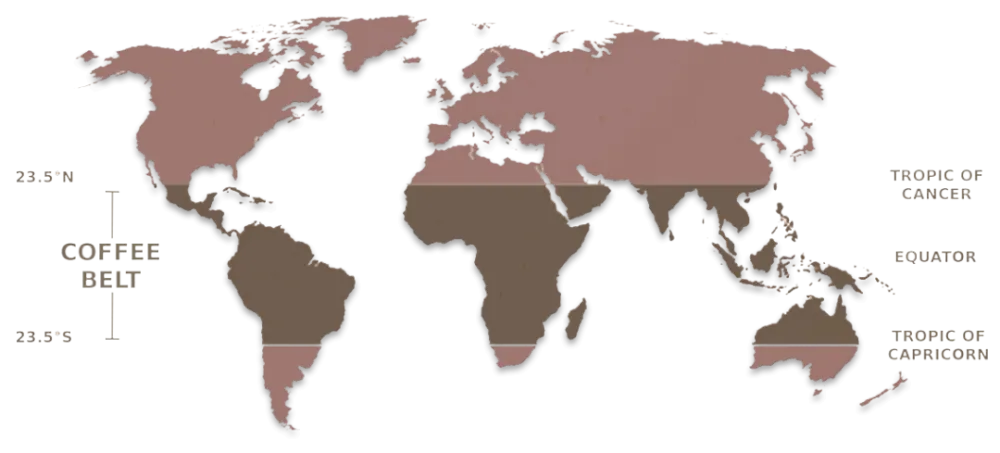
Yunnan’s ability to become one of the few regions in China suitable for coffee cultivation hinges on its location within the global “coffee golden belt”—between the Tropic of Cancer and the Tropic of Capricorn—along with its favorable altitude and climate conditions. Besides Yunnan, Taiwan is another region that meets these criteria. Coffee is not native to China; the earliest written records date back to 1877, when Fujian Governor Ding Richang mentioned in the “Post-Suppression Regulations for Indigenous Peoples and Mountain Development” the encouragement of planting economic crops like coffee to replace traditional hunting lifestyles.
Tracing the history of coffee cultivation on the Chinese mainland, the earliest record goes back to 1904, when French Catholic missionary Tian Deneng was sent from the Dali Diocese to Zhukula Village, Binchuan County, to build a church. He personally planted the first coffee tree there, which is still regarded as the symbolic origin of Yunnan coffee. Subsequently, coffee cultivation saw its first wave of development in the 1950s and 1960s, primarily managed by the Yunnan Agricultural Reclamation system. The varieties planted were mainly locally propagated Typica and a small number of Bourbon variants, mainly exported to the Soviet Union to repay loans. However, after the loan repayment period ended and with the onslaught of diseases, many coffee trees were cut down, and the planted area once shrank to less than 3,000 mu.
Entering the 1980s, with the advent of reform and opening-up and the rise of a market economy, Yunnan coffee experienced its second wave of planting. Starting in 1988, international coffee brand Nestlé actively got involved, promoting the disease-resistant and high-yield Catimor variety. Developed by Portugal’s CIFC in 1959, Catimor is a hybrid of Timor and Caturra, inheriting Robusta genes that grant it strong resistance to leaf rust and pests, with yields several times higher than Typica. Since growers prioritized yield and profit, Catimor gradually replaced Typica as Yunnan’s dominant variety, peaking at around 90% of plantings.
After 2000, with China’s economic rise and the growing awareness of specialty coffee, Yunnan entered its third wave of coffee cultivation. Consumers no longer pursued only yield and price but began to focus on variety, processing methods, and flavor profiles. Currently, Yunnan coffee is steadily advancing toward greater specialization, with some producers even replanting Typica and showcasing its unique potential through refined processing techniques.
To experience the original flavor profile of Yunnan coffee, you can try a washed, medium-light roasted “Brand X. Yunnan Small-Grind.” Its flavor is dominated by chocolate, brown sugar, and nuts, making it suitable for those new to Yunnan beans. Additionally, understanding the characteristics of different varieties can also help you more accurately select coffee beans that suit your taste.
While the Catimor variety boasts advantages in yield and disease resistance, its Robusta lineage can occasionally impart earthy or fishy tones if processed improperly. However, with advancements in processing technology, many producing regions have significantly improved these issues, showcasing cleaner, brighter fruit notes. A certain coffee brand, aiming to deeply explore Yunnan’s terroir, established its own estate in Lincang—a region with altitudes exceeding 1,000 meters, an average annual temperature of about 17°C, distinct dry and wet seasons, and abundant sunshine, providing ideal growing conditions for Typica.
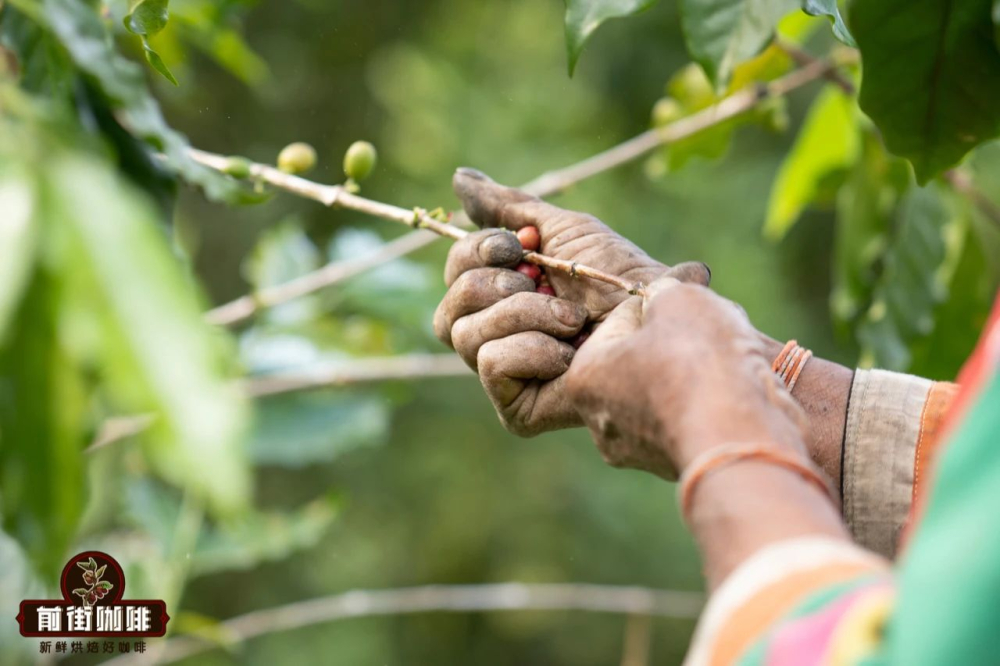
The Typica from the Brand X Lincang estate is processed using the sun-dried method. Ripe cherries are evenly spread on raised beds, regularly turned to ensure uniform drying, prevent off-flavors, and allow the sugars in the pulp to fully penetrate the seeds, imparting a richer sweetness and complex layers to the coffee. In terms of roasting, the roaster opted for a medium-light level to preserve floral and fruity notes and a clear acidity while bringing out a full-bodied mouthfeel.
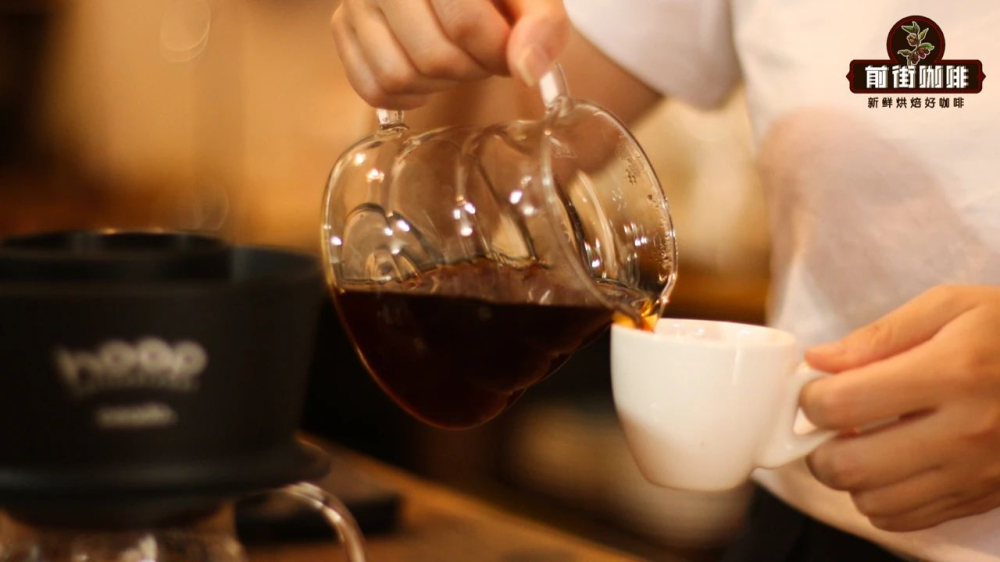
If you plan to brew this sun-dried Typica at home using a pour over method, it is recommended to use a Hario V60 filter cone, with water temperature controlled at around 87°C, a coffee-to-water ratio of 1:15, and a grind size referenced to 75% passing through a Chinese standard No. 20 sieve—approximately equivalent to a medium-fine grind. Since the coffee beans are freshly roasted (usually within 5 days), it is advised to let them rest for 4–7 days for degassing before brewing to allow the flavors to stabilize. During brewing, start with a 30-second bloom, then pour water in a small circular motion from the center out to 125 grams, wait for the water level to drop, and then continue pouring to 225 grams. The total extraction time should be around 2 minutes, fully highlighting the layered flavors of citrus, berries, and a black tea finish.
The above content is compiled by CoffeeHunters, a coffee news website.


