








Introduction:The new season of Huakui 7.0 coffee beans has officially launched. Many coffee enthusiasts, after trying it for the first time, found that its flavor profile differs from previous impressions. This article delves into the historical background, origin evolution, and reasons behind the flavor variations of the Huakui series, while providing a comprehensive introduction to the true nature of Huakui 7.0. Through cupping data and practical pour over recommendations, it helps you master the optimal extraction method to savor the citrus, berry, and tea-like layers of this Sidamo natural-processed bean.
The new season of Huakui 7.0 coffee beans for 2023 has arrived on the market, once again sparking discussions about its flavor characteristics and authenticity. Since 2017, Huakui, as a natural-processed G1 coffee bean from Ethiopia’s Guji Hambela region, has won market favor with its enchanting strawberry-cream-like flavors. However, annual variations in climate, processing conditions, and harvest scope mean that the “Huakui flavor” actually changes each year. Understanding these underlying factors can help you more objectively appreciate the unique personality of the current season’s Huakui.
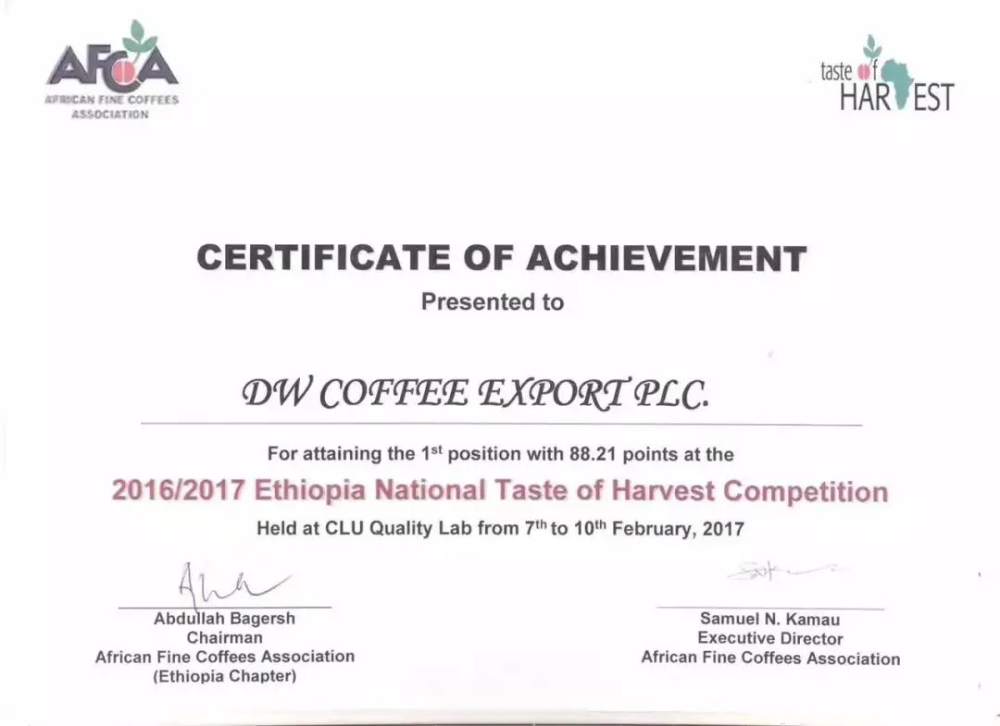
Looking back to 2017, during the TOH (Taste of Harvest) competition organized by the African Fine Coffees Association, a natural-processed lot from the Buku Abel village washing station stood out in the natural category with its intense berry and creamy aromas, taking home the championship. This green coffee was later introduced to the Chinese market under the name “Huakui,” symbolizing its elegance and premium quality. That same batch also gained fame during the World Brewers Cup that year, when Chinese competitor Li Jianfei demonstrated its potential through exquisite pour over techniques, rapidly propelling the name Huakui to stardom.

Many people mistakenly believe that Huakui must come from the Buku Abel washing station. In reality, Buku Abel is a village within Dimtu town in the Guji Hambela region, which includes several small washing stations such as Buku Abel Kebele, Tirtiro Goye Kebele, Seke Bokosa, Haro Soresa, and Buku Saysay. The natural-processed G1 coffee beans produced by these five villages are all included in the Huakui series. In earlier years, due to translation and marketing reasons, Buku Abel was often mistaken for a single large washing station, but it is actually just a key hub for coffee processing in the area.
It’s worth noting that Buku Abel village covers a relatively small area of about 25 square kilometers and contains several washing stations, each with approximately 20–30 natural drying beds. Each station processes around 50–100 tons of coffee beans per season. Based on this estimate, the entire village can produce up to 500 tons of natural-processed G1 coffee beans per season. Although Buku Abel is the main source, other nearby villages such as Tirtiro Goye are also uniformly managed by DW Company, so their natural beans also fit the definition of Huakui.
As for why some consumers question “why Huakui 7.0 doesn’t taste like Huakui,” it actually relates to the inherent nature of coffee farming. As an agricultural product, coffee flavor is influenced by multiple factors in a given year, including climate, sunlight, rainfall, temperature, and processing techniques. The 2017 Huakui is considered classic because that year’s conditions aligned perfectly to create its unique strawberry and cream aromas. But such a “golden year” is rare and unrepeatable, and cannot serve as a fixed standard for every year’s Huakui.
 In fact, starting in 2018, domestic green bean merchants have used the suffix “X.0” to distinguish different seasonal batches of Huakui, such as Huakui 2.0 in 2018, Huakui 3.0 and 3.1 in 2019. A coffee business discovered during cupping that certain smaller-sized Huakui beans had aroma profiles closer to the 2017 championship batch, leading to the subsequent distinction of “small-bean Huakui,” which is not part of the mainstream X.0 series. The 2023 Huakui 7.0 represents a new season and its flavor profile aligns more closely with typical Sidamo natural beans. For Huakui 7.0, being freshly harvested, the beans have higher moisture content and may initially exhibit a noticeable grassy smell. To fully realize its potential, the roaster at one coffee merchant opted for a medium-light roast to preserve more fruit acidity and floral-fruity notes. Cupped 12 hours after roasting, the results showed a dry aroma with a fresh citrus note, while the wet aroma exuded distinct berry tones; upon sipping, one could perceive citrus acidity, apricot sweetness, passion fruit aroma, and a soft tea-like aftertaste, delivering an overall well-balanced and layered performance.
Judging by the typical flavor profile of the Sidamo region, Huakui 7.0 showcases traits of citrus sweetness, rich berries, and tropical fruits, making it a highly representative natural-processed coffee bean. For pour over enthusiasts who enjoy bright acidity and fruity flavor profiles, this bean is definitely worth trying.
Below are the recommended pour over parameters for Huakui 7.0, suitable for use with a Hario V60 filter:92°CWater temperature should be controlled at, with a suggested coffee dosage of15 grams1:15, and a coffee-to-water ratio set at80%. The grind size should be medium-fine, with a recommended fineness as measured by a Chinese No. 20 sieve at about. Be sure to allow the coffee beans to undergoa 4 to 7-day rest period
before brewing, allowing sufficient CO₂ release for a more complete flavor expression.The specific brewing steps are as follows: Begin by pouring30 grams of hot waterfor the bloom, for about30 seconds, allowing the coffee grounds to fully expand. Then, using a slow, small stream, circle slowly from the center outward, pouring up to125 gramsof water; as the water level nears the top of the coffee bed, continue circling to reach a total of225 gramsof water. Once the water in the filter has completely dripped through, remove the filter. The total brew time is recommended to be aroundapproximately 2 minutes
The above content is compiled by CoffeeHunters, a coffee news website.


