







Introduction:Jamaican Blue Mountain coffee is renowned for its rarity and high quality. Its unique flavor profile and strict grading system have made it a dream coffee for enthusiasts. This article delves into the history of Blue Mountain coffee, how its growing environment influences its flavor, how to identify genuine Blue Mountain beans, and offers professional pour over brewing recommendations and parameters so you can experience the rich sweetness of Blue Mountain No. 1 at home.
Jamaican Blue Mountain coffee has long been hailed as a legend in the specialty coffee world—not only for its exceptional flavor but also due to its limited production and high-grade classification standards. This article will start with the origins of Blue Mountain coffee, exploring how its unique growing environment shapes the unforgettable “Blue Mountain taste,” and will analyze in detail its grading categories and identification methods. At the same time, using the Blue Mountain No. 1 from the Clydesdale Estate as an example, we’ll share practical pour over brewing tips and parameter settings to help you consistently extract the essence of this classic coffee at home.
In an era when specialty coffee was not yet mainstream, Jamaican Blue Mountain coffee had already established its place in the coffee pantheon thanks to its outstanding quality. As early as the 1960s, Blue Mountain coffee enjoyed international acclaim. However, in 1969, a powerful hurricane severely damaged Jamaica, impacting the local coffee industry. Japanese UCC Corporation quickly stepped in to help, providing not only financial support but also introducing advanced eco-friendly cultivation techniques to aid the recovery of Blue Mountain coffee production. To show gratitude for Japan’s support, the Jamaican government signed a thirty-year agreement with Japan, stipulating that 90% of Blue Mountain coffee production would be prioritized for the Japanese market, with only about 10%—approximately 245 tons—allocated to other regions. This supply-demand structure, combined with aggressive marketing by the Japanese market, led to skyrocketing prices for Blue Mountain coffee, making it one of the most expensive coffees in the world.
During the agreement period, although not all Blue Mountain coffee was consumed locally in Jamaica, some high-quality beans were still sold at premium prices to other Asian markets such as Singapore, South Korea, as well as Taiwan and Hong Kong in China. With the momentum from Japanese marketing, the Blue Mountain craze gradually spread to mainland China, becoming synonymous with “top-tier coffee” for many older generations. After the 2008 global financial crisis, the Jamaican government opened up more Blue Mountain quotas to other markets, and the agreement with Japan also came to an end, allowing Blue Mountain coffee to enter the view of more consumers, including those in mainland China. Today, many consumers can purchase authentic Blue Mountain No. 1 from the Clydesdale Estate in Jamaica through official channels. These coffee beans are mostly processed using the washed method, preserving their most original flavor characteristics.
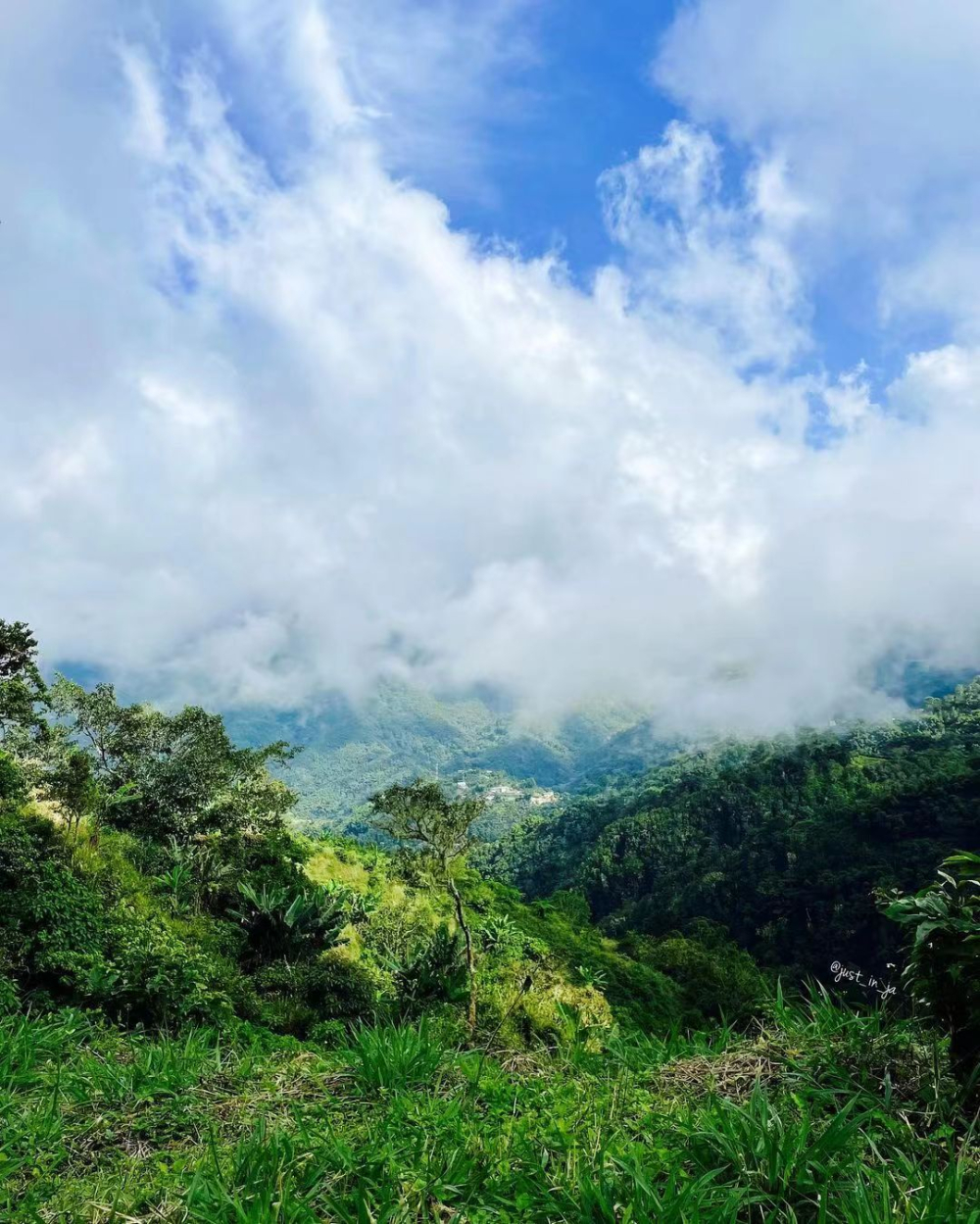
What sets Blue Mountain coffee apart is the uniqueness of its growing environment. The Blue Mountains of Jamaica are located in the eastern part of the country, situated in an earthquake zone. Volcanic activity has enriched the soil with abundant minerals, creating highly fertile growing conditions. The Blue Mountains are not only the highest peak in the Caribbean but also boast fresh air and stable climate. The region experiences frequent rainfall, cool and humid temperatures year-round, and coffee trees grow slowly in the misty environment. The large diurnal temperature variation caused by the high altitude allows coffee cherries more time to accumulate flavor compounds, ultimately resulting in a sweet and mellow taste. Additionally, due to the rugged terrain, coffee harvesting mostly relies on skilled female workers who handpick ripe cherries, ensuring that only the best-quality coffee beans proceed to further processing.
Jamaica has long planted only Arabica varieties, and the local Typica variety remains non-hybridized, preserving its pure lineage. Compared to other producing regions, Jamaica—as a relatively isolated island nation—has a unique microclimate that has enabled Blue Mountain Typica to develop stronger disease resistance, particularly against coffee berry disease, thereby maintaining stable yield and quality levels.
The market is filled with various coffee products labeled as “Blue Mountain,” but in reality, most are far from genuine Blue Mountain coffee. Many consumers see terms like “Blue Mountain flavor,” “Blue Mountain blend,” or “Blue Mountain mix” on e-commerce platforms, which are often just marketing buzzwords rather than beans actually from the Blue Mountains of Jamaica. Truly world-class Blue Mountain coffee is not only expensive but also hard to come by due to its scarcity. Therefore, if you come across “Blue Mountain beans” priced at just a few dozen yuan, you should be wary.
A key factor in identifying authentic Blue Mountain coffee lies in its transportation method. Jamaica is the only producing region in the world that uses handmade oak barrels to ship green beans. Compared to common burlap sacks, oak barrels can effectively regulate internal and external humidity, prevent aroma loss, and maintain stable bean moisture content, which is one of the reasons why Blue Mountain coffee achieves more controllable roast quality. In addition, all Blue Mountain coffee exports must be authorized by a permit issued by the Jamaican government and undergo strict inspection and certification by the Jamaica Coffee Industry Board. Each exported batch of Blue Mountain coffee comes with an official quality certificate and certificate of origin. When purchasing, consumers can ask merchants to provide relevant certification documents to ensure they are buying genuine Blue Mountain coffee.
Blue Mountain coffee is rigorously graded based on multiple indicators of the green beans, with inspections and certifications carried out by the Jamaica Coffee Industry Board (CIB). Evaluation criteria include bean size, defect rate, color, uniformity, as well as cupping performance after roasting—such as dry fragrance, wet aroma, acidity, flavor, body, and cleanliness. Bean size is tested using sieves of different diameters, and only those that can pass through a 17-mesh sieve or larger meet the specifications for Blue Mountain No. 1. Color evaluation combines visual observation with colorimeter readings, with blue-green being the highest-grade indication.
Based on comprehensive evaluation metrics, Blue Mountain coffee is divided into four grades, from highest to lowest: NO.1 (Blue Mountain No. 1), NO.2 (Blue Mountain No. 2), NO.3 (Blue Mountain No. 3), and PB (Blue Mountain Peaberry). Among them, Blue Mountain No. 1 is the highest grade, requiring green bean size of 17 mesh or above, a defect rate below 3%, a moisture content of about 13%, and demonstrating rich aroma, balanced taste, low acidity, and long-lasting aftertaste during cupping.
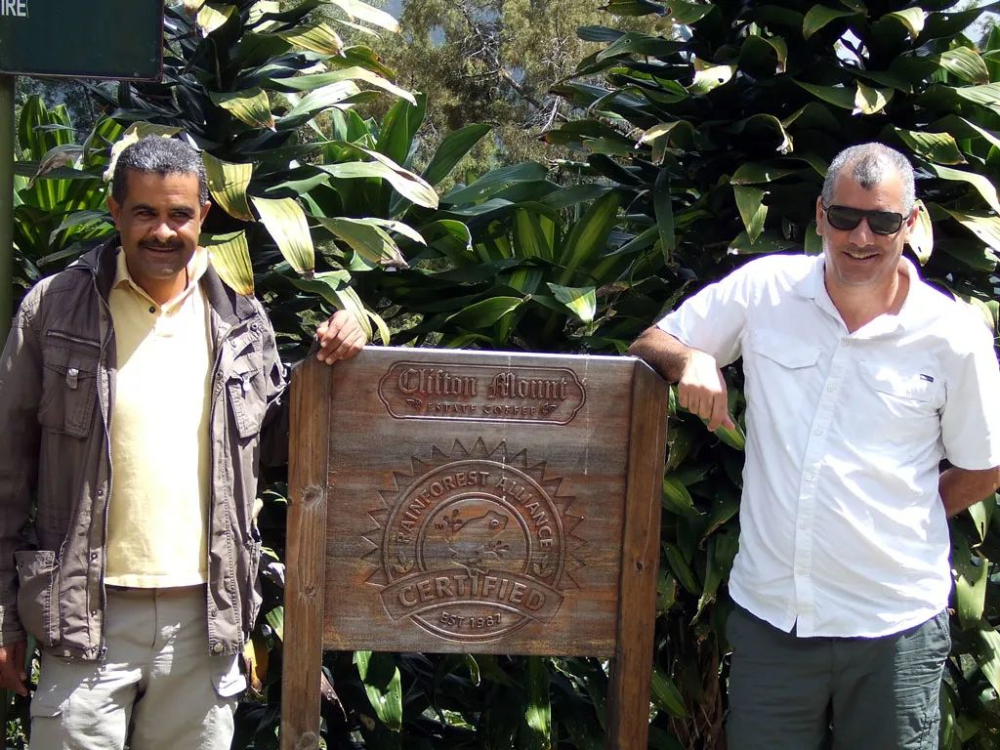
If you’ve purchased genuine Blue Mountain No. 1 coffee beans, the next focus is how to brew them to bring out their optimal flavors. It’s recommended to check the roast date of the beans and opt for freshly roasted beans within five days to achieve the fullest expression of aroma. Coffee beans left too long tend to lose their aroma, affecting the final extraction flavor.
The brewing parameters shared here are based on actual operations used in our store for brewing Blue Mountain No. 1. It is recommended to use a KONO filter cone, whose design helps enhance the overall richness and body of the coffee, especially suitable for beans with a slightly bitter profile or those needing a stronger body. Compared to the V60, the KONO filter cone uses an immersion-style extraction method, which better preserves the sweetness and delicate layers of the coffee. It’s also suitable for other high-quality bean varieties such as Brazilian Queen Estate or Golden Mandheling.
Specific brewing parameters are as follows: use a KONO filter cone, water temperature controlled at 88°C, a coffee-to-water ratio of 1:15, with a recommended coffee dosage of 15 grams. Grind size can refer to EK43s setting 10.5 (approximately 75% passing rate through a standard 20-mesh sieve). For the steps: first, wet the filter cone with hot water to ensure the filter paper adheres tightly to the cone walls, discard the pre-wetting water, then add 15 grams of coffee grounds, and pour 30 grams of water for a 30-second bloom. Next, pour water in small streams in circular motions from the center until the total water volume reaches 125 grams for the first pour; once the coffee bed drops to the middle of the cone, continue pouring with the same technique until 225 grams, then let it drip through before removing the filter cone.
The brewed Blue Mountain No. 1 coffee will showcase a richness akin to dark chocolate, the captivating sweetness of caramel, and a soft, mild acidity. The various flavors are well-balanced, with a smooth mouthfeel and rich layers, perfectly presenting the most classic flavor characteristics of Blue Mountain coffee.
The above content is compiled by CoffeeHunters, a coffee news website.


