







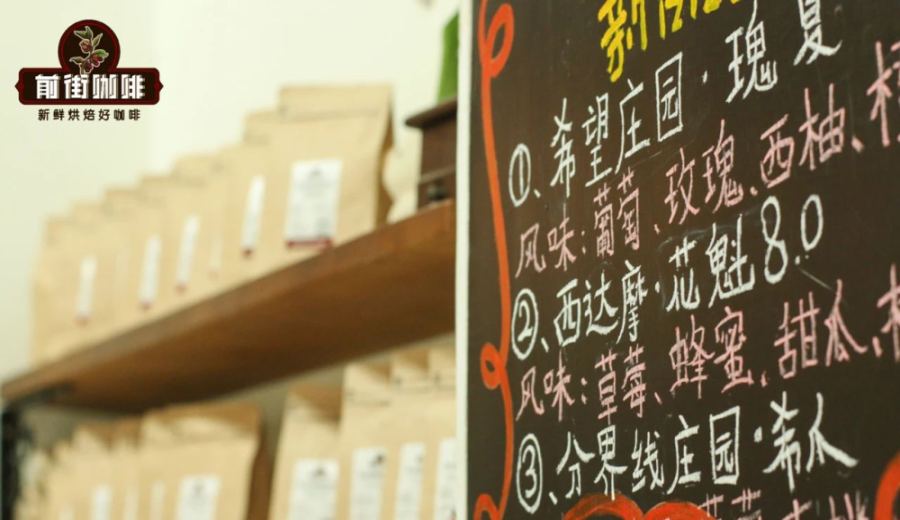
Introduction:Hua Kui coffee is beloved by coffee enthusiasts worldwide for its distinct tropical fruit flavors and exceptional cost-performance ratio. But why does this bean change its "version number" every year? This article will delve into the origin background of Hua Kui, its flavor evolution over the years, and provide professional-level roasting curve adjustment strategies and pour over parameter suggestions to help you master the brewing essence of this Ethiopian star bean.
Among many specialty coffee beans, Ethiopian Hua Kui has become a daily choice for many coffee lovers due to its rich tropical fruit aroma and relatively affordable price. However, you may not have noticed that this widely popular bean has a different "version number" each year, from Hua Kui 1.0, 2.0, all the way to the latest Hua Kui 7.0, 8.0 — what’s the secret behind this? This article will uncover the story of Hua Kui’s growing region, flavor characteristics, and detail practical roasting and pour over techniques to help you fully showcase its unique charm.
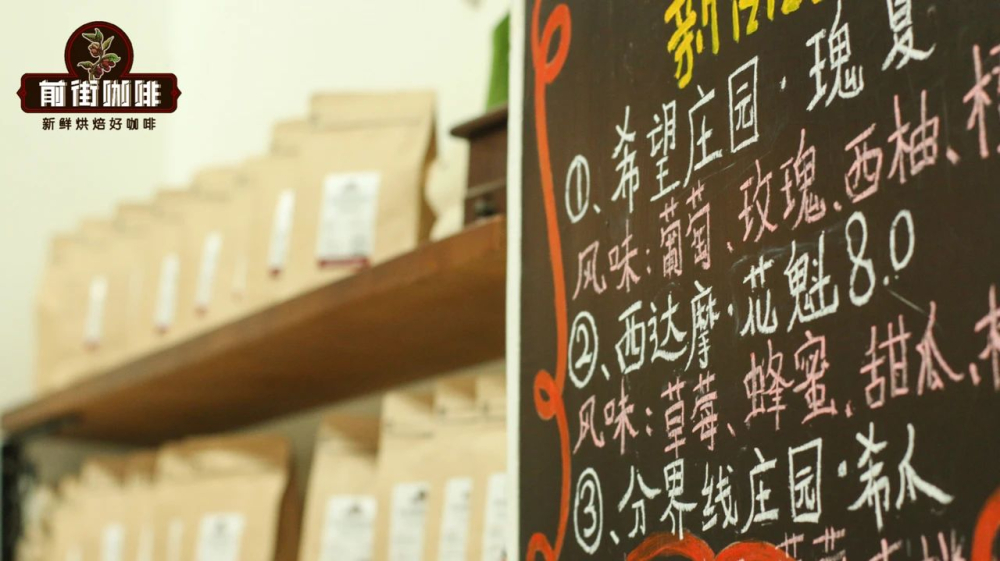
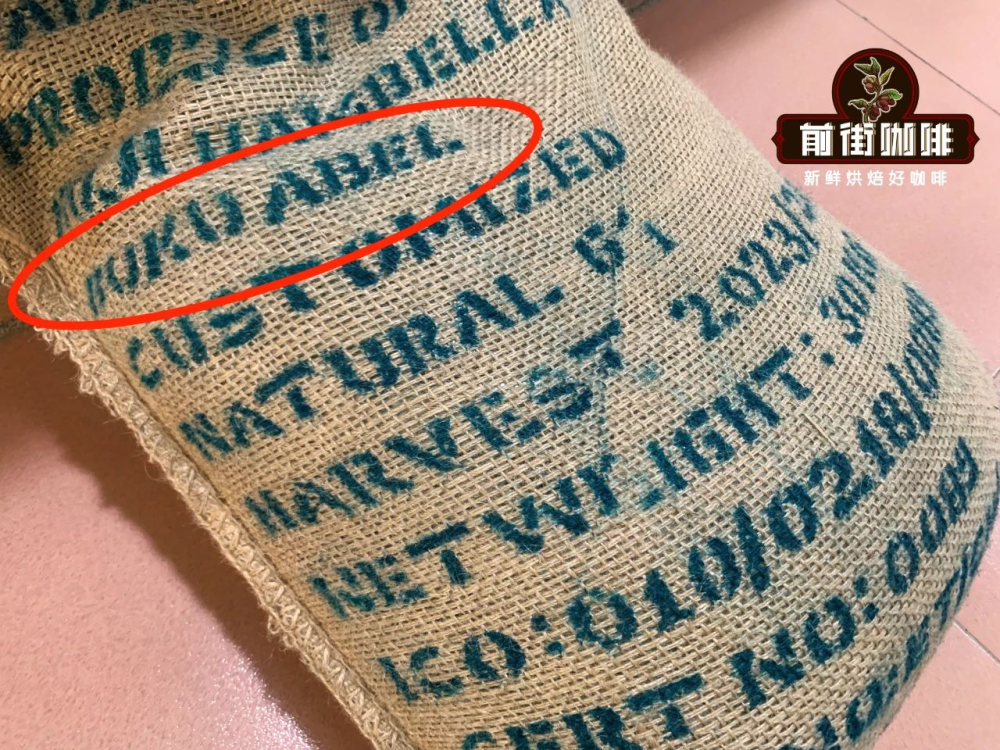
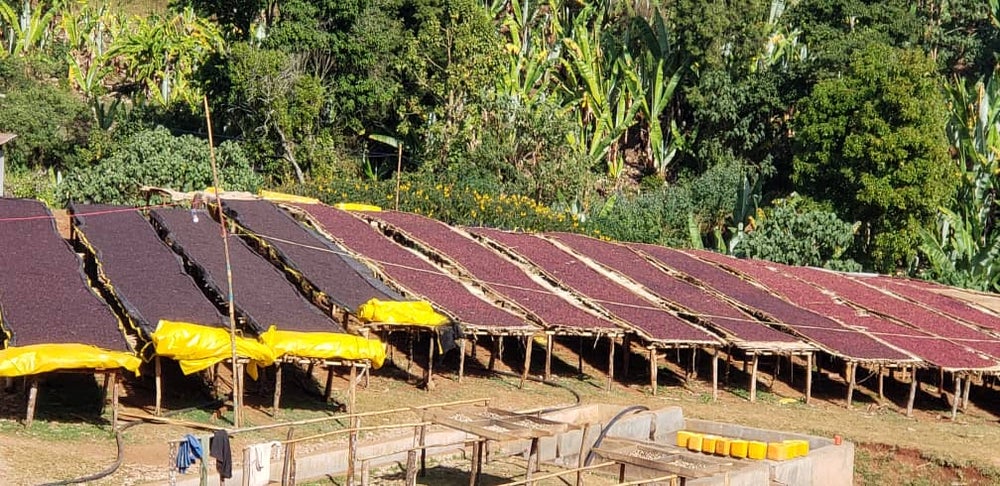
Hua Kui is not a traditional variety or place name, but rather a branded naming approach, similar to the version iteration of electronic products. In fact, it originates from sun-dried G1-grade coffee beans from the Hambella area of the Guji zone in Ethiopia’s Sidamo region, with the Buku Abel processing station being one of the earliest and most well-known sources. During the harvest season from December to January each year, local farmers select only fully red coffee cherries with a sugar content of 30 or higher, and process them using refined sun-drying techniques — including the use of African raised beds, timely shading and rain protection, and continuous turning to ensure even drying of the coffee fruit. After approximately 18 days, when the moisture content stabilizes at 13%, the beans are hulled.
As market demand surged, following Hua Kui’s breakout success in 2017, DW Company significantly expanded production capacity. Not only were five independent processing stations added in the core producing town of Dimtu, including villages such as Buku Abel, Buku Saysay, Haro Soresa, Tirtiro Goye, and Seke Bokosa, which also engaged in sun-dried production. The sun-dried G1 beans produced by these stations gradually became collectively known in the market as "Hua Kui," and slight variations in flavor emerged due to the differing source villages. It is precisely because of this expanded production and mixed sourcing that, although the processing methods remain similar, the flavor profiles of each yearly batch can vary slightly. As a result, the market convention of labeling them with year + version numbers, such as Hua Kui 2.0, 3.0, etc., has been adopted to help consumers identify them.
So, what exactly are the flavors of Hua Kui? Contrary to what its name might suggest, it doesn’t burst with intense floral notes. Instead, bright tropical fruit tones take center stage: creamy strawberry, mango, jackfruit, citrus, and blueberry, among other aromatic layers, often accompanied by a strong berry main note — which is also why it stood out in the TOH competition that year. However, due to annual variations in climate, soil, and processing details, the actual flavor profile of Hua Kui also adjusts subtly each year. For example, batches from 2018 and 2019, while retaining some similar characteristics, generally show slightly less body and aftertaste compared to the original Hua Kui.
Taking the recently popular Hua Kui 8.0 as an example, it is produced in the Sidamo Guji region, at an altitude of about 2250–2350 meters, using local native varieties and continuing the sun-dried processing method. The flavor profile of this bean is clear: upon opening the bag, you can immediately detect pronounced floral notes and dried fruit sweetness, with delicate jackfruit and apricot aromas interwoven. Upon tasting, there is a juicy berry sweetness and the complex layers of passion fruit, with an aftertaste as smooth and lingering as black tea — making it highly suitable for coffee lovers who enjoy bright fruity flavors.
In terms of roasting, since Hua Kui’s green beans come from mid-to-high altitude regions and are native varieties, they are small in size with pointed ends on both sides, have relatively high density though not as hard as SHB grade, and have a moisture content of about 11%. Therefore, special attention must be paid to stability during the dehydration stage and control of first crack development. It is recommended to use a semi-direct-fire roaster such as the Yangjia 800N, with a charge temperature set at 190°C. The early stage should involve a slow temperature rise to ensure even dehydration, reaching the yellowing point (around 150–153°C) in about 6 minutes. First crack usually begins around 9 minutes at approximately 155°C, and the crack sounds are relatively subtle. It is advised to control the development time after first crack between 1 to 1.5 minutes, adjusting the air damper and heat appropriately to avoid over-development, which could lead to aroma loss. When the temperature reaches around 193°C, if you can smell a rich strawberry jam aroma from the sample spoon, it’s the ideal time to drop the beans. The overall roasting time is recommended to be completed within 11 minutes.
As for pour over, to fully bring out the fruity aroma and sweetness of Hua Kui, it is recommended to use freshly roasted (ideally within 5 days) and well-stored beans. Use a V60 filter, with water temperature controlled at 92–93°C, grind size roughly equivalent to superfine sugar (80% passing rate through a #20 standard sieve), a coffee-to-water ratio of 1:15, and a coffee dose of 15 grams. You can adopt the classic three-pour method: the first pour involves adding water twice the weight of the coffee grounds (about 30 grams) for a 30-second bloom, followed by pouring with a small stream in a circular motion from the inside out until reaching 125 grams for the first break. Once the coffee bed has settled by about half, continue pouring to 225 grams to complete extraction, with total time controlled around 2 minutes. These parameters will fully release Hua Kui’s tropical fruit aroma, honey-like sweetness, and the rich, tea-like aftertaste, giving you a layered and surprising experience with every sip.
The above content is compiled by CoffeeHunters, a coffee news website.


