







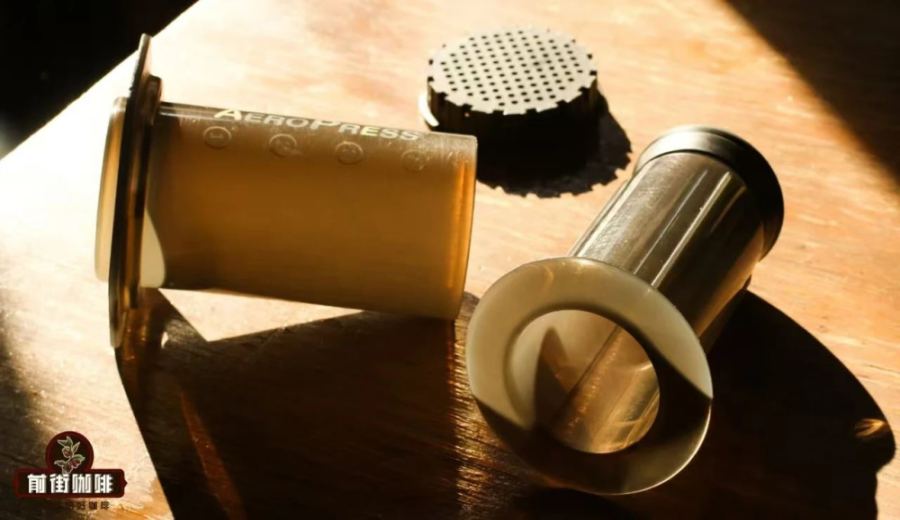
Introduction:The AeroPress is not only suitable for travel and simple home brewing, but can also be used to prepare light roast coffee. This article will delve into the pairing possibilities of the AeroPress with light roast beans, providing precise recommendations on coffee-to-water ratio, water temperature, and inversion time. It will also step-by-step demonstrate how to craft a balanced and smooth AeroPress latte using a high-concentration base. Whether you're a beginner or an experienced AeroPress user, you'll gain more practical tips and flavor-adjustment techniques from this guide.
As a compact and versatile coffee brewing device, the AeroPress is commonly used in home and outdoor settings. But can it perfectly showcase the delicate flavors of light roast coffee beans? Moreover, in actual practice, how should one adjust the coffee-to-water ratio, water temperature, and brewing technique to extract a richly layered and balanced cup? This article will analyze the techniques and possibilities of brewing light roast beans with the AeroPress through real-life examples, covering everything from the tool’s characteristics, bean selection, parameter settings, to latte preparation.
First, let’s clarify a common question: Is the AeroPress really unsuitable for light roast? The answer actually depends on how you use it. Light roast beans typically feature bright acidity, complex floral and fruity aromas, as well as herbal notes. However, if not handled properly, they can easily result in over-extracted sharpness or a thin flavor profile. Therefore, as long as you master the key variables—such asa coffee-to-water ratio of about 1:3, water temperature controlled around 94°C, a grind size close to that of espresso (fine, like flour), and using the inversion method to brew for about one minute—the AeroPress can also highlight the unique flavor layers of light roast beans.
In practice, we recommend using about 20 grams of coffee grounds with 60 milliliters of hot water (following a 1:3 coffee-to-water ratio), and a narrow-spout pour over kettle for stable pouring. After adding the coffee grounds, gently stir about ten times to ensure even contact between the coffee and water, then let it sit for approximately one minute. During this time, the coffee flavor compounds are gradually released, and the subsequent inversion step is key to enhancing concentration and smoothness.
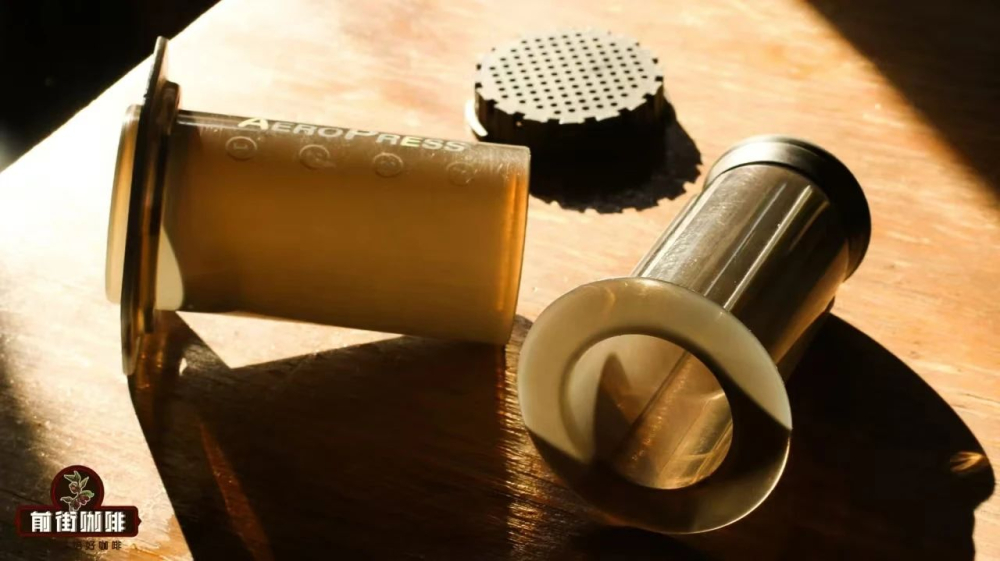
Once the time is up, attach the filter cap, invert the AeroPress (so it resembles a syringe), place the cup upside down over the spout, and then flip the whole assembly over. At this point, press the plunger down steadily and slowly to squeeze the concentrated coffee into the cup. This process not only extracts a rich coffee liquid, but also effectively filters out fine particles, ensuring a clean mouthfeel. The resulting coffee has a deep color, and although the volume is small, the concentration is quite full. One sip reveals clear layers and a lingering aftertaste.
Next, let’s use this high-concentration base to make an AeroPress-style latte. The recommended recipe is: 40 milliliters of AeroPress espresso paired with 200 milliliters of steamed whole milk or milk foam. This ratio preserves the main flavor profile of the coffee, while the silkiness and sweetness of the milk complement the chocolatey, nutty, and slightly caramel notes in the coffee.
The finished latte delivers an overall balanced performance. Although its flavor intensity may not be as bold as a professional semi-automatic espresso machine’s espresso-based latte, it still showcases clear notes of cocoa, cream, and grains, with a clean and uncluttered aftertaste—making it perfect for everyday enjoyment. For readers who enjoy adjusting ratios or experimenting with different types of milk, you can further fine-tune the milk quantity and espresso concentration to find your ideal taste.
In summary, the AeroPress is not just a convenient travel accessory. Its flexible brewing methods and adjustable parameters also make it suitable for challenging the brewing of light roast beans. As long as you mastera 1:3 coffee-to-water ratio, 94°C water temperature, moderate grind size, and one-minute inversion time—you can easily brew a richly flavored, smooth, and satisfying cup of coffee either at home or outdoors, and further create a variety of uniquely flavored coffee beverages.
The above content is compiled by CoffeeHunters, a coffee news website.


