








Introduction:Although Dirty coffee and iced latte may look similar, both being combinations of espresso and milk, they are actually two completely different coffee beverages. From cup size, ingredient ratios, use of ice, serving method, to layering requirements and optimal drinking methods, there are significant differences. This article delves into a detailed comparison of the two, analyzing how to choose the right coffee beans to optimize layering effects and overall flavor, helping you better understand the essence of these two popular cold coffee drinks.
Visually, Dirty coffee and iced latte are extremely similar, both featuring the layered appearance of espresso on top and milk at the bottom. However, they actually differ significantly in preparation philosophy, ratio configuration, and drinking method. This article will comprehensively analyze the fundamental differences between Dirty coffee and iced latte by examining key details such as beverage ratios, use of ice, cup handling techniques, and layering effects, while also extending the discussion to how to adjust recipes based on the characteristics of coffee beans to achieve ideal layering and taste profiles.
Judging from appearance alone, Dirty coffee and iced latte are almost indistinguishable — both involve pouring espresso directly over milk, creating a clear visual separation of colors. But this visual similarity cannot mask their fundamental differences in recipe logic and consumer experience. As a common variation of cold latte drinks, iced latte is typically made with chilled milk and espresso, often with ice cubes added to maintain a cool sensation, and in most cases, it is stirred before serving to evenly mix the coffee and milk.
In contrast, Dirty coffee emphasizes an “unstirred, no ice” original layering state, offering a progressive tasting experience with each sip. Rather than using ice cubes to cool the drink, Dirty coffee maintains a low temperature by using a pre-chilled cup, and it strongly recommends sipping the upper layer of espresso directly to experience the original aroma and intensity of the shot, followed by gradually feeling the transition where coffee and milk blend, and finally ending with the slightly warm cold milk at the bottom. This gradual drinking process from strong to mild, and from hot to cold, is precisely the unique charm of Dirty coffee.
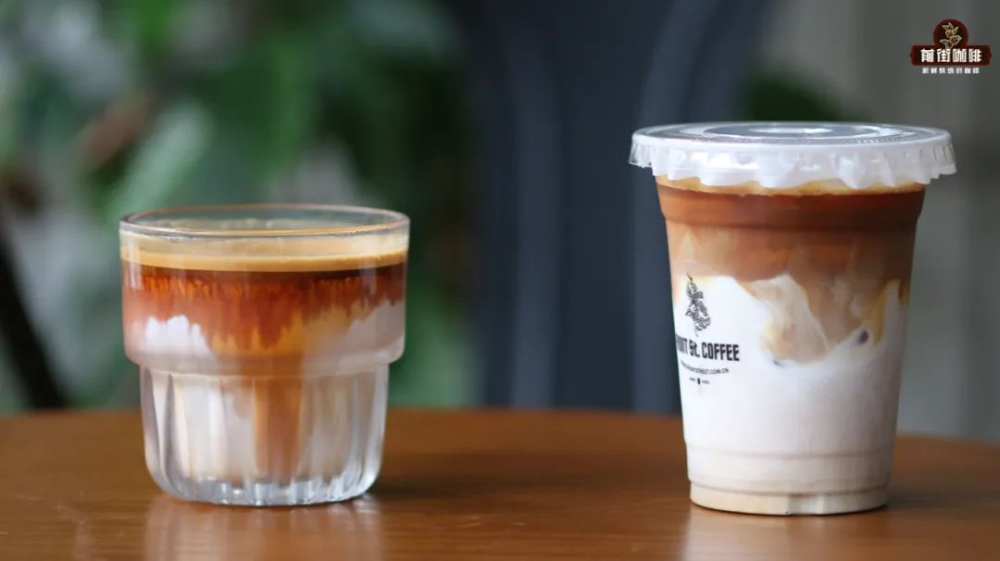
First, let’s clarify the basic definition of iced latte. Simply put, an iced latte is a “chilled version of latte coffee,” with its core recipe consisting of espresso plus a large amount of chilled milk, along with an appropriate amount of ice cubes to keep it cool. After preparation, iced lattes are usually thoroughly mixed to ensure a smooth and consistent texture, avoiding the sensory difference caused by having hot coffee on top and cold milk at the bottom. However, as consumers increasingly value aesthetic appeal for photos and social media presentation, many shops have started pouring espresso directly over milk without stirring and serving it as is, giving the iced latte a visibly layered appearance as well.
As for Dirty coffee, its name originated around 2019 during the popular “dirty food” trend. Back then, Dirty coffee versions often used milk foam, cream, or additional toppings to create a “dirty” visual effect, paired with decorations like cocoa powder or crushed nuts. But over time, the current mainstream Dirty coffee has returned to its essence, no longer emphasizing external messy decorations but instead focusing on the core characteristics of being “unstirred” and having “direct layering.” Such Dirty coffee is typically served in a pre-chilled cup, with hot espresso poured directly over chilled milk, using the temperature difference and passage of time to form a naturally seeping visual layering that creates the imagery of espresso “contaminating” pure milk.

If you want Dirty coffee to display excellent layering effects, it is recommended to choose a blend with rich crema and vivid color. For example, a classic blend that combines beans from three different origins, uses medium-dark roasting, and draws inspiration from the classic “Mamba” combination (i.e., Mandheling and Brazilian beans), with a small addition of Robusta to enhance crema performance and flavor intensity. This formula allows the espresso to form a rich golden crema that contrasts sharply with the white milk, making it an ideal choice for showcasing the layering aesthetics of Dirty coffee.
If you prefer a smoother, more complex flavor profile with nutty and sweet notes, consider trying a premium blend or a dark cocoa-based blend. Both of these blends use Brazilian beans as the base, providing a stable balance of bitterness and sweetness along with a silky mouthfeel. The premium blend incorporates the nutty, chocolatey, and caramel tones of Colombian beans, paired with moderate acidity, resulting in a thick, malty sweetness akin to Ovaltine when mixed with milk. The dark cocoa-based blend, on the other hand, emphasizes the ripe plum acidity of Yunnan small-seed coffee, complementing the sweetness of Brazilian beans. When ground, it emits an alluring roasted melon seed and caramel aroma, making it suitable for use as either a latte or Dirty base, capable of delivering a creamy chocolate-like dense texture.

Although both Dirty coffee and iced latte primarily use espresso and milk as ingredients and both follow the basic operation of “pouring espresso over milk,” there are several key differences in the actual preparation process. First are cup size and milk ratio: Dirty coffee typically uses a smaller cup size of 180–220 ml with relatively less milk, while the standard capacity of iced latte is mostly between 280–320 ml with a higher proportion of milk.
Second, Dirty coffee strictly prohibits the addition of ice cubes, relying mainly on the chilled cup to maintain low temperature, hence it is only suitable for dine-in and immediate consumption. Iced latte, on the other hand, generally includes ice cubes for cooling, and some consumers even prefer it without ice. Moreover, Dirty coffee places much higher emphasis on layering effects compared to iced latte — the latter can still be considered a qualified iced latte even if the coffee and milk quickly mix, whereas Dirty coffee prides itself on clear layering and delayed mixing, delivering a distinctively layered drinking experience.

In terms of drinking method, Dirty coffee emphasizes no stirring and no straw, recommending you drink directly from the top layer. The first sip allows you to enjoy the intense flavor and slightly warm temperature of the espresso, followed by the transitional layer where coffee and milk blend, and finally the refreshing finish from the chilled milk at the bottom. This progressive process from strong to mild, and from hot to cold, gives Dirty coffee a rich variety of layers.
In contrast, iced latte encourages consumers to stir the coffee and milk thoroughly before drinking to achieve a balanced overall flavor and consistent texture experience. Though the two beverages may look similar, their differentiated preparation logic and drinking methods offer coffee lovers entirely distinct sensory journeys.
The above content is compiled by CoffeeHunters, a coffee news website.


