







Introduction:Want to dive deeper into the unique charm of Panamanian Geisha coffee? This article starts with the origin of the Geisha variety, guiding you through the three renowned plots of Hacienda La Esmeralda and the distinctions among the Red, Green, and Blue grades, while also detailing the characteristics of both washed and natural processing methods. It further provides practical V60 pour over parameters and clear flavor guidance, making it a complete beginner’s guide for coffee enthusiasts to appreciate Geisha.
In recent years, Geisha (Geisha) coffee has become a dream item for global specialty coffee lovers, and Panama’s Hacienda La Esmeralda is a key force that elevated this variety to legendary status. This article begins with the historical background of the Geisha variety, delves into its development in Panama, and introduces you to the core production areas of Hacienda La Esmeralda and its three famous micro-plots: Canas Verdes, Jaramillo, and El Velo. We will also explain in detail the grading logic and flavor profiles of the Red, Green, and Blue labels, giving you a more comprehensive understanding of Geisha.
In many specialty coffee shops, Geisha’s popularity has gradually surpassed that of traditional Blue Mountain coffee, especially among younger demographics. Taking actual sales as an example, a cup of Panamanian Green Label Geisha, washed, typically sells for about 60 yuan, while the natural Red Label version is only around 75 yuan. With relatively affordable pricing, it offers an exceptional flavor experience. Interestingly, many shops offer both Ethiopian and Panamanian Geisha, even expanding to emerging origins such as Colombia and Costa Rica, showcasing the diverse potential of this variety.
Although Geisha is now almost synonymous with premium Panamanian coffee, its origin is actually Ethiopia. Historical records indicate that this variety was first discovered in 1931 in the Gesha forest of Ethiopia, then sent to the Kenya Coffee Research Station in 1932, introduced to Uganda and Tanzania in 1936, reached Costa Rica in 1953, and finally took root in Panama in 1960. Today, Panama’s Hacienda La Esmeralda has become a symbol of Geisha coffee quality.
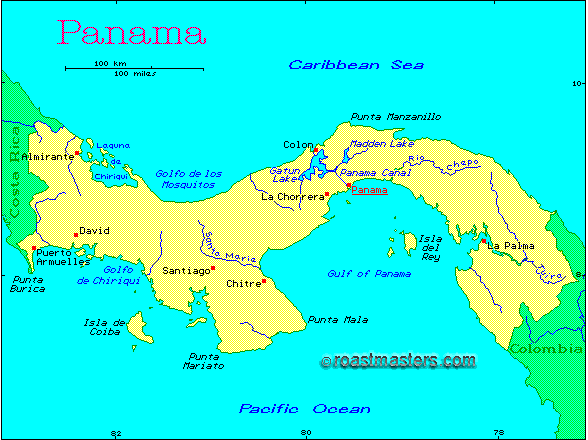
Panama is located in Central America, geographically between 7° and 10° north latitude, within the typical coffee belt climate. The country borders Colombia to the east, Costa Rica to the west, the Caribbean Sea to the north, and the Pacific Ocean to the south. Its mountainous terrain features significant altitude variations, with the western region being most suitable for high-altitude coffee cultivation. The main specialty coffee regions are concentrated in Chiriquí Province, including the areas of Boquete, Volcán, and Renacimiento. Among them, Boquete is the most renowned, not only with an average altitude of 1400 to 1900 meters but also boasting fertile volcanic soil and diverse microclimates, home to numerous top-tier estates such as Elida, Don Pachi, and Hacienda La Esmeralda.
When talking about Panamanian Geisha, one cannot overlook the historical significance of Hacienda La Esmeralda. This estate was established in 1964 when a retired American banker, Rudolph A. Peterson, purchased the land and founded it, with his son formally taking over management after earning his Ph.D. in 1973. In 1987, the estate introduced the Caturra and Catuaí varieties, built its first washed processing facility in 1994, and acquired the nearby high-altitude Jaramillo estate in 1997, gradually establishing its leading position in the specialty coffee world.
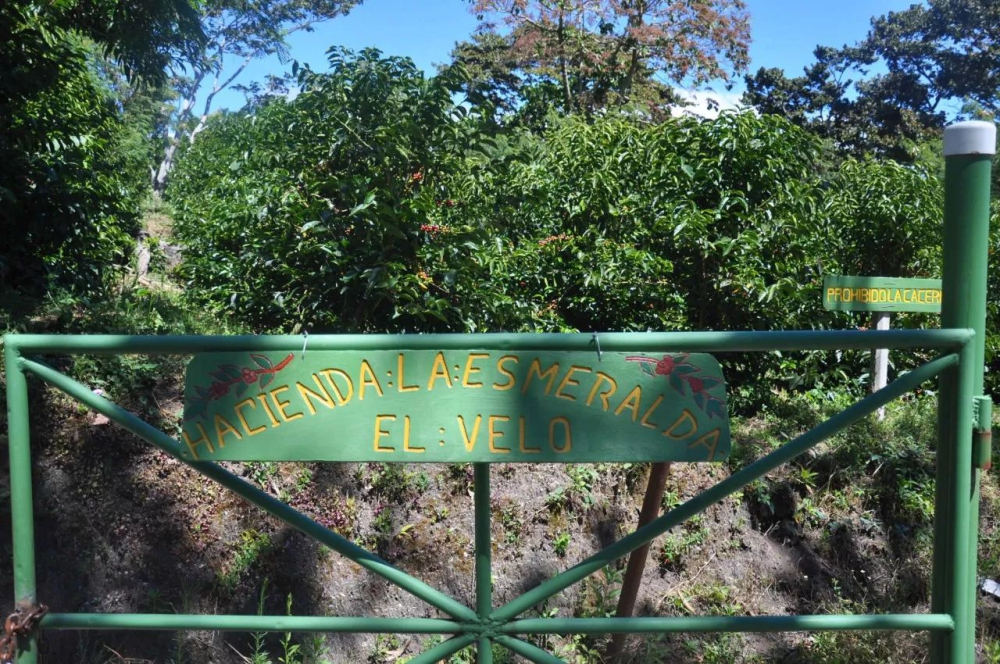
Hacienda La Esmeralda currently owns three highly representative micro-plots: Canas Verdes, Jaramillo, and El Velo. Among them, Canas Verdes sits at an elevation of 1600 to 1800 meters, with an average annual rainfall of about 3500 mm and significant day-night temperature variation, comprising nine subdivisions. Jaramillo is slightly lower in altitude, about 1600 to 1700 meters, with even higher annual rainfall of up to 4000 mm, divided into five smaller plots. As for the newest addition, El Velo, it sits even higher at 1700 to 1900 meters and, besides Geisha and Catuaí, retains a few specialty varieties such as Laurina, Pacamara, Mocha, and SL28, showcasing even richer flavor potential.
Hacienda La Esmeralda maintains a very rigorous grading system for Geisha, mainly divided into three grades corresponding to the well-known Red, Green, and Blue labels. The Red Label, also known as “Hacienda Esmeralda Special,” represents auction-grade Geisha, grown at altitudes of 1600 to 1800 meters, exclusively from the Jaramillo and Canas Verdes plots, and must achieve a cupping score of 90 or above. Each year, only the selected batches of Geisha from the estate’s independent auction can be called auction Red Label. There are also non-auction versions available on the market, with the same quality and processing method, differing only in price and rarity. The Red Label is mostly processed via natural or washed methods, and is known for its bright floral notes, citrus character, and honey-like sweetness.
The Green Label, also called “Private Collection,” belongs to non-auction batches, using micro-lot blends from the Jaramillo, Canas Verdes, and El Velo plots, also at altitudes of 1600 to 1800 meters. Though not part of the auction, its flavor profile remains rich, commonly processed via washed or natural methods, making it a high-value everyday choice for many coffee enthusiasts. The flavor wheel often includes jasmine, citrus, berries, and melon, with a refreshing and layered mouthfeel.
The Blue Label, formerly known as “Geisha 1500,” ranges from 1400 to 1500 meters in altitude and is the entry-level among the three grades. It uses blended beans from all three blocks, and since 2020, washed processing has been added. However, it is reported that this grade will be gradually phased out after 2021, with limited stock remaining on the market. Its flavors are dominated by fresh lemon, oolong tea notes, cane sugar, and peach aromas, making it suitable for those new to Geisha.
Finally, for coffee enthusiasts who enjoy brewing manually, we have tested both the washed and natural versions of the Green Label Geisha. We recommend using a V60 #01 filter, 15 grams of coffee, a 1:16 coffee-to-water ratio, and a grind size similar to EK43s#10.2, with water temperature controlled at 90–91°C. Use the classic three-pour method: begin with a 30-second bloom using 30 grams of water, then pour in a slow circular motion until reaching 125 grams for the first pour, wait for the water level to drop, then pour up to 225 grams, and finally remove the filter just before the water runs out, with total brew time around 2 minutes to 2 minutes and 5 seconds.
In actual tasting, the washed Green Label presents clear citrus and grapefruit acidity, with honey sweetness in the mid-palate and an oolong tea note along with brown sugar sweetness in the finish. The overall flavor is clean, bright, and well-balanced. The natural Green Label, on the other hand, showcases intense fruitiness and fermentation aromas, with prominent melon and tropical fruit flavors on the palate, offering a juice-like smoothness, distinct sweetness, and a long-lasting aftertaste—making it an excellent choice for those who prefer sweet profiles.
The above content is compiled by CoffeeHunters, a coffee news website.


