








Introduction:Have you ever experienced the frustration of coffee failing to drip out of your moka pot, or suddenly erupting violently? These issues are often related to an imbalance of pressure in the lower chamber. This article will delve into the four main reasons why coffee might spray out of your moka pot, including improper water level control, incorrect coffee grind size, the impact of bean roast level, and improper heat adjustment. We’ll also provide practical and specific tips to help you brew smooth and flavorful coffee without sudden spurts.
Many moka pot users have encountered this issue: after lighting the stove, the coffee takes a long time to appear, then suddenly sprays forcefully from the upper chamber, potentially dirtying the stovetop or even burning your hands. This phenomenon is closely related to the steam pressure generated in the lower chamber. When water is heated and turns into steam, the steam accumulates and increases pressure, pushing the hot water upward through the coffee grounds to extract the coffee. If this pressure becomes too great—exceeding what the moka pot structure can handle—it can easily lead to spraying.
So, which operational details cause abnormal pressure? And how can we adjust to ensure the coffee flows out smoothly, avoiding sudden spurts? Next, we’ll break down these issues from four common aspects: water level, coffee grind size, bean roast level, and heating flame intensity. We’ll offer concrete and actionable solutions to help you brew smoother, more aromatic moka pot coffee.

1. Too Much Water
The lower chamber of a moka pot usually has a safety valve marked with a line that also serves as the maximum water level indicator. If the water level exceeds this line, it not only reduces the space available for steam generation but also leaves insufficient room for the water to expand as it turns into steam, causing pressure to rise rapidly. In such cases, the steam is forced to push upward abruptly, which can easily lead to spraying and may even damage the pot’s structure.
It’s important to note that moka pots are not designed for high-pressure extraction. Compared to professional espresso machines, their pressure tolerance is limited. Overfilling with water can not only cause the liquid to spurt out in unstable arcs but, in more serious cases, the entire pot could rupture due to excessive internal pressure—posing a real safety hazard. Always be careful to control the amount of water added.
2. Incorrect Coffee Grind Size
The ideal grind size for a moka pot falls between that of pour over and espresso—typically finer than pour over but not as fine as the ultra-fine grind used in espresso machines. The feel is similar to fine flour. This level of fineness effectively increases the density of the coffee bed, reducing the gaps through which water can pass, thus allowing the hot water more contact time with the coffee grounds, which aids in flavor extraction.
If the coffee is ground too coarse—similar in size to granulated sugar used in single-origin pour over—the resistance the coffee bed offers to water flow decreases significantly. This causes the water to pass through the grounds too quickly, not only reducing extraction efficiency but also resulting in a thin, diluted-tasting coffee. Additionally, overly fast water flow can lead to unstable pressure, causing the coffee to shoot out in a jet-like manner and increasing the risk of spraying.
3. Using Light Roast Beans
In addition to grind size, the roast level of the coffee beans also significantly affects pressure performance. Light roast beans, due to their shorter roasting time, are relatively harder and release fewer internal gases. This results in insufficient resistance when hot water passes through the coffee bed, allowing it to pass through too quickly and potentially causing spraying. Therefore, for moka pots, it’s recommended to use medium to dark roast espresso blends. These beans typically have better density and gas-release characteristics, making them more compatible with the pressurized extraction method of a moka pot.
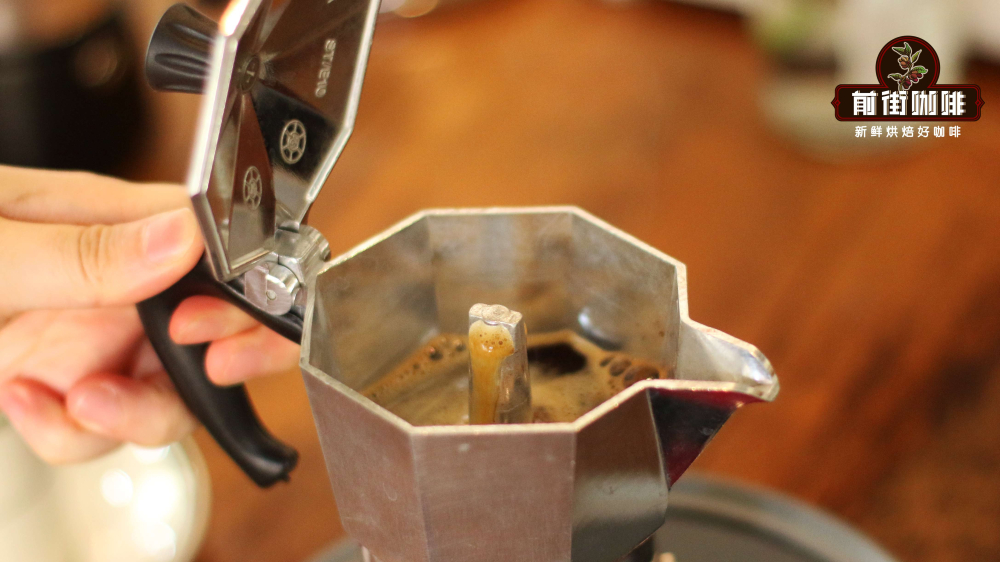
If you particularly enjoy the thick crema on top of your coffee, you might consider using blends specifically designed for espresso, such as those combining Brazilian beans, Indonesian Mandheling, and a small amount of Robusta. These blends not only produce a rich crema layer but also showcase complex aromas of roasted hazelnuts, butter, dark chocolate, and caramel—making them suitable for home use or small coffee shop operations.
4. Improper Heat Control
When you notice coffee starting to flow from the upper chamber, it means the water in the lower chamber has reached boiling point. Continuing to use high heat at this stage will cause more water to vaporize rapidly, leading to a sudden spike in steam pressure. This can result in the coffee shooting out in a forceful stream, negatively affecting taste and posing potential dangers.
It’s recommended that as soon as coffee begins to flow, you immediately reduce the stove flame to low or medium, or even slightly lift the moka pot away from the heat source to decrease continuous steam production. By maintaining stable and moderate heating, you can effectively balance the extraction pressure, allowing the coffee to drip smoothly and avoiding spraying caused by sudden pressure surges.
The above content is compiled by CoffeeHunters, a coffee news website.


