







Introduction:Jamaica Blue Mountain coffee is hailed as the finest in the coffee world, but its strict grading system and the prevalence of counterfeit products in the market often confuse consumers. This article delves into the three major categories—Blue Mountain, High Mountain, and Jamaica coffee—as well as the grading standards from NO.1 to PB peaberry, helping you understand how to identify authentic beans through barrel packaging and government certification. It also provides professional pour over parameters and flavor profiles to help you grasp the unique charm of true Blue Mountain coffee.
Blue Mountain coffee enjoys the reputation of being the “King of Coffee,” but many products on the market that claim to have a “Blue Mountain flavor” are often completely unrelated to genuine Jamaica Blue Mountain. To help coffee enthusiasts distinguish authenticity and gain a deeper understanding of Blue Mountain coffee’s grading system, we will break down the three major regional classifications and detailed standards of Jamaica Blue Mountain, from NO.1 to PB peaberry, step by step guiding you to recognize what truly constitutes top-tier Blue Mountain coffee.
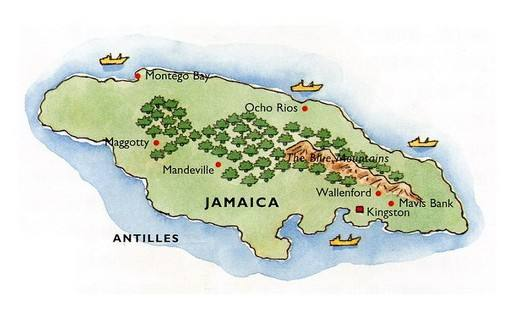
First, Blue Mountain coffee is grown exclusively in the Blue Mountains of Jamaica, at altitudes between 1,000 and 1,700 meters, with an extremely limited annual production, which contributes to its rare and high-priced market position. However, precisely because of this supply shortage, many coffees pretending to have a Blue Mountain flavor have emerged on the market, with some products containing no Blue Mountain beans at all. These so-called “Blue Mountain flavor” coffees are typically divided into three tiers in the Japanese market: the top tier consists of “Blue Mountain Coffee” made from 100% Blue Mountain beans; the middle tier is “Blue Mountain Blend,” which contains at least 60% Blue Mountain beans; and the bottom tier is “Blue Mountain Flavor,” which may not contain any Blue Mountain beans at all. Consumers should pay special attention when making purchases.
Jamaica Blue Mountain coffee is mainly divided into three categories based on region and quality: Blue Mountain Coffee, High Mountain Coffee (Jamaica High Mountain Supreme Coffee Beans), and Jamaica Coffee (Jamaica Prime Coffee Beans). Among these, Blue Mountain and High Mountain coffee are further subdivided into NO.1, NO.2, NO.3, and PB (peaberry). The general quality ranking from highest to lowest is: Blue Mountain No.1 > Blue Mountain No.2 > High Mountain No.1 > High Mountain No.2 > Jamaica Coffee. In terms of green bean grading, NO.1, NO.2, NO.3, and PB are the official common grading names. According to the CIB (Coffee Industry Board) standards, Grade NO.1 Blue Mountain green beans must meet the following criteria: bean size of 17 mesh or larger, defect rate below 3%, and moisture content of around 13%. These strict standards ensure the consistent flavor performance of Blue Mountain coffee.
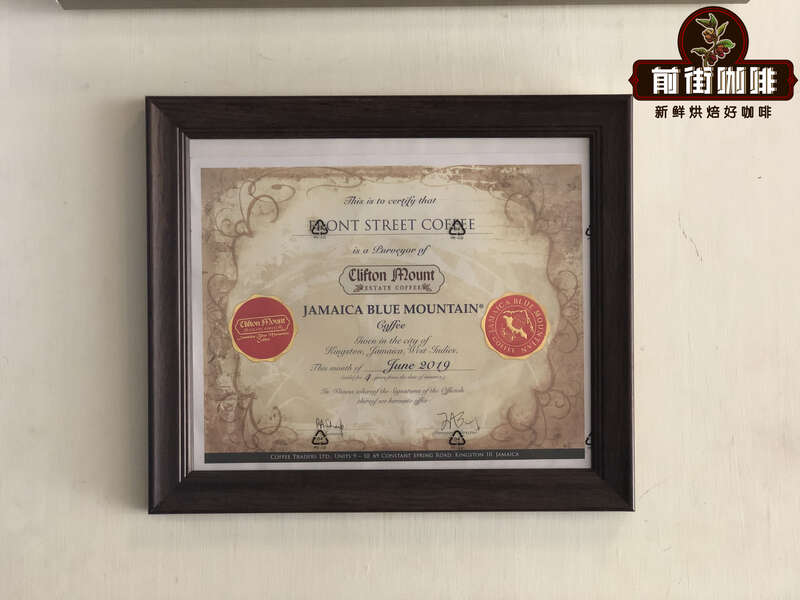
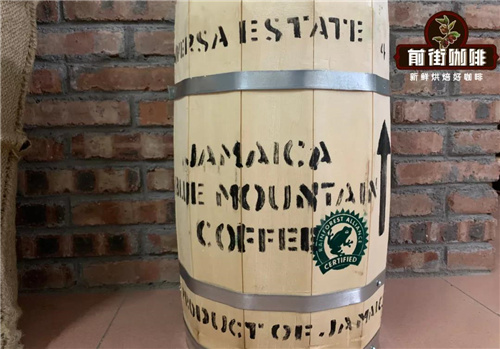
Many consumers wonder how to determine if the coffee they purchased is authentic Blue Mountain. A simple and reliable way to identify it is by observing the packaging. Genuine Blue Mountain coffee is not packed in common cotton or jute bags but is instead stored in wooden barrels, which usually feature the exclusive logo of the tropical rain frog. Additionally, each batch of authentic Blue Mountain coffee comes with a certification issued by the Jamaican government. It is recommended that consumers request relevant documentation from sellers when purchasing to ensure they are getting truly premium beans from the Blue Mountain range.
Regarding the flavor of Blue Mountain coffee, common packaging descriptions include phrases like “a balanced harmony of sweet, sour, bitter, and rich flavors,” “an elegant character,” or “hand-grown with limited yield.” While these adjectives may seem abstract, Blue Mountain coffee is indeed renowned for its excellent balance and smooth taste. Many coffee experts and enthusiasts say that Blue Mountain coffee is best enjoyed as black coffee, with caffeine content only about half that of regular coffee, aligning more closely with the modern trend toward healthy beverages. Many tasters describe it as the “beauty among coffees” because its performance in all aspects is nearly flawless.
However, in recent years, some market irregularities have emerged. Some businesses, in pursuit of profit, mix low-altitude beans with high-altitude ones, significantly reducing the original quality level of Blue Mountain coffee and thereby undermining consumer trust. Moreover, many consumers may mistakenly purchase “Blue Mountain blends” that contain only trace amounts of Blue Mountain beans or even “Blue Mountain flavor” products that contain none at all, leading to a huge gap between expectations and actual experience. This is why identifying the authenticity of Blue Mountain coffee is particularly important.
Speaking of the actual flavor profile of Blue Mountain coffee, take the example of Blue Mountain coffee from the Clifton Estate. Its green beans exhibit a uniform light green color, with medium to slightly small particle size, slightly upturned ends, and an overall compact and neat appearance. After roasting, the beans visibly expand, feeling fuller to the touch. Due to the influence of the high-altitude environment, their cellular structure is relatively loose, and when ground by hand, a crisp and smooth texture can be felt, with almost no noticeable resistance.
Ground Blue Mountain coffee releases a rich and robust aroma, a unique characteristic that many blends or imitations fail to deliver. To personally experience its true flavor, it is recommended to follow these professional pour over parameters: use a KONO filter, set the water temperature to 88°C, use 15 grams of coffee grounds, and maintain a 1:15 coffee-to-water ratio. The pour over process can employ a simple and effective three-stage pouring method: the first stage involves pouring 30 grams of water to allow the coffee grounds to bloom fully and form a “hamburger” shape, taking about 30 seconds; the second stage involves pouring 125 grams of water at the 54-second mark, then waiting for the water level to drop to two-thirds of the coffee bed before proceeding to the third stage; the third stage involves pouring the final 225 grams of water at the 1-minute-40-second mark, with the total extraction time controlled to around 2 minutes and 10 seconds. After extraction, gently swirl the coffee liquid to evenly distribute the flavors before tasting.
The final brewed Blue Mountain coffee has a mild citrus acidity upon entry, with an overall balanced and delicate mouthfeel. The mid-palate reveals an elegant nutty note, while the aftertaste carries on with a smooth dark chocolate finish. This harmonious coexistence of flavor elements, neither jarring nor thin, is precisely the most precious and hard-to-replicate key trait of Blue Mountain coffee, and also one of the important criteria for distinguishing authenticity.
The above content is compiled by CoffeeHunters, a coffee news website.


