







Introduction:The sun-dried and red honey processed coffee beans under the Yirgacheffe Red Cherry Project have always been popular choices among coffee enthusiasts. This article delves into the characteristics and regional backgrounds of these two processing methods, helping you understand their distinct flavor profiles, and provides practical pour over recommendations and extraction parameters to help you fully unlock the potential of these two specialty coffees.
Among Ethiopia’s many coffee-growing regions, Yirgacheffe has long been renowned for its unique citrus, floral notes, and bright acidity. The smallholder coffees supported by the “Red Cherry Project” stand out even more due to their rigorous selection process and processing craftsmanship. The “Red Honey Red Cherry” and “Sun-Dried Red Cherry” offerings on the menu are two representative products of this project, each showcasing the unique charm of sun-dried and red honey processing.
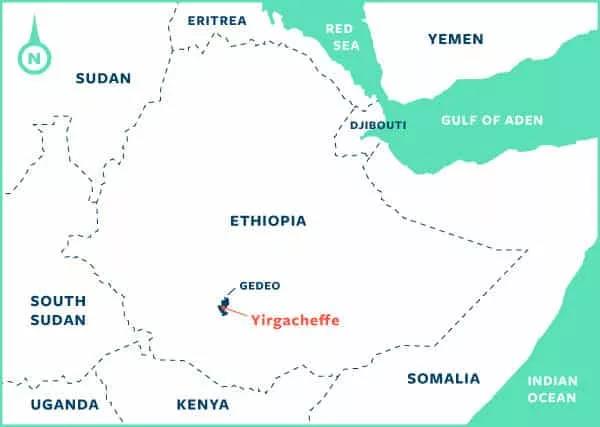
Yirgacheffe is located in the highland region of Ethiopia’s Sidamo Province, with an average altitude exceeding 2,000 meters, making it one of the country’s highest-altitude coffee-growing areas. The microclimate, volcanic soil, and abundant sunlight here create coffee beans with bright acidity and rich layers of aroma. The name Yirgacheffe comes from the local language, where “yirga” means to settle and “cheffe” refers to a wetland, together symbolizing “settling in the wetlands,” highlighting the uniqueness of its geographical environment.
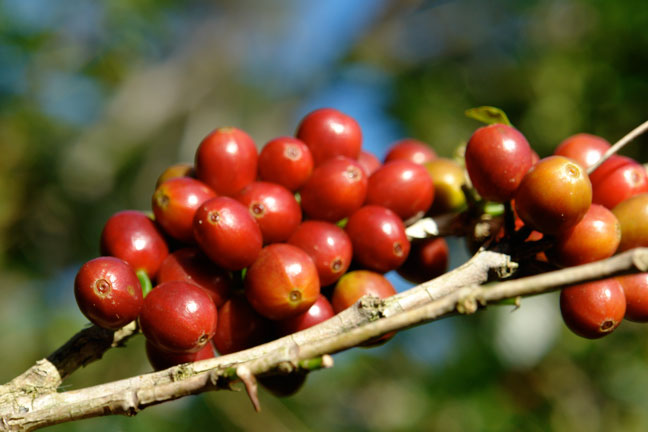
The so-called “Red Cherry Project” (ORC) was launched in 2007 by the major Dutch green coffee trader Trabocca, with the aim of discovering and elevating high-quality coffee from small-scale farms in Ethiopia. This project sets extremely high standards for coffee harvesting, requiring all coffee cherries to be fully ripe and red, and to be hand-picked exclusively. During the harvest period, only female workers are allowed to select the cherries, ensuring that every single coffee fruit is 100% ripe and red—a step that significantly impacts the purity of the final flavor.
The Red Cherry Project is not just about quality control but also serves as an incentive mechanism. The project invites farms across Ethiopia to produce small batches of 1,500 to 3,000 kilograms (approximately 25 to 50 bags) during the harvest season, which are then subjected to a second round of screening and cupping by Trabocca. Farms that pass the quality assessment not only receive better pricing but also bonus funds provided by the project, which can be used to improve production facilities and techniques, further enhancing the quality of future batches. Currently, the project has expanded to include over ten well-known regions such as Yirgacheffe, Sidamo, and the Pungo Forest, and even added the Golocha area near Harar in recent years.
Speaking of processing methods, sun-dried and red honey are the core differences between these two Yirgacheffe coffees. One of them comes from the Aletaland Estate in Yirgacheffe, with an altitude between 1,700 and 2,200 meters, and uses traditional sun-dried processing. During the process, the coffee cherries must first undergo manual sorting to remove unripe green cherries and defective ones, followed by more than two weeks of sun exposure. Throughout this period, moldy or damaged cherries are continuously inspected and removed. Once the flesh moisture content drops to 12%, the outer hard pulp, mucilage, and parchment are mechanically removed, and finally, density and color grading are performed, with visual inspection to eliminate the last defective beans, ensuring every coffee bean meets high standards.
In contrast, the other one uses the red honey processing method, originating from the Idido area of Yirgacheffe, grown at an altitude of 2,000 to 2,200 meters, and the variety is a local heirloom. The hallmark of honey processing is retaining the mucilage layer of the coffee cherry, unlike washed processing which removes it entirely. This sugar-rich mucilage has a significant impact on the fermentation process and the ultimate sweetness of the flavor. Red honey processing retains about 75% of the mucilage, allowing it to slowly release sweetness and complexity during drying, which is why it is often considered a compromise between sun-dried and washed methods, combining both brightness and body.
In terms of roasting recommendations, to highlight the distinctive citrus and berry acidity of the Yirgacheffe region, as well as the different layers brought by the two processing methods—the fermentation character of sun-dried and the sweetness of red honey—roasters in the region often opt for a medium-light roast level. This roast degree preserves more floral and fruity notes while achieving a good balance between acidity and sweetness. For brewing, it is recommended to use water at 90–91°C; the slightly higher temperature helps enhance the release of aromatic compounds and acidity, avoiding excessively sharp sourness.
For actual pour over brewing, it is recommended to use a Hario V60 dripper. Its wide opening and spiral ridges facilitate airflow, improving extraction efficiency and clarity of taste. The suggested specific parameters are: 15 grams of coffee grounds, a 1:15 coffee-to-water ratio, a grind size close to that of coarse sugar, and water temperature controlled at 92–93°C.
The pour over steps are as follows: First, pour 30 grams of water for a 30-second bloom. Then pour 95 grams of water (totaling approximately 125 grams), completed within about 1 minute. When the water level drops to two-thirds of the coffee bed, continue pouring the remaining 100 grams of water (totaling approximately 225 grams), completed within about 1 minute and 40 seconds. The total extraction time is around 1 minute and 55 seconds, after which the dripper is removed to finish brewing.
In terms of flavor profile, one of them exhibits pronounced notes of lemon, licorice, citrus, berries, and sweet orange, with high sweetness and a caramel and creamy finish, along with a lingering black tea aroma. The other starts with a refreshing ginger flower note, leading into bright acidity and sweetness of citrus, lemon, and fruit candy. The mid-palate reveals cedar-like notes and honey-like sweetness, transitioning into an oolong tea-like finish, accompanied by a lasting creamy aftertaste. The overall profile is rich, layered, and well-balanced.
The above content is compiled by CoffeeHunters, a coffee news website.


