







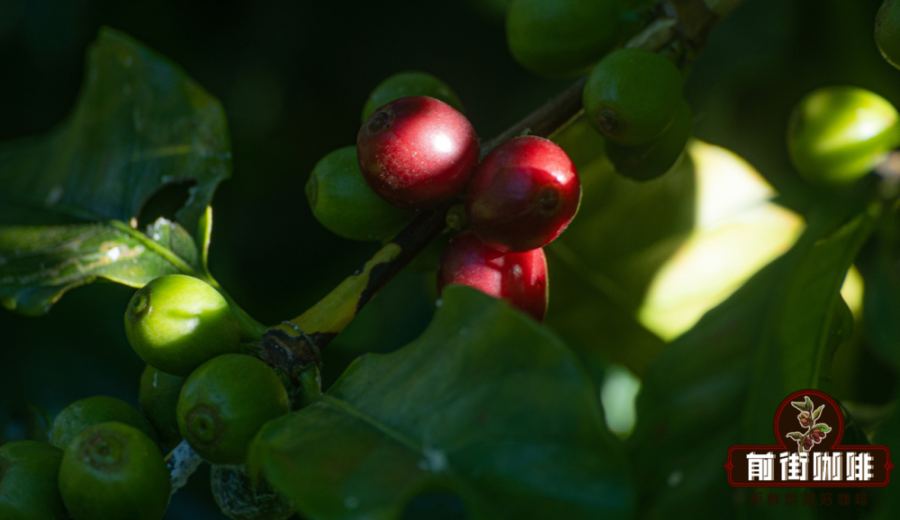
Introduction:As China’s primary coffee-producing region, Yunnan boasts a diverse range of coffee beans thanks to its unique geographical environment. This article delves into the terroir characteristics, mainstream planted varieties, and the differences between washed and natural processing methods in four major producing areas—Lincang, Baoshan, Pu’er, and Dehong. It also provides professional-level brewing parameters for washed Yunnan small-bean coffee, helping coffee enthusiasts comprehensively understand Yunnan coffee’s potential from region to cup.
Yunnan’s coffee cultivation history dates back to 1904, when French missionary Térence Desflèches planted the first coffee seedlings in Zhukula Village, Dali, marking the beginning of coffee cultivation in China. After more than a century of development, the region has become an emerging force on the global coffee map, with the four major producing areas of Lincang, Baoshan, Pu’er, and Dehong being the most representative.
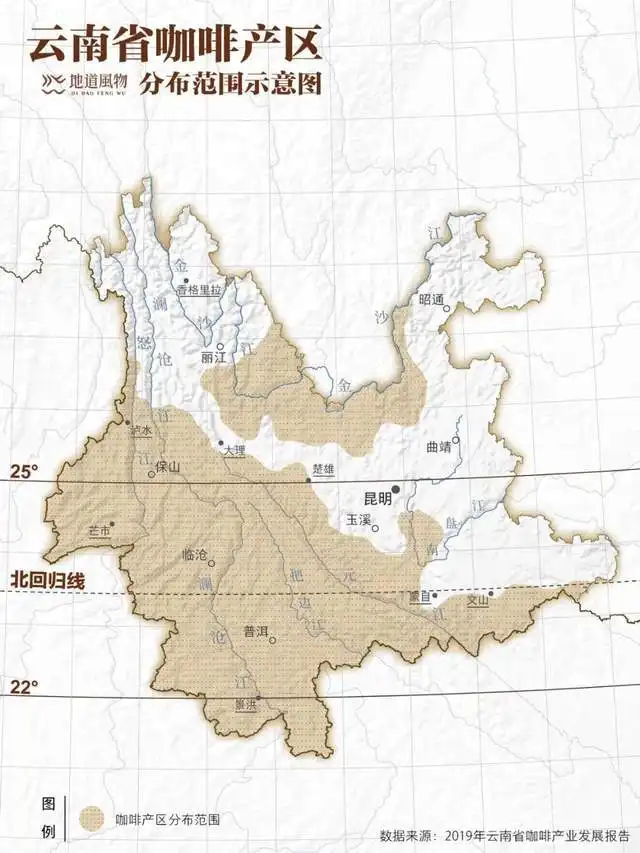
These producing areas are located in the golden planting belt near the Tropic of Cancer, with altitudes generally ranging between 1,000 and 2,000 meters. The mountainous terrain, significant diurnal temperature variations, abundant rainfall, and ample sunlight together create a microclimate ideal for growing Arabica varieties.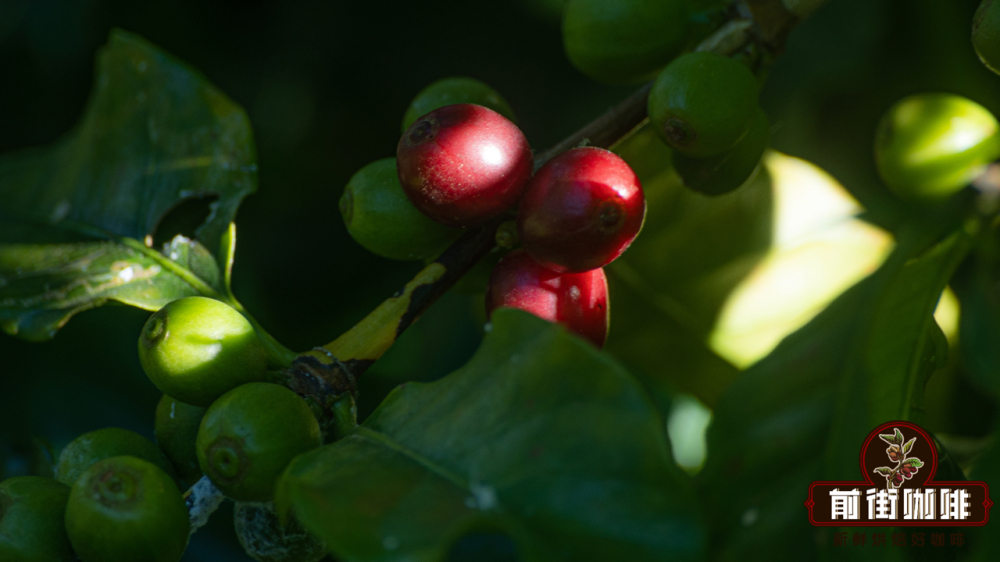
The Lincang producing area is located in the southwestern part of Yunnan, bordering Myanmar, and is named after its location along the Lancang River. With altitudes exceeding 1,000 meters and an average annual temperature of about 17.3°C, the climate here is distinctly divided into dry and rainy seasons. The rainy season, from June to September each year, provides a humid environment and sloped planting methods that help coffee cherries accumulate flavor compounds. A well-known local coffee farm established its estate here in 2013, using the classic Typica variety. After seven years of meticulous management, it launched its first harvest batch of naturally processed coffee beans in 2020, showcasing rich and layered tropical fruit notes.
Baoshan is one of the birthplaces of China’s small-bean coffee. Its cultivation history can be traced back to the mid-1950s, when patriotic overseas Chinese Liang Jinshan introduced the first batch of coffee seedlings from Southeast Asia. The region has an average annual temperature of 21.3°C, with extreme highs exceeding 40°C, but its frost-free nature throughout the year makes it an ideal place for growing high-quality small-bean coffee. In 2010, Baoshan small-bean coffee was awarded China’s National Geographical Indication Protection certification. The small-bean coffee from the Ludian Dam producing area is especially praised for its rich, nutty aroma and balanced acidity-to-sweetness ratio. Its washed versions often exhibit a pronounced caramel sweetness and a soft aftertaste.
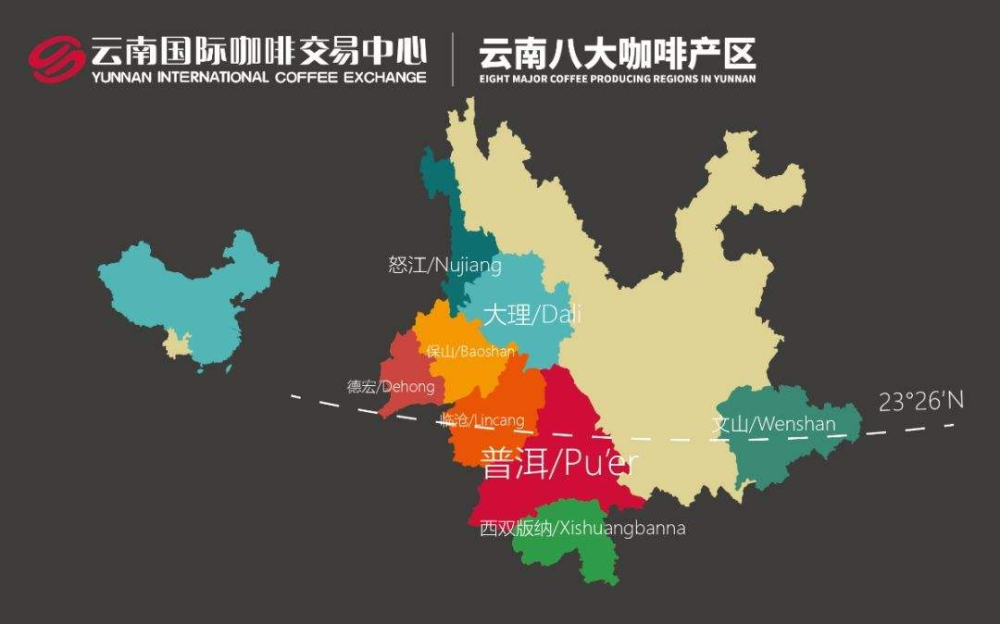
Pu’er City, as Yunnan’s largest coffee-producing area, has seen its development closely tied to international coffee giants. In the 1990s, Nestlé established an agricultural technology demonstration farm here, cultivating coffee varieties adapted to the local environment and providing technical training to farmers, significantly improving the overall quality and yield of the producing area. Today, Pu’er-produced coffee beans have successfully entered the high-end markets of Europe and America, with its natural and honey-processed products particularly known for their bright citrus notes and full-bodied mouthfeel.
Dehong Prefecture, known as the “Hometown of Coffee in China,” began large-scale coffee cultivation as early as 1951 when coffee seeds were introduced from the Myanmar border. The region is home to the Ruili Coffee Germplasm Resource Garden under the Ministry of Agriculture, a gene bank established in the 1980s that houses over 200 coffee species and cultivated varieties. It is one of the most important tropical crop germplasm conservation bases in the country. Dehong’s diverse microclimates allow it to produce coffee with distinct regional characteristics, ranging from fresh floral notes to rich chocolate flavors.
In terms of variety evolution, Yunnan initially relied mainly on the ancient Typica variety. While elegant in flavor, this variety is susceptible to leaf rust and has relatively low yields. The later-introduced Catimor series, which incorporates disease-resistant genes from Robusta, not only exhibits strong resistance to leaf rust and berry diseases but also features early maturation and high yield. It has now become the mainstream cultivated variety in the producing areas, accounting for over 70% of the total planted area.
When it comes to processing method choices, due to Yunnan’s long rainy season and unstable sunlight,washed processing has become the preferred method for the vast majority of farms.This process involves first removing the pulp and flesh, then fermenting the parchment-covered coffee beans in water tanks to break down the mucilage layer using microbes, followed by rinsing with clean water and sun drying. This method effectively reduces impurity interference, presenting a cleaner and brighter flavor profile, particularly suitable for highlighting the fruit acidity and sweetness layers of the coffee itself.
For home brewing of washed Yunnan small-bean coffee, it is recommended to use a flow-optimized V60 filter cone, paired with the following parameters to highlight its nutty and brown sugar base flavors:
• Filter cone: V60 (transparent version recommended for observing filtration speed)
• Water temperature: 91°C (±1°C)
• Grind size: Medium-fine (equivalent to 80% extraction through a #20 sieve, close to the texture of fine sugar)
• Coffee-to-water ratio: 1:15 (e.g., 15 grams of coffee to 225 milliliters of water)
• Step-by-step extraction process: First, pour 30 grams of water for a 30-second bloom, then add 95 grams of water for the second pour. Once the flow slows, add 100 grams of water to complete the extraction, with the total time controlled to around 2 minutes. These parameters help balance acidity and body, avoiding over-extraction or harsh off-flavors.
The brewed coffee typically showcases a distinct nutty main note, with a smooth brown sugar sweetness upon entry. As the temperature slightly drops, it transitions to a clear plum-like acidity, and the finish leaves a gentle black tea-like aftertaste. The overall performance is balanced and suitable for everyday drinking.
The above content is compiled by CoffeeHunters, a coffee news website.


