







Introduction:Although Bolivia is not a mainstream coffee-producing country, its high altitude and unique varieties create distinctive flavors. This article delves into the Java variety from the renowned Vallecito Estate in the country, introduces the characteristics of its cocoa sun-dried processing method, and provides practical V60 pour over parameters and flavor profiles to help coffee enthusiasts fully grasp the brewing essentials of this potential bean.
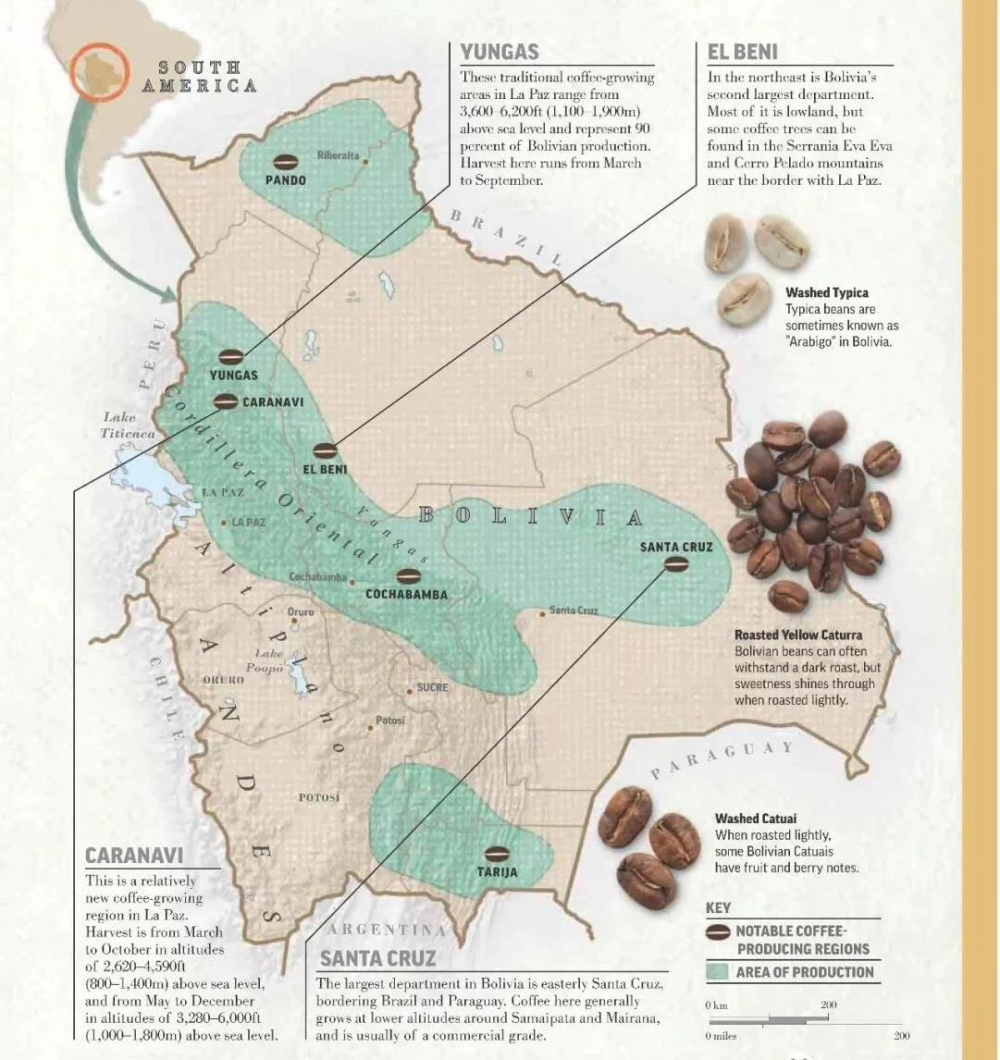
Located in South America, Bolivia, though relatively underdeveloped economically, boasts a uniquely advantageous geographical environment that nurtures coffee with high-quality potential. The country features high-altitude mountainous regions and a cool climate, which are particularly suitable for cultivating premium Arabica coffee. The beans produced often exhibit prominent sweetness and gentle acidity, with rich flavor layers.
Take Vallecito Estate as an example. Covering just six hectares, the estate is located in Caranavi, one of Bolivia’s major coffee-growing regions, at an altitude exceeding 1,660 meters. This elevation slows down the ripening process of coffee cherries, extending the overall growth cycle and aiding in sugar accumulation, thereby imparting more pronounced sweetness and complexity to the coffee. Additionally, coffee from high-altitude areas typically features gentle citrus acidity and berry notes, contrasting with the intense chocolatey sweetness and mild acidity commonly found in low-altitude regions.
In terms of variety, Bolivia mainly cultivates Typica and a small amount of Caturra, but the most distinctive is the Java variety. Originating from Ethiopia, this variety is also known locally as "long bean" due to its slender shape. Java not only exhibits good resistance to common coffee leaf rust, making it suitable for smallholder farmers, but its flavor profile is also on par with the highly popular Geisha variety, showing great development potential.
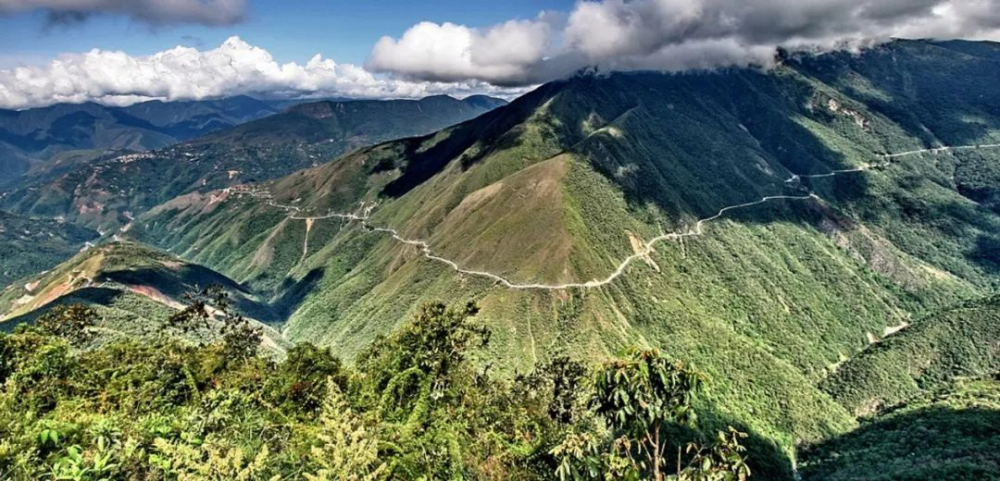
However, despite Bolivia’s potential for high-quality coffee, its production has long remained low. One reason is that coffee production in the country is dominated by smallholders, making large-scale exports difficult. Moreover, about 40% of the coffee beans are consumed domestically, and the underdeveloped transportation infrastructure—especially in the main producing region of Yungas, where roads are treacherous and dubbed the "Road of Death"—not only affects transport efficiency but can also cause the coffee cherries to ferment and deteriorate during transit, negatively impacting export quality.
Regarding green bean processing methods, Bolivian farmers commonly use the washed process: first, the screened coffee cherries are depulped by a pulper to remove the skin and part of the pulp, then the beans with residual mucilage are soaked in water for about 24 hours of fermentation, followed by rinsing with clean water to remove mucilage and impurities, and finally drying to reduce the moisture content to around 12% via sun drying or mechanical drying before hulling and storage. While this method ensures cleanliness and stability, it tends to produce more conservative flavor profiles.
Some regions have also experimented with sun-dried processing, especially in colder areas where farmers use machines for low-temperature slow drying, known as the "cocoa sun-dried processing method." This technique was first introduced by Pedro of the Rodríguez family, who utilized a low-temperature dryer originally designed for cacao beans to dry coffee beans in a stable and gradual manner, effectively reducing the impact of weather variations on quality.
The cocoa sun-dried processing flow generally involves: carefully selecting the ripest coffee cherries, washing them, and then placing them on African beds to be turned daily for about a week before transferring them to a cocoa dryer for low-temperature drying, and finally storing them in a warehouse. This method preserves the richness and uniqueness of flavors even under unfavorable weather conditions.
Taking the cocoa sun-dried Java coffee from Vallecito Estate as an example, its producing area is located in La Paz Department, at an altitude of about 1,600 meters, and its flavor profile is highly layered: the cup opens with distinct citrus and hawthorn-like acidity and sweetness, the mid-palate blends fruit, chocolate, and vanilla cream notes, and upon cooling, subtle maple sweetness and jasmine tea aromas emerge, with a lingering sugarcane sweetness. It is ideal for coffee lovers who enjoy a balanced acidity and sweetness with complex aromas.
If you’d like to try brewing this specialty coffee bean at home, the V60 filter cone is recommended. Its large aperture and unique spiral ribs help enhance the flow rate and air circulation during extraction. Although it may sacrifice some body, it highlights bright acidity and clear aromas, making it an ideal choice for showcasing the Java variety’s flavors.
Recommended brewing parameters are as follows: water temperature controlled at 90–91°C, using an EK43s grinder set to 10 (approximately the fineness of granulated sugar), with a coffee-to-water ratio of 1:15 and a total coffee dose of 15 grams. The specific technique: start with a 30-second bloom using 30 grams of water, then pour 95 grams (total around 125 grams) over about 1 minute; when the water level drops to two-thirds of the coffee bed, add the remaining 100 grams (total around 225 grams) over approximately 1 minute and 40 seconds. The total dripping time should be controlled between 1 minute 55 seconds and 2 minutes, then remove the filter cone to complete extraction.
Under these parameters, the flavor profile typically presents mild fermentation notes, grape-like character, delicate nuttiness, and soft floral aromas, with medium acidity. The overall mouthfeel has a juice-like refreshing texture, making it highly suitable for coffee enthusiasts who seek layers and details to further explore.
The above content is compiled by CoffeeHunters, a coffee news website.


