








Introduction:Kenyan coffee is renowned for its bright acidity and rich layered complexity, primarily derived from two classic cultivars—SL28 and SL34—as well as the unique K72 washed processing method. This article delves into Kenya’s coffee grading system, varietal characteristics, and flavor differences across major growing regions, while also providing detailed information and practical pour over recommendations for two popular Kenyan beans, helping coffee enthusiasts better appreciate their distinctive charm.
When it comes to Kenyan coffee, many people immediately think of its distinctively layered and vibrant mouthfeel, along with an acidity as lively as fresh juice. This acidity often leaves a lingering aftertaste reminiscent of grapefruit or red wine, making it truly unforgettable. This article will systematically introduce the main varietal sources, cultivation, and trading models of Kenyan coffee, and provide in-depth analysis of two representative Kenyan beans—one from the Sasanich Estate and the other from the Asali Washing Station in the Thika region—including regional characteristics, flavor profiles, and practical pour over suggestions to give you a more comprehensive understanding of this uniquely flavorful African specialty coffee.

A significant part of the soul of Kenyan coffee’s flavor comes from its unique varietal selection. In the 1930s, the Kenyan government commissioned the Scott Labs research facility to carry out a varietal improvement program, aiming to identify coffee tree varieties that combined high yield, excellent flavor, and disease resistance. From 42 breeding lines, the research team ultimately selected two main cultivars: SL28 and SL34. Though not of the same origin—the former is derived from Bourbon, while the latter from Typica—these two cultivars share surprising similarities in flavor expression: both exhibit pronounced acidity layers and outstanding sweetness. However, observations show that SL28 performs better in environmental adaptability and overall flavor detail, often featuring intense blackcurrant and citrus notes, along with subtle dark plum aromas. SL34, on the other hand, is known for its clear and bright fruit character and smooth, clean mouthfeel. Additionally, some Kenyan coffees also include the Ruiru 11 variety, a hybrid developed to resist coffee leaf rust. Although it offers high yields, its flavor profile is relatively ordinary, so it seldom appears in the specialty coffee market.
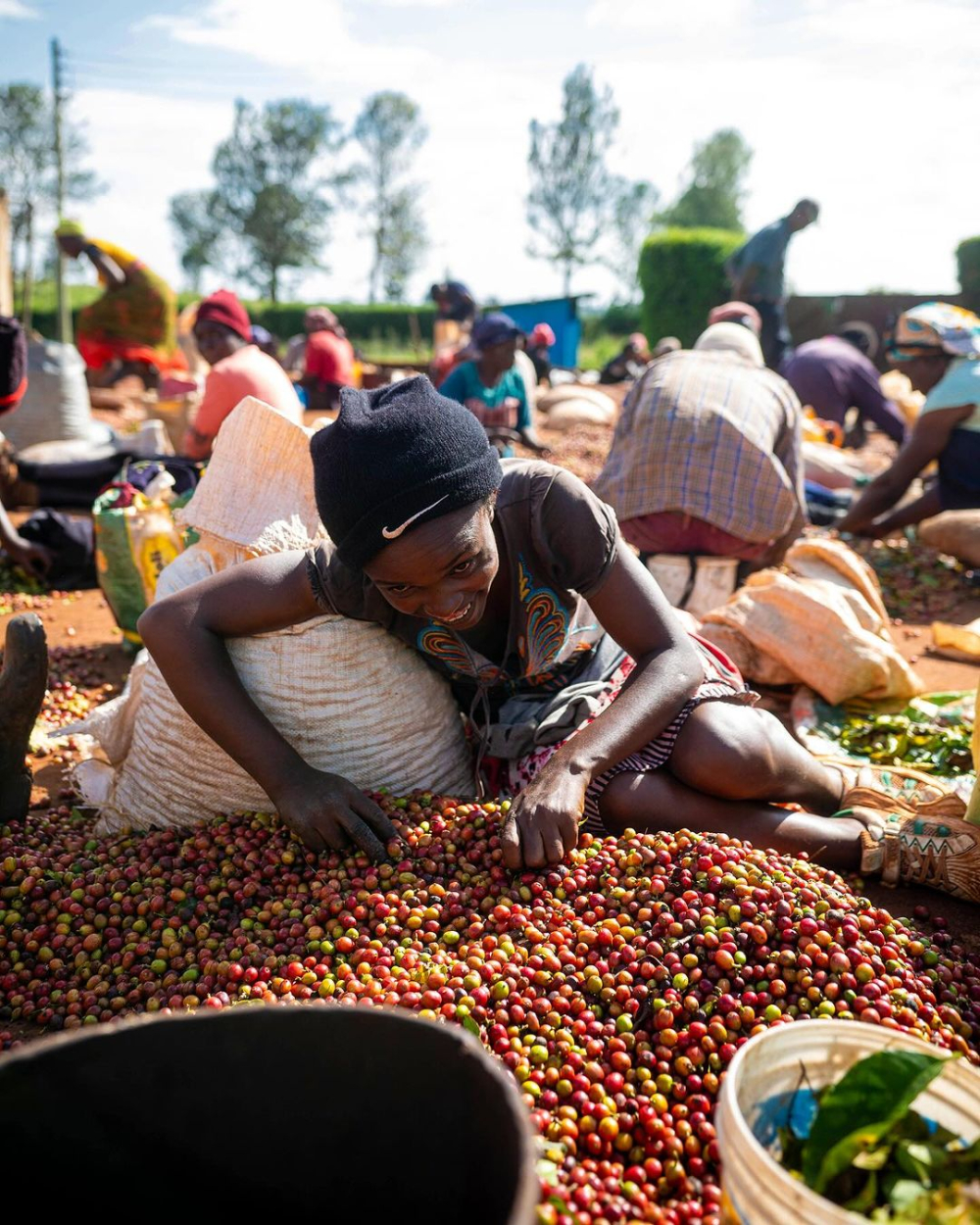
Kenyan coffee cultivation is mainly concentrated in volcanic regions at elevations between 1,600 and 2,100 meters, spanning from the area around the capital Nairobi to the Kenyan highlands. The local farming models can be divided into two main types: large-scale farms, which account for about 25% of the total—numbering over 3,000 and usually equipped with their own processing facilities—and a cooperative system composed of 270 cooperatives and approximately 700,000 smallholder farmers, making up around 75% of the total cultivation area. Cooperatives typically have professional management teams overseeing every step of the coffee process from harvest to processing, even down to the care of individual coffee trees, resulting in more consistent quality.
Washed processing is the dominant method for Kenyan coffee, but its technique is distinctive, most notably represented by the so-called K72 washed process, also known as “double washed” or “72-hour washed.” The core of this method lies in its exceptionally long fermentation period—up to 72 hours, far exceeding the standard 36 hours of typical washed processes. The specific steps include: harvesting coffee cherries at peak ripeness when sugar content reaches 21, selecting the highest-quality cherries, removing the outer skin, and placing them in water tanks for the first 24-hour fermentation. After thorough washing, they are soaked in clean river water for a second 24-hour fermentation. This process is repeated three times for a total of 72 hours. During this time, water quality is strictly controlled, and the fermentation water is changed every few hours to prevent the growth of unwanted microbes and off-flavors. This prolonged, repeated fermentation and washing process imparts Kenyan coffee with a rich yet clean acidity and a delicate mouthfeel. When tasted, it often reveals intense fruit acids like cherry tomato and dark plum, as well as a honey-like finish.
Kenyan coffee trading is mainly conducted through two channels: one is the auction system at the Nairobi Coffee Exchange, which accounts for about 85% of transactions and serves as the official primary trading platform; the other is so-called “second window” direct trade, which makes up only around 15%. Through the auction system, green bean quality and pricing are determined by open market bidding, representing the main channel for the circulation of Kenya’s specialty coffee.
Kenya has numerous coffee-growing regions, each with distinct flavor profiles due to variations in terrain, elevation, and microclimate. This article focuses on the origins of two popular Kenyan beans: first is the Sasanich Estate in the Kiambu region, which sits at elevations between 1,500 and 2,000 meters, making it one of the highest-altitude coffee-growing areas in the country. The region features fertile acidic red soil, deep layers with good drainage, abundant sunshine, and suitable rainfall, providing ideal conditions for coffee growth. The other is coffee from the Asali Washing Station in the Thika region. Thika is located in central Kenya, near the foothills of Mount Aberdare, and is one of the higher-altitude secondary regions in the area. The soil is mineral-rich volcanic red earth with abundant organic matter, which helps concentrate and express the coffee’s flavors.
Generally speaking, coffee from the Kiambu and Murang’a regions is known for its bright and full-bodied acidity; the Nyeri region showcases clear citrus and floral notes, with noticeable berry acidity though not as intense as Ethiopia’s Yirgacheffe; Kirinyaga region also features bright acidity paired with delicate sweetness; Embu region has relatively softer acidity but offers a balanced overall profile with a long finish; Machakos region is noted for its delicate mouthfeel and long-lasting finish; and the Kisii and Bungoma regions are characterized by soft fruity sweetness and nutty tones, with more moderate acidity.
To fully highlight the bright acidity and fruity notes of Kenyan coffee, roasters typically opt for a light roast. Below are detailed profiles of two popular Kenyan beans:
1. Sasanich Coffee Bean
Region: Kiambu
Elevation: 1,680 meters
Variety: SL28, SL34, Ruiru 11
Processing Method: Washed
Flavor: Pronounced dark plum, cherry tomato, and honey aromas, with subtle nutty notes upon cooling, and a juice-like, vibrant mouthfeel with clear and bright acidity.
2. Asali Coffee Bean
Region: Thika
Elevation: 1,550~1,750 meters
Variety: SL28, SL34
Processing Method: 72-Hour Washed
Grade: AA TOP
Flavor: Wet aroma carries ripe tomato and floral notes. When hot, it presents caramel and brown sugar sweetness. As it cools slightly, the cherry tomato and dark plum acidity becomes prominent, with clean and bright acidity, highlighted sweetness in the mid-palate, and an overall refreshing, juice-like mouthfeel.
Pour Over Recommendation: It is recommended to use beans roasted about 4 days prior, brewed using a V60 dripper to balance flow rate and flavor expression. Suggested dosage is 15 grams with a 1:16 coffee-to-water ratio, and water temperature controlled at 90°C to reduce the risk of over-extraction and avoid overly sharp acidity. For actual brewing, a staged extraction method is advised: start with a 30-gram bloom for 30 seconds to allow the coffee grounds to fully expand. Then pour 120 grams of water in small circles centered around the coffee bed, maintaining a pour height of about 5 cm to avoid excessive agitation. When the water level drops to half the coffee bed, begin the third pour by circling outward from the center at a flow rate of about 4 grams per second, stopping after a total of 240 grams. The entire extraction should take about 1 minute and 50 seconds. With these parameters, the signature berry acidity and rounded mouthfeel of Kenyan coffee are accentuated, with a tea-like, delicate aftertaste, delivering a balanced and layered cup overall.
The above content is compiled by CoffeeHunters, a coffee news website.


