







Introduction:Want to truly understand how to brew the Geisha Village Gold Label Geisha for the best flavor? This article starts by exploring the differences between the Gold Label and Red Label, analyzing their origin background, variety origins, and grading system, then delves into the ideal grind size, water temperature, coffee-to-water ratio, and a practical three-stage pouring method. Helping you unlock the full flavor potential of this high-altitude Ethiopian Geisha.
The Geisha Village Gold Label Geisha is a highly sought-after gem for many coffee enthusiasts, but do you know how it differs from the well-known Emerald Estate Red Label Geisha? Many people encountering a "labeled" Geisha for the first time often have questions about these classifications—such as “Is the Gold Label a higher grade than the Red Label?” or “Between the Gold Label and the Emerald Red Label, which has better flavor?” These questions are actually closely related to each estate’s grading logic.
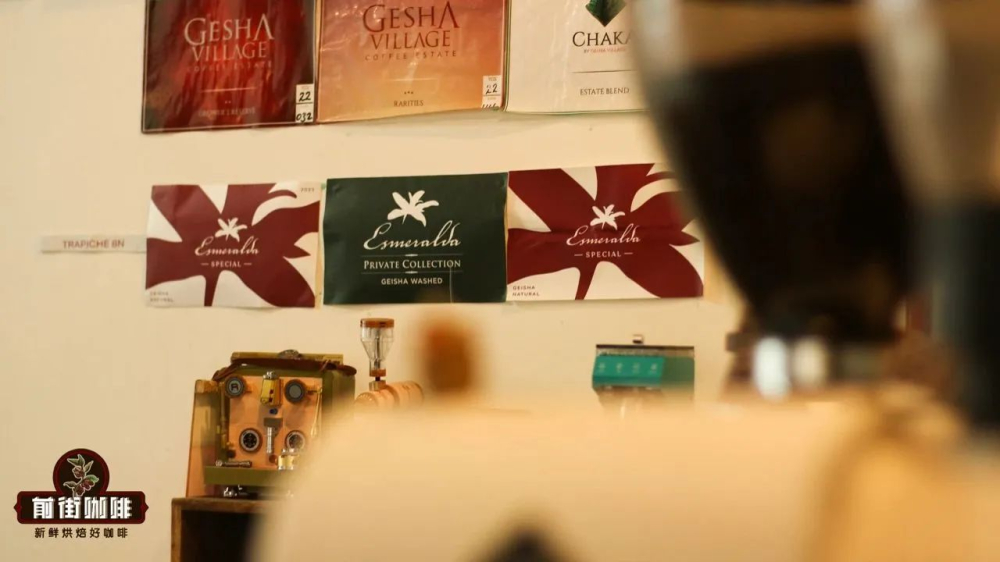
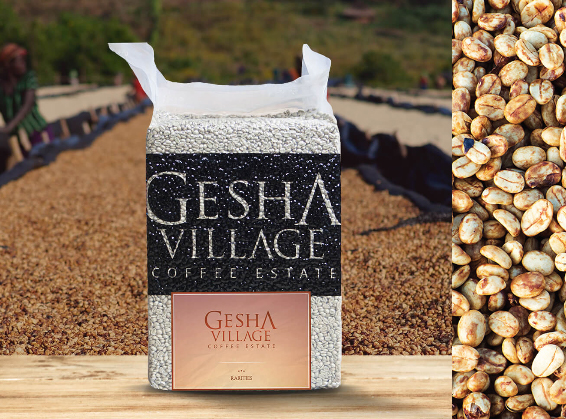
In common café grading terminology, the term "Label" is often used to indicate the quality positioning of a particular Geisha batch, such as Gold Label, Red Label, Green Label, etc. This usage is mainly popular in the Chinese market. Take Emerald Estate as an example—their Red Label’s official name is 'Esmeralda Special,' representing that the batch of Geisha scored above 91 in cupping tests and comes with detailed plot and processing information, while the “Red” comes from the main color of its packaging. Similarly, Geisha Village’s Gold Label’s official English name is 'Rarities,' meaning 'rare treasures,' referring to the top-tier Geisha among non-auction batches, accounting for only about 10% of the estate’s total production, with each batch also providing specific plot information. Although both estates use colors like red and green to denote grades, the actual producing regions and varieties are completely different—so be sure to confirm the origin when purchasing.
Geisha Village is located in the southwestern part of Ethiopia, bordering South Sudan, in the Bench Maji region, with nearly 500 hectares of cultivated area. This area features typical highland terrain, with even the lowest elevation exceeding 1,900 meters. The high-altitude environment allows coffee cherries to ripen slowly at low temperatures, helping accumulate richer flavor compounds. Bench Maji is one of the 14 districts under the SNNPR state and is also the birthplace of the famous Geisha variety. However, due to its remote location, most local coffee still maintains traditional forest cultivation methods. The region has its own smallholder cooperative union, serving over 130,000 coffee farmers, and Geisha Village is one of the few large-scale estates in the area equipped with major washed processing facilities and systematic quality control.
Speaking of the varieties of the Gold Label Geisha, we must start with the origin of the Geisha. Geisha was first discovered in the 1930s near the Gesha Mountains in southern Ethiopia, originally intended as a candidate for disease-resistant varieties. It was later introduced by research institutions in Kenya, Uganda, and other places, and was finally cataloged in 1953 by CATIE Tropical Agricultural Research Center in Costa Rica under the number T2722. However, due to its low yield and susceptibility to damage, it long went unnoticed. It wasn’t until the 1990s that the owner of Panama’s Emerald Estate discovered that Geisha exhibited exceptional disease resistance and unique flavors in high-altitude environments, propelling it to fame. In 2004, this Geisha—which won the BOP competition—was later confirmed to be CATIE’s T2722 variety.
As for Geisha Village’s 'Geisha 1931,' it is a variety selected by the estate owner Adam with the help of Willem Boot, based on the appearance and flavor characteristics of Panamanian Geisha, through extensive screening in Ethiopia’s Gesha region. Although its flavor is similar to Panamanian Geisha, genetically it cannot be confirmed to be identical. The name '1931' commemorates the year Geisha was first discovered. Currently, the main varieties planted by Geisha Village are three: Gori Gesha, Geisha 1931, and IIIubabor Forest. Among them, Geisha 1931 is used in the Gold Label grade to present a flavor profile close to that of Panamanian Geisha.
Based on microclimatic conditions, Geisha Village divides its plots into multiple blocks. Each block selects the most suitable variety to plant according to altitude, sunlight, and shade conditions, ensuring flavor diversity and regional character. Gold Label Geisha usually comes from high-elevation plots ranging from 1,900 to 2,069 meters, such as Oma, Surma, and Shewa-Jibabu, with Shewa-Jibabu being the highest-altitude area in the entire estate. The Gold Label batch purchased by the farm comes from the Oma plot, grown at an altitude between 1,900 and 2,040 meters, with the variety being Geisha 1931, processed using the natural method. Its flavor often exhibits layers of citrus, berries, cream, caramel, melon, and honey.
For brewing this high-quality Geisha using pour over, it is recommended to use freshly roasted beans, with the optimal flavor window being 7 to 30 days post-roast, especially the golden period of 1 to 2 weeks after roasting. The reference roast batch used here is freshly roasted within 5 days, ensuring it is still at its best flavor stage upon arrival. Lightly roasted Geisha beans are relatively hard in texture, making slightly higher water temperature and finer grind size suitable for bringing out aroma and complexity.
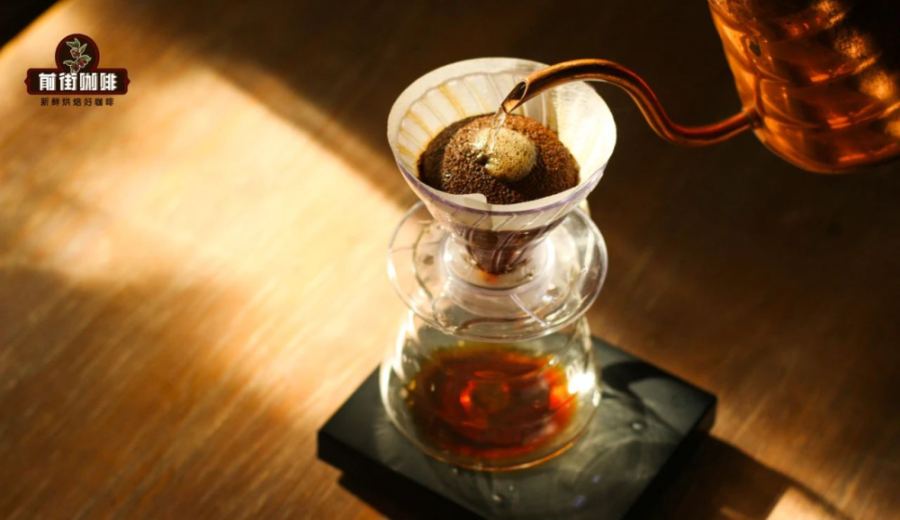
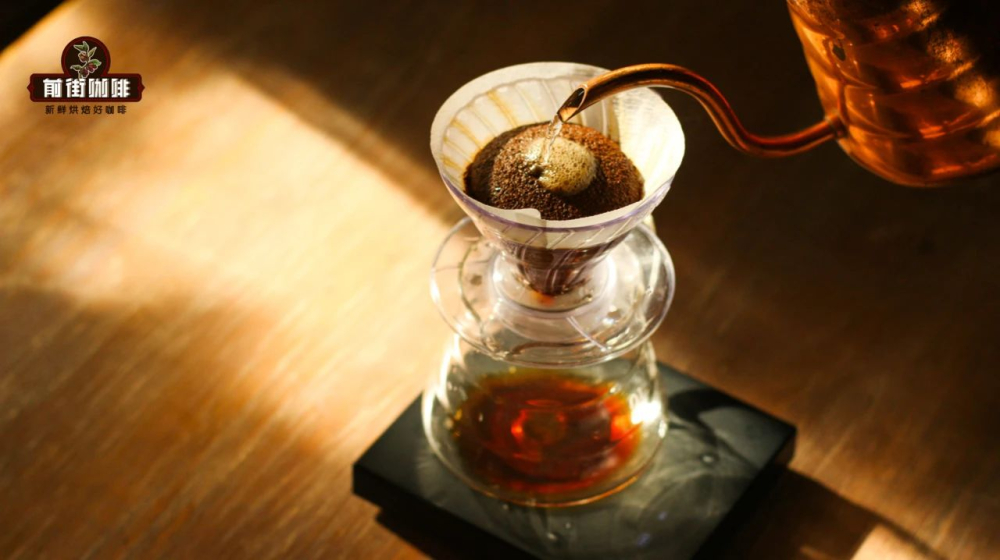
It is recommended to use a V60 dripper for pour over, with the following parameters:Water temperature: 91-92°C,Coffee dose: 15 grams,Coffee-to-water ratio: 1:15,Grind size: Fine sugar-like (approximately 80% passing through a #20 sieve). The extraction uses a three-stage pouring method: First, perform a 30-second bloom with 30 grams of water to allow the coffee grounds to fully expand; then pour the second stage of 95 grams of water, completing it around 1 minute and 5 seconds, at which point the coffee bed should be reduced to half its height; finally, pour the third stage of 100 grams of water, finishing the pour at 1 minute and 40 seconds. The entire dripping process is completed in approximately 2 minutes and 30 seconds to 3 minutes. When pouring, it is recommended to gently circle from the center outward with a small stream of water to avoid strong impact that could lead to uneven extraction.
Mastering these details can help you more consistently extract the multi-layered flavors of the Geisha Village Gold Label Geisha—from bright citrus notes to rich honey and caramel finishes—each sip is a true essence of Ethiopia’s highland terroir.
The above content is compiled by CoffeeHunters, a coffee news website.


