








Introduction:From the first Typica plant introduced by French missionaries to Yunnan becoming an important origin for specialty coffee in China, this history reflects the evolution of varieties, processing methods, and market demands. This article will take you through Yunnan coffee’s transformation from a debt-repayment crop to a specialty product, analyze the differences between Typica and Catimor, and provide actual flavor profiles and pour over parameters for a Typica from a certain Lincang estate — helping you better understand the potential of Yunnan coffee.
The development of Yunnan coffee has been a bumpy journey. It all began in the late 19th century when French Catholic missionaries brought the first coffee trees to Dali, reportedly of the small-bean variety, later known as Typica. However, at the time, domestic awareness of coffee was limited, and yields were low, so coffee cultivation never really scaled up.
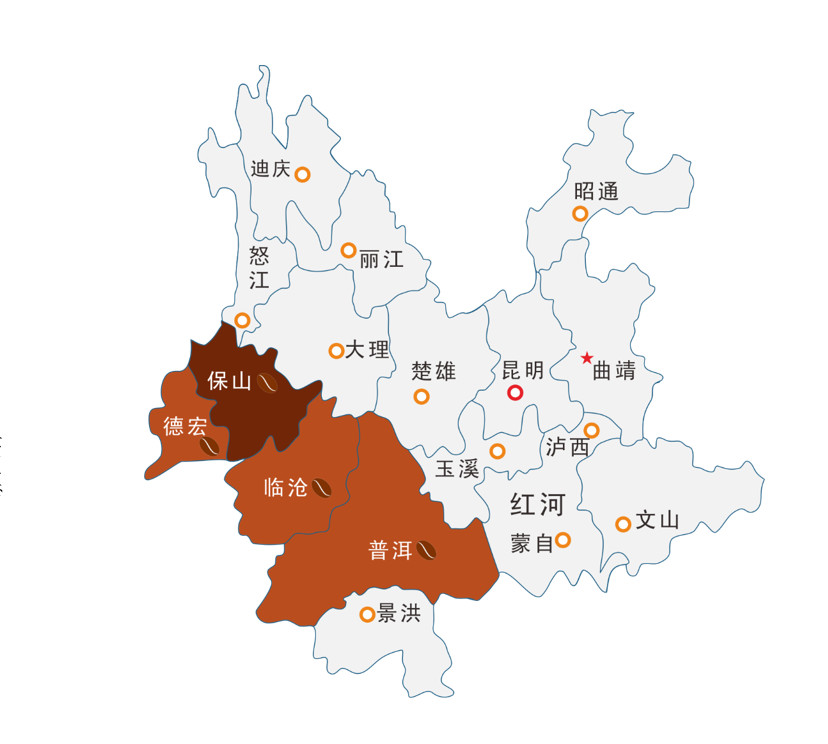
It wasn’t until the 1960s, when Yunnan began large-scale coffee planting to repay Soviet loans, that things changed. Planting areas included Baoshan’s Luxi River, Dehong’s Zhefang, Ruili, Wanding, and Wenshan, with total acreage once reaching as high as 50,000 mu. These coffees were mainly locally cultivated Typica and its variant Bourbon, harvested and processed via dry methods, then exported to the Soviet Union by the state.

However, after the debt repayment task ended, domestic demand for coffee remained low, and at the same time, a severe outbreak of coffee leaf rust disease led to the death of many coffee trees. Farmers switched to other cash crops, and coffee planting area shrank drastically to only about 2,000 mu.
A turning point came in the 1980s with the rise of the instant coffee industry. In search of a stable and high-yield coffee supply, Nestlé entered Yunnan in 1988 and introduced the Catimor variety. This variety, which has Robusta genetics, is highly disease-resistant and productive, but due to its non-pure Arabica lineage, it generally produces bitter, astringent flavors lacking complexity.
As a result, before the year 2000, most consumers’ impression of Yunnan coffee was almost synonymous with “instant coffee raw material” — flavors that were monotonous and subpar. However, as China’s economy took off and the specialty coffee culture gradually emerged, consumer demand for better flavor and quality increased, bringing a transformation opportunity for Yunnan coffee.
Variety has always been a fundamental factor influencing coffee flavor. Some industry players believe that if Yunnan coffee is to truly go specialty, selecting premium varieties is a key step. Typica, as the earliest introduced small-bean variety, though low-yielding, can exhibit rich fruit acidity and layers under suitable altitude and processing methods. However, due to growing challenges, many farmers have turned to the easier-to-manage and higher-yielding Catimor.
Even so, some industry experts point out that if planted at high altitudes (such as above 1,500 meters) and paired with good post-harvest processing, Catimor can also deliver decent aroma and body. However, to showcase a more representative “regional flavor,” traditional processing methods paired with premium Arabica varieties — such as Typica or Bourbon — are still essential.
To improve the flavor profile of Yunnan coffee at the source, a certain brand established its own coffee estate in Lincang in 2013, primarily planting Typica with a small amount of Bourbon. The goal is to change the variety and upgrade processing techniques so that Yunnan coffee, even with traditional washed or natural processing, can display flavor characteristics similar to international specialty coffee — breaking the stereotype that Yunnan coffee is only about “flavored Catimor.”
It is understood that the brand’s self-grown Typica has a relatively low annual yield, producing only about 600 kg in the 2021–2022 season, mainly sold through its own stores and online channels. These coffee beans are processed via natural sun-drying after harvest, then quickly sent to the roastery for cupping and roasting to ensure freshness.
In terms of flavor profile, this brand’s Yunnan Typica features dominant notes of plum, berries, brown sugar, and black tea, with bright acidity and a distinct tea-like quality. Annual climate variations have minimal impact on the core flavor profile, though the body may differ slightly. This flavor profile makes it especially suitable for pour over enthusiasts who enjoy fruity acidity and tea undertones.
To fully highlight its sweet-tart and tea-like qualities, it is recommended to use a medium-light to medium roast and brew with a V60 filter. Specific parameters are suggested as follows: a 1:15 coffee-to-water ratio, a grind size roughly the size of coarse sugar (approximately 75% through a 20-mesh sieve in China), with water temperature controlled at 88–89°C.
Suggested pour over steps: First, pour 30 grams of water for a 30-second bloom; second, pour in a circular motion with a slow stream until 125 grams, then wait until the water level drops halfway before continuing to 225 grams. Total extraction time is around 2 minutes and 10 seconds. These parameters help balance acidity and sweetness while avoiding over-extraction that could lead to bitterness.
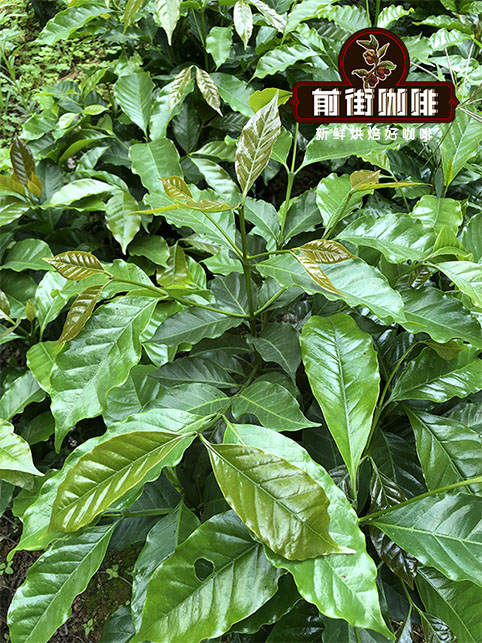
In actual cupping, this Yunnan Typica exhibits a rich berry juice character, clear plum acidity, accompanied by roasted nutty aromas, a soft black tea note, and a natural brown sugar sweetness. The overall flavor is well-layered, with a clean and lingering aftertaste.
In summary, the transformation of Yunnan coffee is not just about increased production, but also a comprehensive upgrade in variety selection, processing techniques, and market positioning. Typica, as the starting point of Yunnan coffee, is now being re-embraced on the path to specialty — showcasing potential to align with international specialty coffee standards through scientific cultivation and refined processing. For coffee lovers, trying a pour over Yunnan Typica might just bring you a delightful surprise.

The above content is compiled by CoffeeHunters, a coffee news website.


