







Introduction:Jamaican Blue Mountain coffee is hailed as one of the world’s finest coffees, yet the market is flooded with various products labeled as “Blue Mountain,” making it hard to discern authenticity. What exactly makes Blue Mountain coffee so unique? How does the CIB (Jamaica Coffee Industry Board) ensure its quality? This article will delve into the history, geographical conditions, washed processing methods, the three legally defined growing regions, grading system, coffee variety characteristics, tips for identifying genuine beans, as well as practical pour over brewing advice and roasting essentials — all to help you uncover the secrets behind this legendary coffee.
Renowned worldwide, the true essence of Blue Mountain coffee is often overshadowed by various "Blue Mountain flavor" or "Blue Mountain blend" offerings on the market. So what exactly constitutes authentic Jamaican Blue Mountain coffee? The answer involves stringent cultivation zones, quality certification, and processing procedures — far surpassing ordinary high-priced coffees.
The History and Origins of Blue Mountain Coffee
Coffee cultivation in Jamaica began in the 18th century. In 1717, King Louis XV of France ordered the establishment of plantations there, and by the mid-1720s, then-Governor Sir Nicholas Lawes introduced Arabica seeds from Martinique, planting them initially in the St. Andrew area. These coffee trees were later transplanted to the Blue Mountain range and classified into different grades based on altitude. Among them, Blue Mountain coffee, thanks to its exceptional environmental conditions, became the pinnacle of the coffee world.
The Unique Geography and Climate of the Blue Mountains
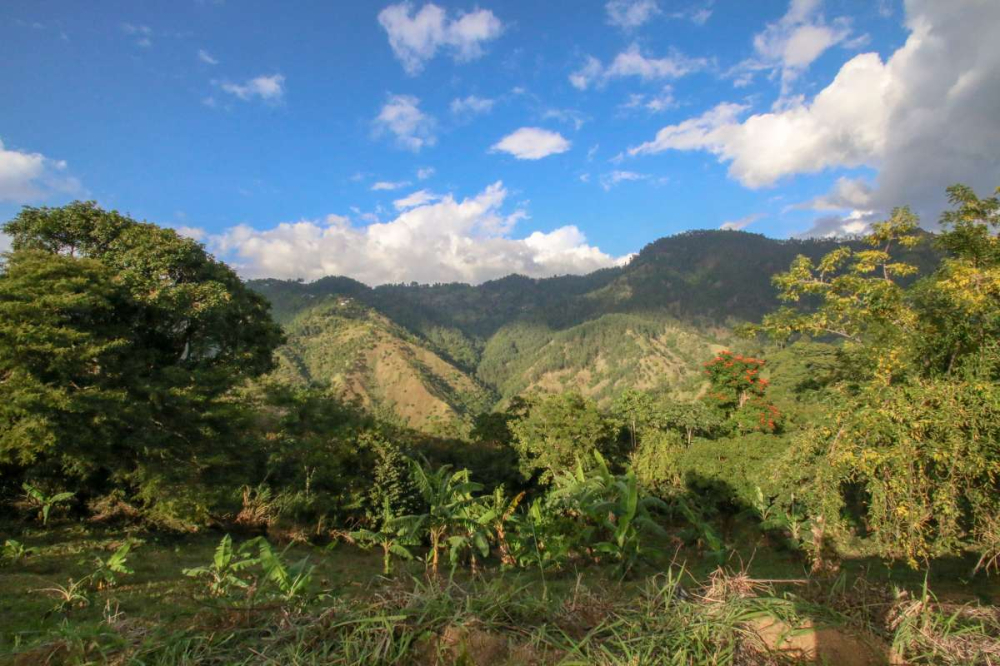
The Blue Mountain range is located in eastern Jamaica, embraced by the Caribbean Sea. The mountains shimmer with a sapphire-like hue under sunlight, hence their name. The region sits at elevations exceeding 2,100 meters, with the highest peak reaching 2,256 meters — placing it within the ideal growing zone of the coffee belt. It boasts fertile volcanic soil, fresh air, abundant and consistent rainfall (average annual precipitation of about 1,980 mm), and a cool, foggy climate year-round (average temperature around 27°C), providing an almost perfect environment for coffee trees.
It’s worth noting that Blue Mountain coffee is mostly grown on terraced farms, coexisting with crops such as bananas and avocados. This not only helps maintain ecological balance but also offers the coffee trees moderate shade and nutrients. Moreover, due to the steep terrain, harvesting is challenging and primarily relies on skilled female pickers who can accurately judge the ripeness of the coffee cherries, ensuring only the best are harvested.
Washed Processing: The Only Method for Blue Mountain
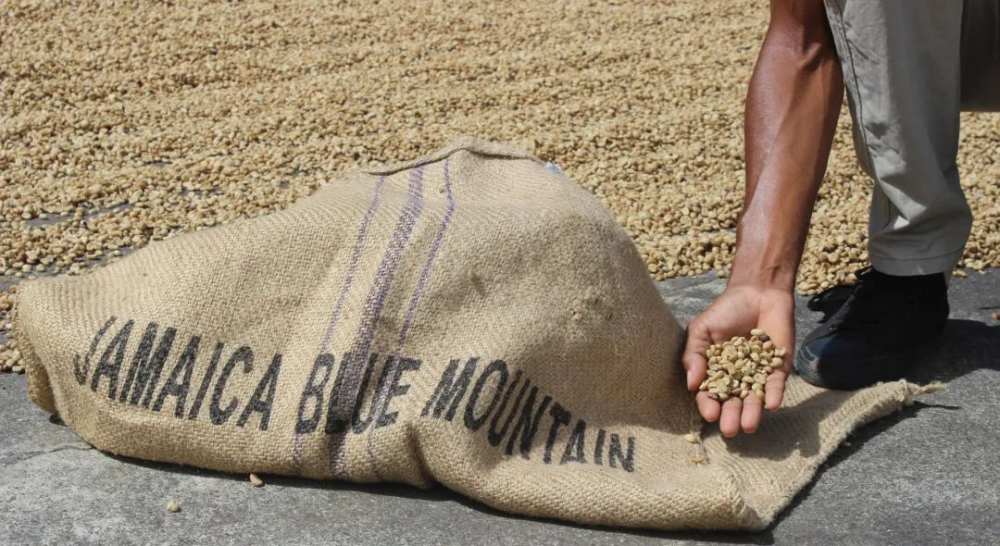
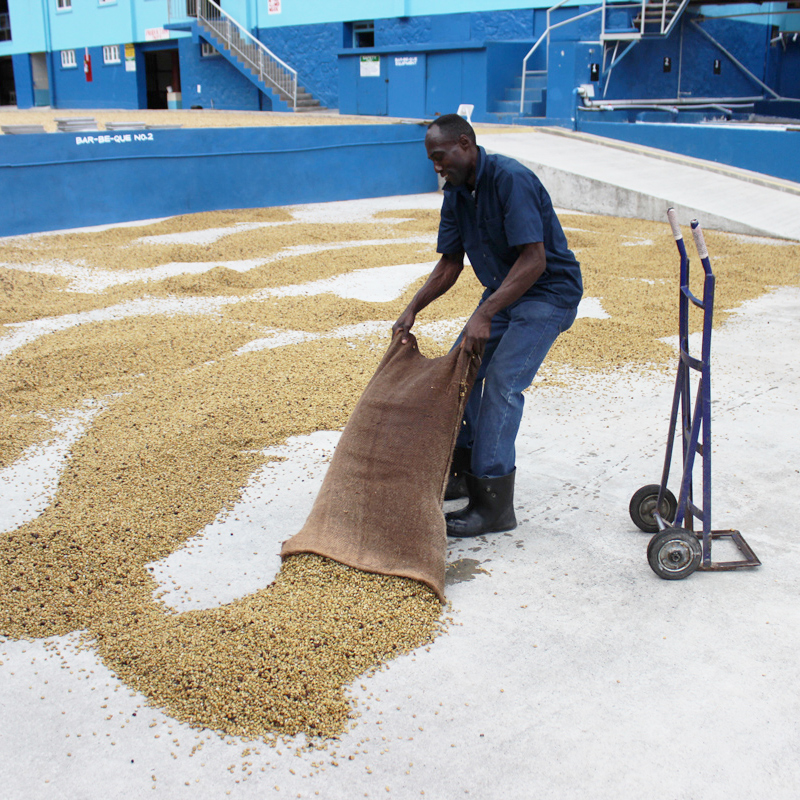
Jamaican Blue Mountain coffee exclusively uses the washed processing method, which preserves the coffee’s pure flavor profile. During processing, the fruit skin and pulp are first removed, followed by 12 to 18 hours of fermentation, then frictional washing to remove the mucilage. The processed beans are still covered by the parchment layer, with a moisture content of about 50%, and require prolonged sun drying to reduce the moisture level to 12–14% before screening and storage. Every step is rigorously controlled to ensure the final quality.
The Three Legally Defined Growing Regions of Blue Mountain Coffee
The legally designated growing regions for Blue Mountain coffee are limited to the Blue Mountain range in northeastern Jamaica, covering three main areas: St. Andrew, Portland, and St. Thomas, with a total area of only about 6,000 hectares. In addition, Jamaica has 12,000 hectares dedicated to cultivating high mountain and regular Jamaican coffee. The steep terrain and microclimates of the Blue Mountains result in slow growth for coffee trees, but yield more concentrated and layered flavors.
Notable estates in these regions include Wallenford Estate, Silver Hill Estate, and Atlanta Estate at Mavis Bank, among others. Though modest in scale, these estates are mostly family-run, with generations of farming expertise. Additionally, certified bodies such as the Mavis Bank Central Factory (M.B.C.E) and the Blue Mountain Coffee Cooperative Trading Company (M.H.C.C.T.) also guarantee the quality of Blue Mountain coffee.
The Variety and Tree Characteristics of Blue Mountain Coffee
Jamaican Blue Mountain coffee is cultivated using the Typica variety, an historic Arabica cultivar known for its elegant flavor, though it suffers from low yield and weak disease resistance. Typica trees are tall, with bronze-colored leaves, and produce oval or slender pointed coffee beans. Their exacting growing requirements further contribute to the rarity and value of Blue Mountain coffee.
CIB Certification and the Blue Mountain Grading System
The Jamaica Coffee Industry Board (CIB) is the official body responsible for regulating the quality and certifying Blue Mountain coffee, and it operates under Jamaica’s Ministry of Agriculture and Fisheries. According to CIB standards, only coffee grown at altitudes above 666 meters can be called Jamaican Blue Mountain coffee. Its grades, from highest to lowest, are NO.1, NO.2, NO.3, and PB (Peaberry). NO.1 is the top grade, requiring large bean size, a defect rate below 3%, moisture content of around 13%, and production solely from the rugged mountainous regions between 2,000 and 2,256 meters.
Certification of Blue Mountain coffee includes three types of documentation: a quality certificate, an authorized sales certificate from the producer, and a certificate of origin — ensuring each batch meets strict international standards.
Blue Mountain Flavor vs Authentic Blue Mountain: Don’t Confuse the Two
Commonly seen “Blue Mountain flavor” or “Blue Mountain blends” on the market are actually products where other coffee varieties are dark roasted to mimic the flavor profile of Blue Mountain — they have no relation to genuine Blue Mountain coffee. True Blue Mountain coffee features bright and delicate acidity, full body, and a richly layered aroma. On the palate, it offers notes of cocoa, honey, and gentle citrus, with a long finish free of bitterness.
How to Brew and Roast Blue Mountain Coffee?
Blue Mountain coffee is recommended to be roasted to medium-dark to dark levels to fully showcase its rich and sweet characteristics. For pour over brewing, V60, KONO, or Kalita filters are suggested. Suggested parameters: 15g of coffee, water temperature 86–88°C, grind size close to medium-fine (e.g., EK43s setting 10.5, around 75% extraction), water-to-coffee ratio 1:15, total brew time around 2 minutes. Avoid excessively high temperatures to prevent extracting excessive impurities, which may lead to astringency or smoky flavors.
How to Identify Genuine Blue Mountain Coffee?
Authentic Blue Mountain green beans appear bluish-green, uniform in size with slight curl, and become plump and firm after roasting. When ground, they feel crisp and smooth with a rich, multi-layered aroma. In flavor, true Blue Mountain coffee exhibits balance without any single characteristic overpowering the rest, with a lingering fruity and cocoa-like aftertaste. Coffee sold at suspiciously low prices or from unclear sources is very likely counterfeit.
In summary, Jamaican Blue Mountain coffee is not only a gift of geography and climate but also the crystallization of rigorous management and masterful craftsmanship. Understanding its cultivation, processing, and certification systems is key to truly appreciating the essence of this world-class coffee.
The above content is compiled by CoffeeHunters, a coffee news website.


