








Introduction:Pink Bourbon is often mistaken as a member of the Bourbon family, but its origin and genetic makeup are actually more complex. This article starts with the historical background of Bourbon, details the differences among the red, yellow, and pink variants, explores the true origins of Pink Bourbon, and introduces the characteristics of Yellow Bourbon along with pour over brewing recommendations, allowing you to better understand the unique charm of these rare Arabica varieties.
Bourbon, as one of the important branches of Arabica coffee, originated from the ancient Typica and was first introduced to Réunion Island (then called Bourbon Island) on the east coast of Africa by the French in the 19th century. It later gradually spread to Central and South America, becoming the dominant variety in multiple coffee-growing regions including Brazil. Among the many Bourbon varieties, in addition to the familiar Red Bourbon, there is also the orange-yellow Yellow Bourbon, as well as the rarer and uniquely colored Pink Bourbon. Many people wonder: does Pink Bourbon really belong to the Bourbon family? And how did it come into being? The following will provide an in-depth analysis.
The most obvious characteristic of the Bourbon variety lies in the color changes of its fruit during the ripening process, typically transitioning from green to yellow, and then gradually to red. Therefore, the commonly seen "Red Bourbon" is the variety that presents a deep red color when the fruit is fully ripe. Such varieties are usually grown at medium to high altitudes, and are known for their intense aroma, balanced acidity, and good sweetness. However, in places like Brazil, some atypical mutations have also emerged—instances where the fruit does not turn red upon ripening but instead appears orange-yellow or an unusual pinkish hue.
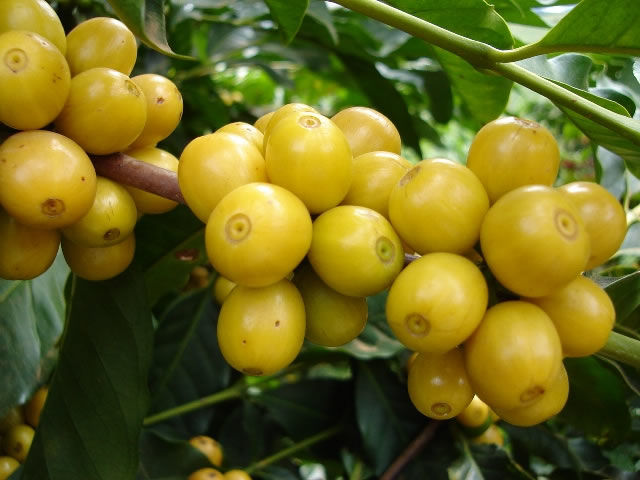
Among them, Yellow Bourbon (Bourbon Amarello), also referred to in English as Yellow Bourbon, is a special variant found only in the state of São Paulo, Brazil. The fruit of this variety does not turn red upon ripening but instead exhibits a bright orange-yellow color, hence the name. This yellow mutation is closely related to genetic factors and is the result of long-term selective breeding and specific environmental conditions. Yellow Bourbon typically offers a pronounced sweetness, soft acidity, and a wealth of aromatic qualities, making it a proud offering from many specialty coffee farms.
One coffee brand once launched a Yellow Bourbon coffee bean from Fazenda Rainha in Brazil, a farm located in the Mogiana region at an altitude between 1400 and 1950 meters. These coffee beans were processed using the natural (sun-dried) method, which enhanced the sweetness of the fruit pulp, ultimately delivering a complex flavor profile of nuts, chocolate, cream, peanuts, and sugarcane—an excellent choice for pour over enthusiasts.
So, what exactly is Pink Bourbon? In fact, there are still differing theories about the origins of Pink Bourbon. One school of thought suggests that Pink Bourbon may be the result of a natural cross between the Colombia variety and Caturra. Caturra itself is a dwarf variant of Bourbon, characterized by higher yields and disease resistance; whereas the Colombia variety is a disease-resistant, high-yield cultivar actively promoted by Colombia. Although its flavor profile is not as delicate as traditional varieties, it is stable and suitable for large-scale cultivation. Pink Bourbon may have emerged as a rare color mutation under such hybridization circumstances.
However, achieving a beautiful pink color in coffee fruit is not easy. Typically, the final color of the fruit depends on recessive genes carried by the pollen during pollination, and these genes may individually lead to red, yellow, or other hues. If the genes interfere with each other, unexpected colors such as orange or even a pinkish tone may result. Thus, the emergence of Pink Bourbon can be considered quite rare, and its scarcity adds to its mystique and collectible value.
In contrast, the "yellow" of Yellow Bourbon is a stable expression achieved through artificial selection and genetic screening. Especially in higher-altitude growing environments, Yellow Bourbon can accumulate more fructose, thereby exhibiting a sweeter and more refined flavor. This is also one of the reasons why it has consistently achieved strong results in Brazil's COE (Cup of Excellence) competitions.
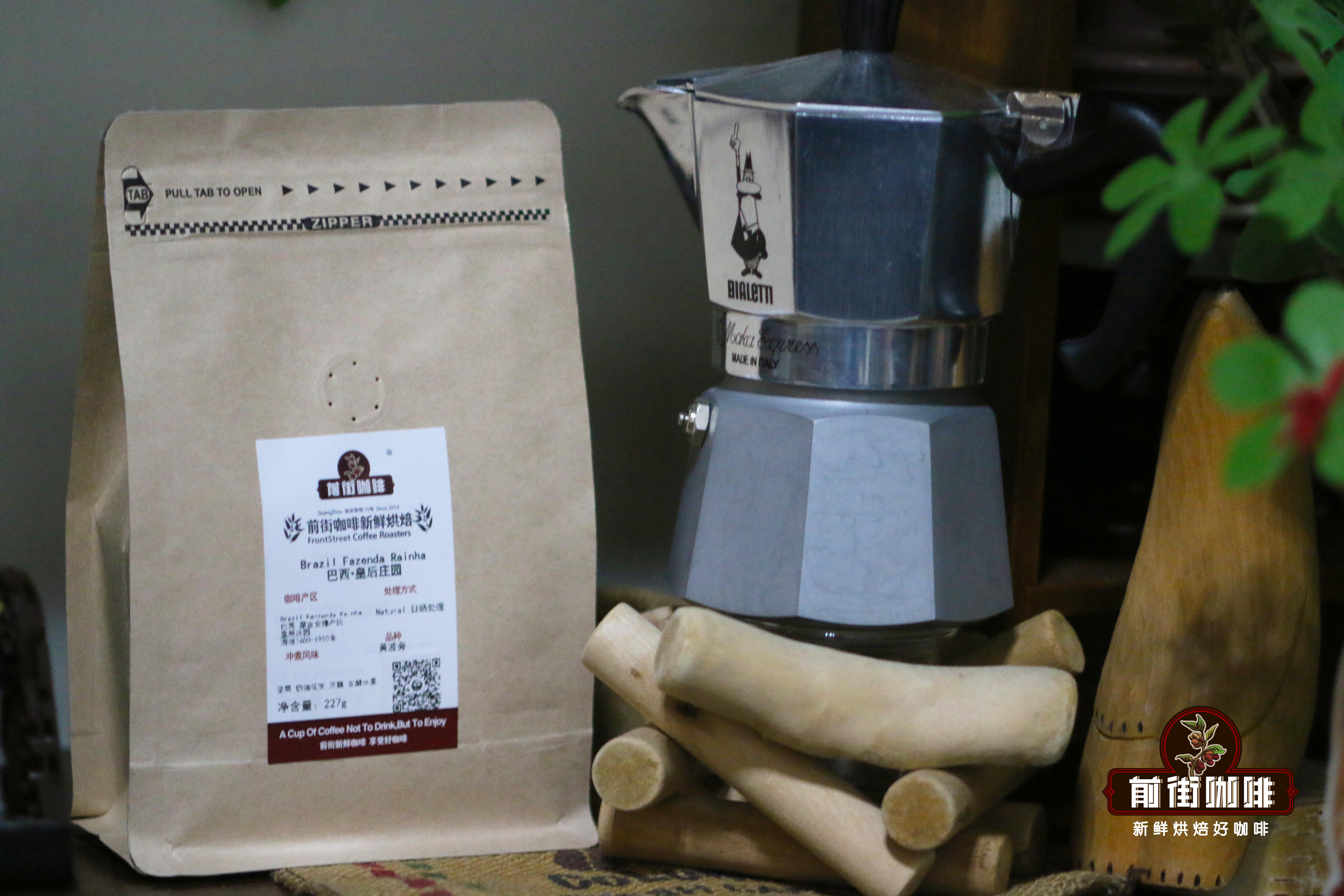
Take the Yellow Bourbon from Fazenda Rainha as an example. After harvesting, the farm employs a refined sun-drying process rather than the traditional rough sun exposure. They first use floatation technology to remove unripe cherries, then place the coffee fruit on African raised beds, frequently turning them during the drying process to ensure even heat distribution and avoid over-fermentation or contamination by earthy flavors. This method not only preserves the natural sweetness of the fruit pulp but also results in a cleaner, brighter final coffee flavor.
In terms of roasting, due to the high-density beans and rich sugar content resulting from growth at high altitudes, the coffee brand recommends using a medium-dark roast to fully bring out its rich aroma and sweet caramel notes. Roasting too lightly may fail to unlock its potential, while roasting too dark can easily mask its delicate acidity and fruity qualities.
For pour over extraction, the following parameters are recommended to achieve the best flavor expression: water temperature controlled at 87~88°C, using a KONO filter cone, with coffee grounds ground to a medium-coarse consistency (approximately 70% passing through a Chinese standard No. 20 sieve), using 15 grams of coffee, with a 1:15brew ratio set to 125 grams for the first pour, then waiting for the water level to drop to half the filter cone before continuing to pour to 225 grams, with total brew time controlled at around 2 minutes. Finally, gently swirl the coffee liquid before enjoying.
Using the above pour over parameters, Yellow Bourbon coffee can showcase layers of aroma such as dark chocolate, cream, nuts, and peanuts. The cup entry offers a natural sweetness akin to sugarcane, with soft acidity, a balanced overall mouthfeel, and a long-lasting finish—making it an ideal choice for coffee lovers who enjoy medium to dark roast flavor profiles.
The above content is compiled by CoffeeHunters, a coffee news website.


