







Introduction:Want to understand why Arabica coffee beans are considered the flagship of specialty coffee, and why their prices remain high? This article delves into the differences between Arabica and other coffee varieties, analyzing their flavor advantages and cultivation challenges. It also provides a detailed introduction to the characteristics, processing methods, and grading systems of major producing regions such as Brazil, Colombia, Panama, and Ethiopia, helping you choose the most suitable coffee beans.
From a botanical classification perspective, coffee belongs to the genus Coffea in the Rubiaceae family, which includes over a hundred species, with about eighty confirmed. The three most commonly used species for making drinkable coffee are Arabica, Robusta, and Liberica. Generally, Arabica is mostly used for single-origin or specialty coffee, while Robusta is often used to make instant coffee. Although Arabica is widely regarded as a symbol of high quality in the market, the choice should ultimately depend on individual taste preferences. For example, consumers in the United States and Japan tend to prefer the light-bodied coffee brewed from Arabica, while Europeans prefer espresso made by blending Arabica with Robusta.
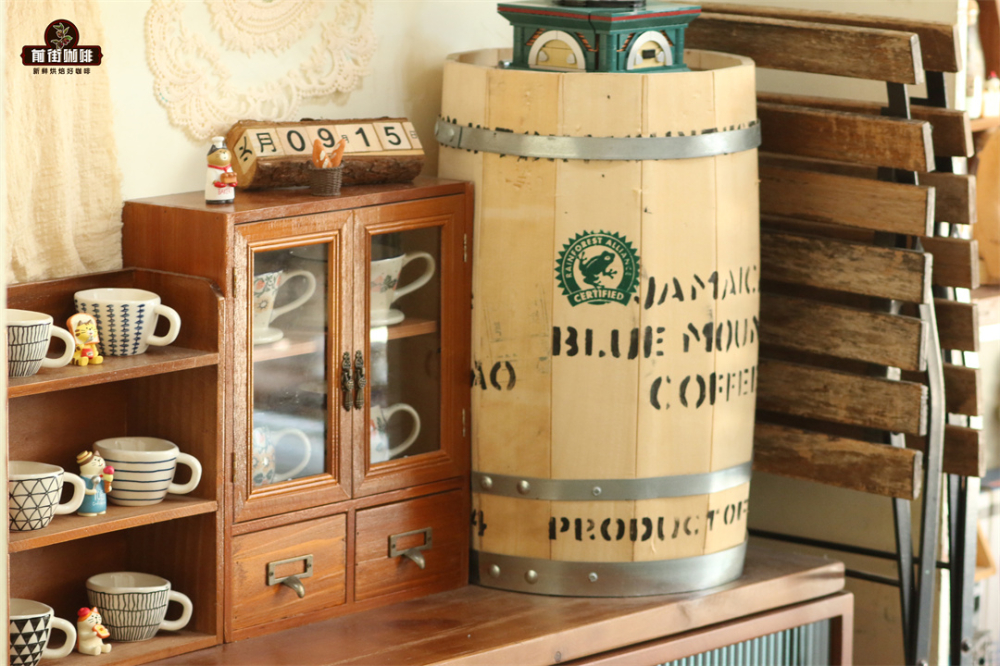
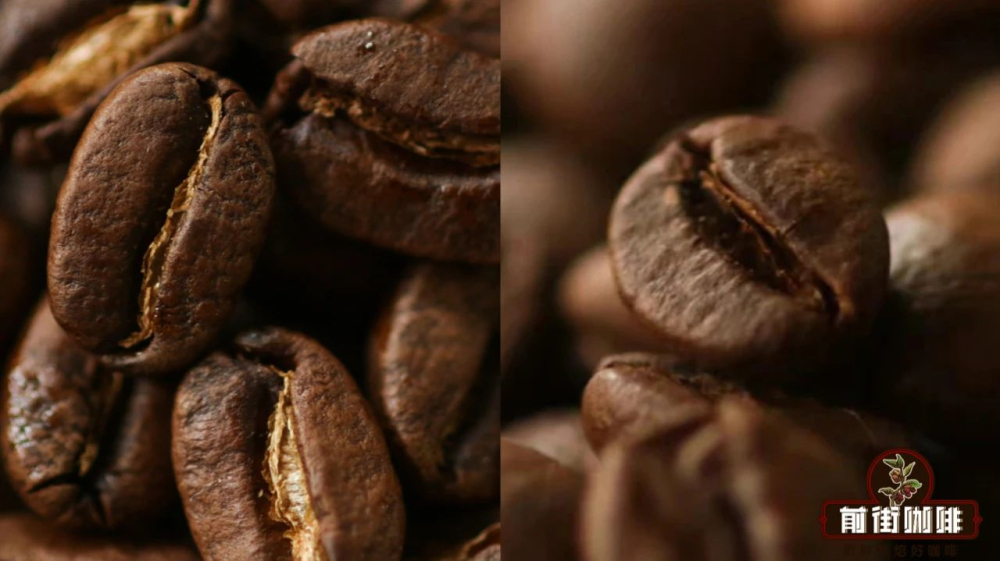
Arabica is hailed as a premium coffee bean mainly due to its outstanding flavor and aroma performance. Originating from Ethiopia, Arabica is now also widely cultivated in southern Africa, other parts of Africa, and Asia, accounting for approximately 70% to 75% of the world’s total coffee production. However, because it has weaker resistance to pests and diseases, Arabica is better suited to high-altitude regions, especially areas above 1,500 meters, where the best-quality beans are produced. This hard-earned meticulous cultivation results in a rich and balanced flavor profile, making it the top choice for single-origin and specialty coffee. World-renowned varieties such as Hawaiian Kona, Jamaican Blue Mountain, and Yemeni Mocha all belong to the Arabica species. Its green beans typically have a dark color and a long, narrow shape, not only offering distinct sweetness and acidity but also rich unique aromas, showcasing the characteristics of high-quality highland cultivation.
In terms of flavor performance, Arabica is undoubtedly the top choice for specialty coffee. Since the rise of the specialty coffee concept, Arabica has consistently dominated the market. For example, its subspecies Typica boasts excellent acidity and very high cupping scores. As one of the oldest coffee varieties, it has superior genetics. Meanwhile, Geisha, which has recently shone brightly in the specialty market, has conquered countless coffee enthusiasts with its refreshing floral notes and delightful acidity.
However, Arabica also has its limitations. Aside from its lower resistance to pests and diseases, which has led to the breeding of many more disease-resistant varieties, it also has a wide variety of mutations or hybrids, such as Typica, Bourbon, and Geisha. In some single-origin and specialty coffee offerings at certain shops, there are over 50 Arabica subspecies from different producing regions, capable of satisfying diverse taste preferences, and the shops may even have other unlisted items for further exploration.
The following will introduce several notable representative producing regions of Arabica specialty coffee, taking an in-depth look at their cultivation and processing characteristics.
As the country with the largest coffee cultivation area and production in the world, Brazil also sees a year-on-year increase in domestic coffee consumption, making it the world’s second-largest consumer market after the United States. Since it began cultivating coffee in 1727, Brazil has leveraged its favorable climate and fertile soil, with its main producing regions concentrated in the southeastern states of Minas Gerais, São Paulo, and Paraná. However, in recent years, frost damage in the southern regions has led to a gradual northward shift of cultivation areas. Currently, large estates in the Cerrado region of Minas Gerais have introduced irrigation and mechanized facilities, adopting a diversified planting model that includes not only Arabica varieties such as Bourbon but also the disease-resistant Conillon (Robusta).
Brazilian coffee generally has lower acidity, blending the inherent bitterness and sweetness of coffee with a smooth mouthfeel, accompanied by a faint grassy aroma and mild bitterness, leaving a refreshing and comfortable aftertaste. Among them, the Bourbon coffee beans from Fazenda Rainha are a typical representation of Brazilian coffee, with a distinct nutty and chocolatey profile, moderate caramel sweetness, and an overall smooth and balanced taste.
Brazil’s planted varieties include Arabica types such as Bourbon, Mundo Novo, and Catuai, as well as Conillon. Processing is mainly done using the natural (dry) method, with some beans employing the honey process. In terms of grading, it is categorized from 'No.2' to 'No.6' based on screen size and defect count. Those with a screen size of S17 (6.75mm) to S18 (7mm) and a defect score below 11 in a 300g sample are rated as the highest grade 'No.2' (also called Type 2).
Colombia is the world’s third-largest coffee producer, following Brazil and Vietnam. Its main producing regions are located on the foothills of the Andes Mountains, with an average altitude exceeding four thousand meters, and on small farms situated on steep slopes at elevations of about one to two thousand meters. The Colombian National Federation of Coffee Growers (FNC) manages the coffee industry comprehensively, overseeing everything from production to distribution and actively promoting the development of specialty coffee. The country employs shade-grown cultivation and manual harvesting, and has introduced water-saving equipment suitable for small farms, which is vastly different from Brazil’s large-scale production methods. Colombia, being on the equator, has two main harvest seasons per year.
Colombia’s specialty-grade washed coffee often features citrus, nut, and dark cocoa profiles, with an overall smooth and rich flavor. Dark cocoa is one of its standout characteristics, coupled with the refined acidity brought by high altitudes, making it a coffee-producing country with distinctly American flavors.
Planted varieties include Caturra, Castillo, and Colombia Typica. Processing is mainly done using the washed method, with two harvests per year, from October to January and April to June. Grading is based on screen size, with S17 (6.75mm) and above classified as 'Supremo', and S14 (5.5mm) to S16 (6.5mm) as 'Excelso'.
Panama is currently one of the most popular specialty coffee-producing countries, home to numerous estates such as Hacienda Esmeralda, Finca Deborah, and Ninety Plus. The main planted varieties include Geisha, Caturra, and Catuai, with Geisha being the most representative. Some specialty coffee brands consider the Geisha produced by Hacienda Esmeralda to be the most emblematic of Panama.
Coffee cultivation in Panama takes place from September to March, primarily using the washed processing method, supplemented by natural (sun-dried) or mechanical drying. Grading is based on the altitude of the producing region, categorized from highest to lowest as 'Strictly Hard Bean' (SHB) and 'Hard Bean' (HB).
Guatemala is a typical volcanic country, with the Antigua producing region surrounded by three volcanoes. The volcanic ash soil is rich in nutrients, creating a unique coffee flavor. A certain brand highly recommends the Finca La Flor coffee beans, produced by the Lamastus Family Estates, known for its strict quality control and excellent processing techniques. The green beans are processed by Las Pastores, the largest washed processing plant in Antigua. Finca La Flor not only showcases the region’s inherent flavors but also offers intense floral and tea aromas. Upon tasting, it presents lime acidity and berry flavors, with the finish transitioning into a honey-like sweetness. The overall cup is clean and layered.
Guatemala’s planted varieties include Bourbon, Caturra, and Catuai. Processing is mainly done using the washed method, supplemented by sun-drying or mechanical drying. Regions with altitudes exceeding 1,300 meters are classified as 'Strictly Hard Bean' (SHB), 1,200 to 1,300 meters as 'Hard Bean' (HB), and 900 to 1,050 meters as 'European Preparation Washed' (EPW).
Costa Rica has over two hundred years of coffee cultivation history, with a mature coffee industry and is one of the few countries in the world that prohibits the cultivation of Robusta (including Catimor). It places extreme emphasis on coffee quality. The characteristic of Costa Rican coffee lies in its unique honey processing method, which retains some mucilage during drying, giving the coffee both the cleanliness of washed processing and the sweetness of sun-dried processing. Its flavor is based on nuts, paired with bright acidity and sugary sweetness.
Planted varieties include Caturra and Catuai, with the law explicitly prohibiting the cultivation of Robusta. Processing is mainly done using the honey method, with the harvest season from November to March. Grading is based on altitude, categorized from highest to lowest as 'Strictly Hard Bean' (SHB), 'Good Hard Bean' (GHB), and 'Hard Bean' (HB).
Jamaica’s Blue Mountain coffee is renowned for its exceptional balance, hailing from the Blue Mountains, named for the blue haze created by sunlight reflecting off the ocean. Blue Mountain coffee has long been subject to strict export controls. In the past, it was mainly exported as washed Typica to countries like Japan, but recently, sun-dried Typica and Geisha varieties have also emerged. However, washed Typica remains the classic representative of Blue Mountain, offering citrus acidity, with a mid-palate showcasing nutty and dark cocoa flavors, a long-lasting aftertaste, and a rich, full-bodied mouthfeel.
Jamaica’s planted varieties are mainly Typica, with processing primarily done using the washed method, and the harvest season starting in October. Grading is based on screen size and defect count, divided into 'No.1', 'No.2', and 'No.3', with other beans graded by altitude or screen size.
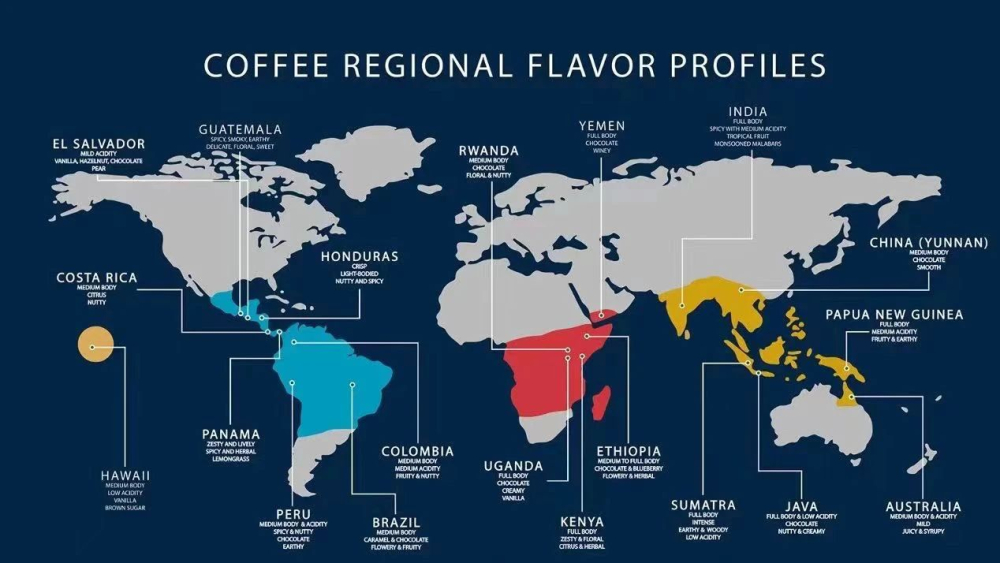
Ethiopia is the birthplace of coffee, boasting an extremely rich variety of coffee species, often referred to as a genetic treasure trove of coffee. Due to the difficulty in identifying varieties and the fact that most are grown by smallholders, the harvested beans are often processed together, hence most of its exported coffee beans are collectively referred to as 'heirloom'. Among them, the washed coffee beans from the Yirgacheffe producing region are the most representative. Although Ethiopia mostly uses traditional natural (sun-dried) processing, early natural processing was inconsistent in quality and often had off-flavors. It wasn’t until the introduction of washed processing in the last century that Yirgacheffe coffee gained widespread fame.
Some well-known brands feature many recommended items from Ethiopia on their menus, such as Red Cherry, Flower Power, and Kochere. These coffees all showcase the classic citrus and lemon acidity, soft floral notes, and fruity and tea-like aftertastes of Yirgacheffe.
Ethiopia mainly grows Typica, along with many unique varieties. Processing is primarily done using the washed method, but natural (sun-dried) processing still accounts for a certain proportion. Grading is based on defect count, ranging from fewest to most as 'Grade 1' to 'Grade 8', with only Grades 1 to 5 meeting export standards.
Kenya is another highly representative coffee-producing country in Africa, known for its distinctive berry profiles, often reminiscent of grapefruit, blackberries, and sour plums. Coupled with its high acidity, it has become a favorite for summer iced coffee. The flavor of Kenyan coffee mainly comes from the SL28 and SL34 varieties, along with mature washed processing techniques.
Planted varieties are mainly the SL28 and SL34, which are selective breeds of Bourbon, with SL standing for the Scott Laboratories in Nairobi. Processing is primarily done using the washed method, with two harvest seasons per year, from September to December and May to July. Grading is based on screen size, with S18 (7mm) and above classified as 'AA', S15 (6mm) to S17 (6.75mm) as 'AB', and peaberries as 'PB'.
Indonesia consists of more than seventeen thousand islands, with Java Island as its main producing region. Indonesia has a long history of coffee cultivation, but in the 1980s, a coffee leaf rust epidemic almost wiped out Arabica, leading to the switch to the disease-resistant Robusta variety Catimor. It is now the world’s fourth-largest coffee producer. Mandheling is the representative of Indonesian coffee, mainly produced in the Aceh region of Sumatra. Arabica grown in Sumatra is generally referred to as Mandheling and is highly regarded in the specialty coffee community. Additionally, Toraja from Sulawesi is also widely loved. Indonesia also has a unique Sumatran semi-washed processing method, which involves drying the beans in their parchment.
Some brands recommend Golden Mandheling, which undergoes multiple hand-sortings to significantly reduce defective beans, resulting in a cleaner and smoother mouthfeel. In addition to its classic herbal and spicy notes, it also exhibits excellent purity.
Indonesia’s planted varieties include Catimor, Typica, and Robusta. Processing is mainly done using the natural (sun-dried) method, with some employing the washed method. Grading is based on screen size and defect count, categorized as 'large' and 'small', and further divided into five grades based on the number of defective beans, from fewest to most as 'Grade 1' to 'Grade 5'.
The above content is compiled by CoffeeHunters, a coffee news website.


