







Introduction:Jamaican Blue Mountain coffee is renowned for being transported in wooden barrels, making it the only coffee-growing region in the world that still adheres to this traditional practice. Behind this unique method lies a deep consideration of historical heritage and quality control. This article delves into the origins of Blue Mountain coffee’s barrel packaging, the advantages of the wood used, certification markings, and cultivation background. It also explores the flavor differences between washed and natural processed Blue Mountain No. 1, along with brewing recommendations to help you better understand this rare coffee.
While most of the world’s green coffee beans are shipped in jute sacks, Jamaican Blue Mountain coffee stands apart by traditionally using wooden barrels as its shipping container. This practice is not only a continuation of history but also closely tied to maintaining the quality stability of the beans during long-distance transport. This article will take you through the historical origins of the barrels, their material characteristics, certification systems, as well as the growing environment and processing techniques of Blue Mountain coffee — offering a comprehensive analysis of what makes this world-class coffee so unique. It also provides practical brewing parameters and flavor profiles for both washed and natural Blue Mountain No. 1, helping you gain a deeper appreciation of this precious coffee.
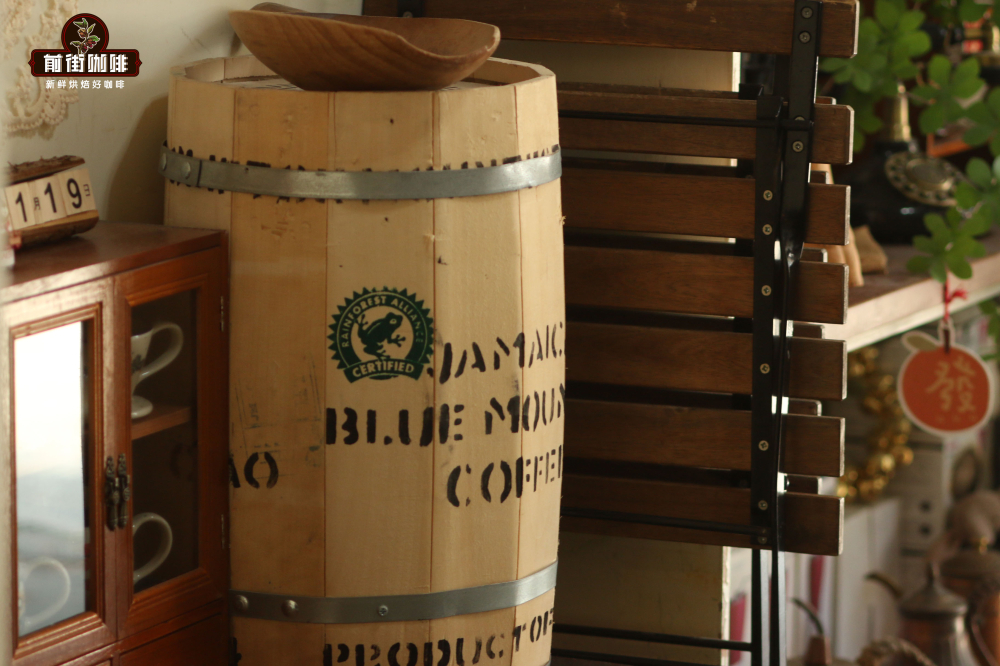
The reason Jamaican Blue Mountain coffee opts for wooden barrel packaging is inseparable from its long history. It is understood that this tradition dates back to the 18th-century British colonial period. At that time, flour shipped from Britain to Jamaica was transported in wooden barrels, and after use, these empty barrels were recycled and repurposed to carry coffee and rum. The wooden barrels currently used are mainly made from timber sourced from temperate forests in the United States, which possess natural humidity-regulating properties. This type of wood can buffer drastic changes in temperature and humidity during transit, preventing the beans from being affected by environmental fluctuations that could compromise their quality. Additionally, the barrels offer excellent sealing, helping to preserve the coffee’s aroma and reduce volatility. Although wooden barrel packaging is more costly, Jamaican Blue Mountain estates persist with this method to ensure the coffee remains in optimal condition during export, thus creating a distinctive hallmark for Blue Mountain coffee.
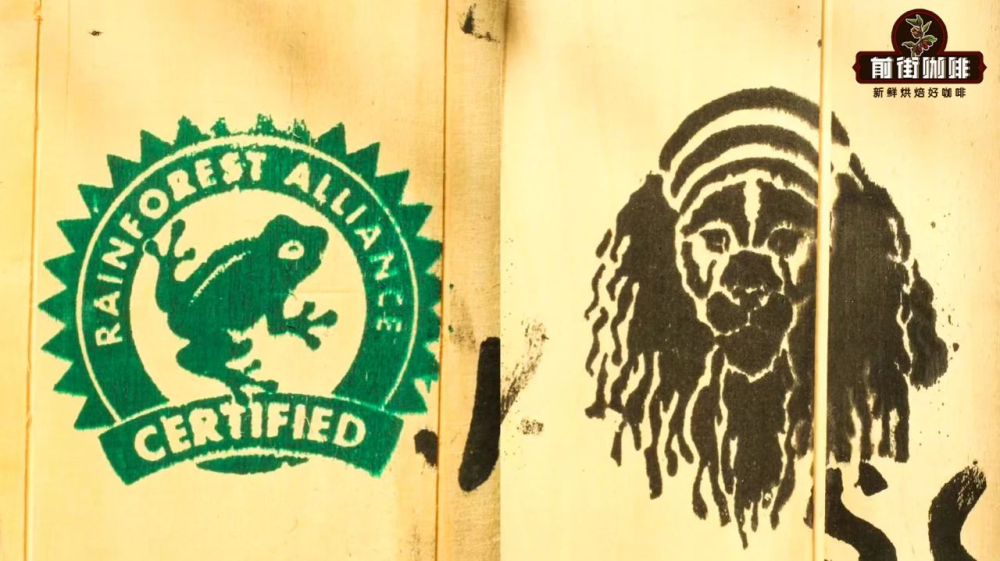
It is worth noting that some Blue Mountain coffee barrels bear a small green frog symbol, signifying “Rainforest Alliance Certification,” awarded by the Rainforest Alliance. This certification requires farms to meet strict ecological protection standards, including limitations on pesticide use, waste management, and the preservation of surrounding biodiversity. Only farms that pass evaluation can have their coffee labeled as “Rainforest Alliance Certified Coffee.” Currently, Clifton Estate is the only Blue Mountain coffee producer in Jamaica to have earned this certification, making its barrels a symbol of high quality and environmental responsibility.
All exported Jamaican Blue Mountain coffee can be accompanied by relevant certificates issued by the Jamaica Coffee Industry Board, primarily divided into three categories: The first is the quality certification certificate issued by the Jamaica Coffee Industry Board, which clearly indicates the time and quantity, and is issued only after official random sampling and passing inspection; the second is the authorized sales certificate from Blue Mountain coffee producers, with only four government-approved processing plants and sixteen certified exporters across Jamaica; the third is the origin certificate for Blue Mountain coffee, ensuring the beans come from the specific Blue Mountain region of Jamaica. Together, these three certificates form the authoritative authentication of Blue Mountain coffee’s authenticity.
Jamaican Blue Mountain coffee is predominantly of the Typica variety, one of the oldest and widely recognized Arabica cultivars known for its excellent flavor profile. Although it has relatively low yield and is susceptible to rust disease, its pure flavor and balanced taste have established it as a representative of specialty coffee. The cultivation altitude of Blue Mountain coffee generally ranges between 1200 and 2256 meters, with higher altitudes yielding coffee that achieves increasingly ideal levels of acidity, sweetness, and body. The commonly available Blue Mountain No. 1 on the market belongs to the highest grade — featuring large beans, low defect rates, and grown only on the steep mid-slopes of the Blue Mountains at altitudes between 2000 and 2256 meters. It is widely regarded by coffee enthusiasts worldwide as an ultimate delicacy.
The processing methods for Blue Mountain coffee are mainly divided into washed and natural (sun-dried). Prior to the end of 2019, Blue Mountain coffee was only processed using the washed method, until 2020 when the natural process was introduced to explore more flavor possibilities. The washed process removes the fruit pulp, highlighting the intrinsic pure flavors of the coffee bean, resulting in a clean, bright, and layered taste; whereas the natural process retains the fermentation flavors from the fruit pulp stage, delivering a richer sweetness and greater complexity. For those trying Blue Mountain coffee for the first time, it is recommended to start with the washed version to better appreciate the delicate expression of its inherent flavors.

Taking Clifton Estate as an example, located at an altitude of about 1310 meters, its Typica coffee — whether washed or natural — showcases the classic elegant traits of Blue Mountain coffee. Washed Blue Mountain No. 1 offers a sweet entrance with brown sugar notes and berry-like acidity, followed by nutty and cocoa flavors in the mid-to-late stages, with a creamy-smooth mouthfeel and a lingering walnut aroma in the finish. Natural Blue Mountain No. 1 presents a profile dominated by dark chocolate and nuts, with an overall rich and bright flavor, balanced acidity, sweetness, and bitterness, and a more pronounced body. Both processing methods have their unique merits, allowing consumers to choose based on personal preference.
Regarding the grading system of Blue Mountain coffee, it is mainly divided into Grades NO.1 to NO.4 and PB (Peaberry), with NO.1 being the highest grade and widely recognized as the finest. Coffee of this grade not only comes from high-altitude regions but also undergoes rigorous screening with extremely low defect rates and uniformly plump beans. It is highly sought after by Blue Mountain enthusiasts around the world for collection. The imported Blue Mountain No. 1 is precisely this top-tier grade, fully demonstrating the exceptional flavor potential of Blue Mountain coffee.
In terms of brewing, it is recommended to use a KONO filter cone, which can bring out a rounder and fuller body, though its gas venting performance is slightly inferior. Tested brewing parameters are as follows: using 15 grams of coffee grounds, a 1:15 coffee-to-water ratio, medium-fine grind size similar to granulated sugar, and water temperature controlled at 86°C. The specific steps are: start with a 30-second bloom using 30 grams of water, then pour in a slow, centered stream to reach 125 grams and pause briefly, followed by pouring up to 225 grams as the water level drops, with a total extraction time of about 2 minutes. These parameters are ideal for fully highlighting the delicate flavors of Blue Mountain coffee.
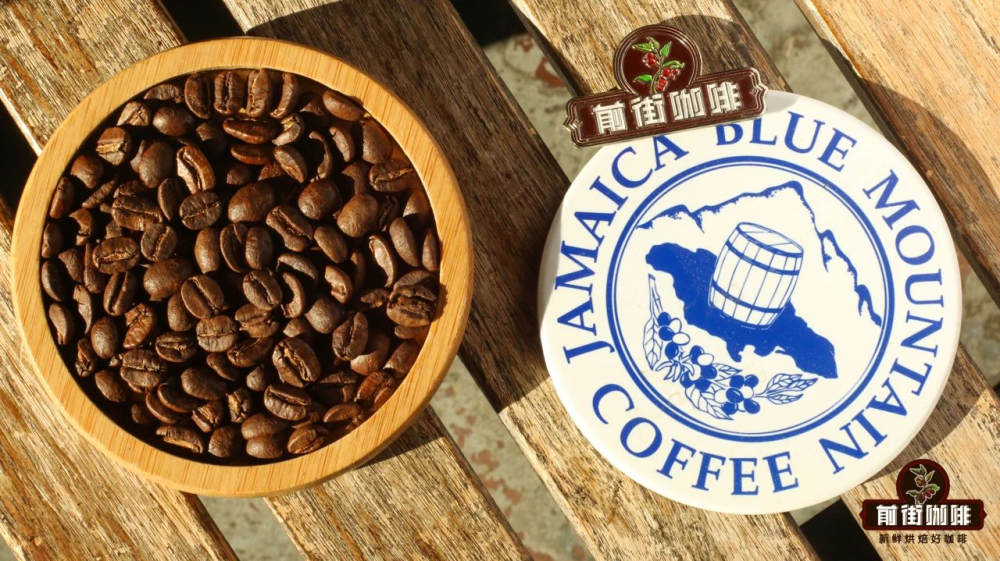
Based on comprehensive tasting experiences, natural Blue Mountain coffee immediately presents a sweet, brown sugar-like profile with a refreshing berry acidity, followed by layers of nuttiness and cocoa in the mid-to-late stages, offering a creamy, smooth mouthfeel and a warm, nutty aftertaste. On the other hand, washed Blue Mountain features a profile dominated by dark chocolate and nuts, with a clear, bright flavor, clean and refreshing mouthfeel, and a balanced acidity, sweetness, and bitterness — suitable for those who prefer delicate and pure flavors. Regardless of which processing method you choose, you can deeply appreciate the unique charm of Blue Mountain coffee as one of the world’s finest.
The above content is compiled by CoffeeHunters, a coffee news website.


