







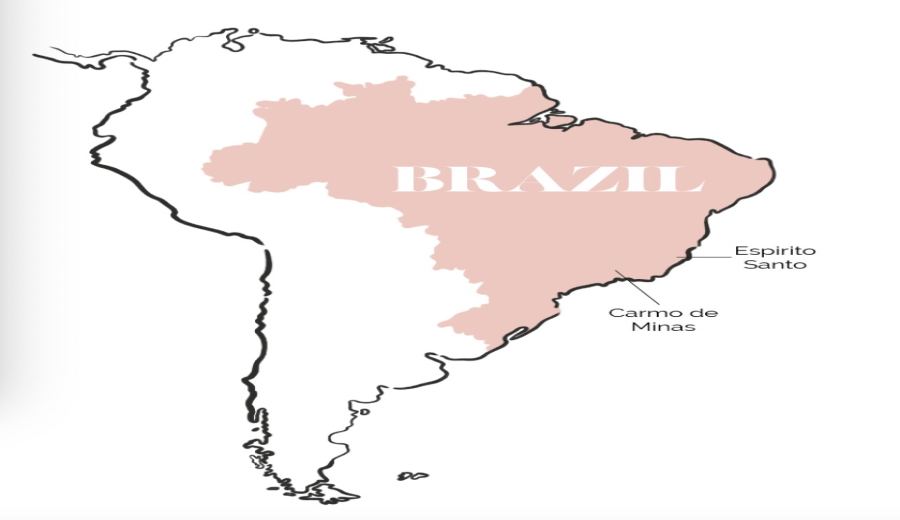
Introduction:As the world’s largest producer of Arabica coffee, Brazil is renowned for its beans’ low acidity, full body, and rich flavors of nuts and chocolate. This article delves into the flavor profiles and official grading standards of Brazil’s major producing regions, and provides detailed introductions to two representative specialty beans: Cerrado Red Bourbon Semi-Washed and Mogiana Yellow Bourbon Semi-Washed. It also offers practical brewing parameter recommendations for both pour over and French press methods, helping coffee enthusiasts master the brewing techniques for Brazilian beans and elevate their tasting experience.
Brazil is the world’s top producer of Arabica coffee, accounting for approximately 30% of global coffee consumption. Thanks to its vast land area, favorable climate, and mature industrialized cultivation and processing models, Brazilian coffee not only boasts large supply volumes but also holds a notable place in the specialty market. Unlike other high-altitude producing regions in Central and South America, Brazil’s main regions—such as Minas Gerais, São Paulo (the birthplace of Santos coffee), Paraná, and Mogiana—are generally characterized by lower altitudes, flat terrains, and minimal microclimate variations. Most coffee trees are grown without shade, which contributes to the region’s unique terroir flavors.
The flavor profile of Brazilian coffee is distinctly different from that of African or Southeast Asian beans. It typically exhibits low acidity, a full body, and prominent notes of nuts, caramel, and chocolate sweetness. With a good balance between acidity and bitterness, these characteristics make Brazilian beans a popular base choice for many blends and a favorite among coffee lovers who prefer bold, rich flavors.
The first step to understanding Brazilian coffee is to familiarize yourself with its multi-dimensional grading and classification system. Due to relatively low growing altitudes and softer bean density, Brazil employs a variety of comprehensive indicators to assess coffee quality, including defect rates, bean size, cupping quality, and flavor categories.
First and foremost,Defect Rate Deduction System, which serves as the primary legal grading basis in Brazil. The scoring method involves deducting points based on the number of defective beans found in every 300 grams of green coffee. Grades range from No.2 to No.8, totaling seven levels. If the defect count is 4 or fewer, the beans can be rated as No.2, which is considered a common high-quality commercial and specialty grade. A defect-free No.1 rating is extremely rare and difficult to supply consistently, making No.2 the de facto highest standard for Brazilian specialty beans.
Next isBean Size Screening, which uses a 1/64-inch mesh sieve for grading. Screen sizes typically range from 14 to 20, with the numbers referring to the shorter side (i.e., width) of the bean. While beans larger than 18 mesh do exist, they are rare in production.17/18 meshis regarded as the benchmark for specialty-grade beans. Larger-sized beans often result in more uniform roasting and extraction performance.
The third criterion isCupping Quality Classification, with common descriptors including Fine Cup (FC), Good Cup (GC), and Fair Cup. FC and GC are indicators of higher quality. Many green coffee suppliers or platforms also specify the processing method (e.g., natural, washed, honey) and the producing farm, helping consumers understand the flavor story behind the beans.
Finally, there is theFlavor/Taste Classification, which ranks from highest to lowest as Strictly Soft (very mild), Soft (mild), Softish (slightly mild), Hardish (harsh), and Rioy (with iodine or medicinal off-flavors). This system helps consumers anticipate the mouthfeel characteristics after brewing.
Among Brazil’s many producing regions,CerradoandMogianaare two well-known premium coffee regions. Cerrado, located in the western part of Minas Gerais, is famed for its highland climate and deep volcanic soils. Its Red Bourbon beans, processed via semi-washed methods, showcase rich flavors of nuts, caramel, and dark chocolate, with almost no acidity—offering a full body and excellent value, making it an ideal entry point for those new to Brazilian flavors.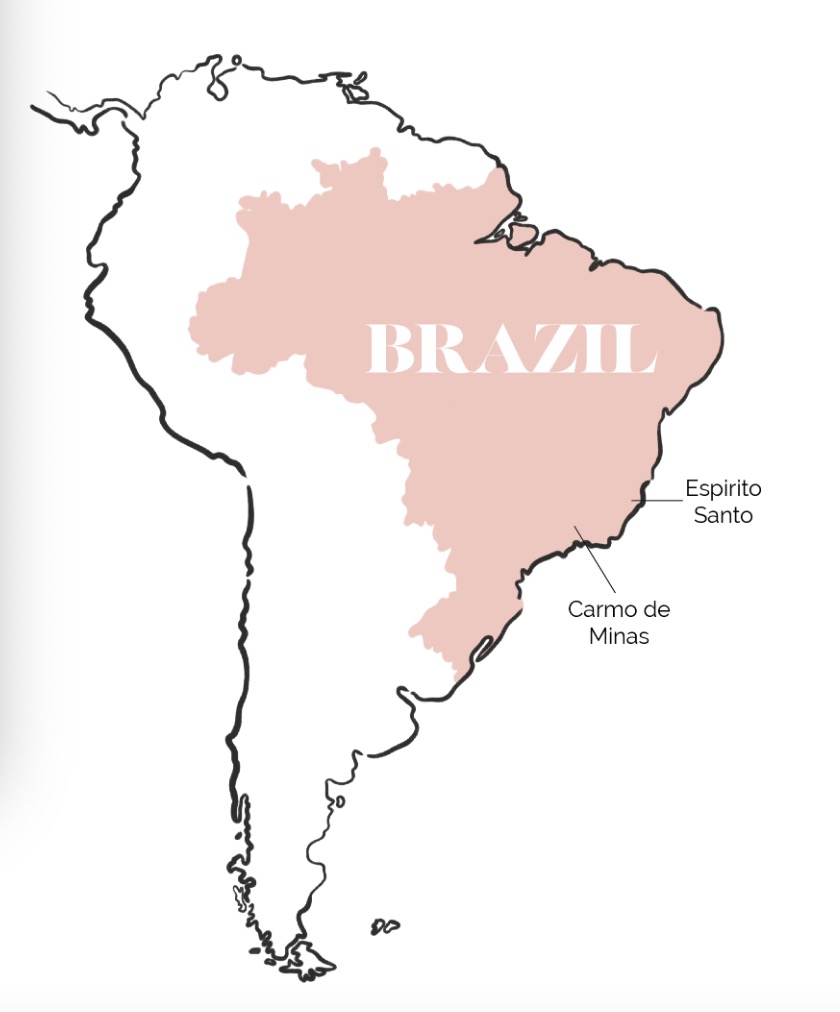
Another noteworthy specialty bean is the Yellow Bourbon fromMogiana, carefully cultivated and processed by the renowned Queen Estate. Yellow Bourbon naturally features gentler and cleaner acidity with less perceived bitterness. After undergoing the semi-washed process, it releases bright chocolate aromas and nutty flavors, with a smooth and delicate mouthfeel accompanied by sweet notes reminiscent of black tea and sugarcane juice. Overall, it presents a refreshing and layered profile, suitable for drinkers who enjoy bright, sweet, and tangy profiles.
To fully highlight the bold richness of Brazilian coffee, it is recommended to usepour over or French pressmethods, both of which are immersion-style brewing techniques. Since Brazilian beans are typically roasted to medium-dark levels, usinglower water temperatures and coarser grind sizescan help avoid over-extraction and better emphasize their sweetness and body.
Suggested pour over parameters are as follows: use a Kono filter (its snug design prolongs contact time, mimicking an immersion effect), with a water temperature of around88°C[temperature not provided],1:15a brew ratio of [ratio not provided](e.g., 15g coffee to 225ml water),with a grind size similar to granulated white sugar (approximately 70% passing through a #20 sieve). The specific steps are: start with a 30g bloom for 30 seconds, then pour up to 125g of water. Once the water level drops halfway, add the remaining water up to 225g, aiming for a total brew time of around
2 minutes and 10 seconds.If using a French press, it’s important to
immediately pour out the brewed coffee for drinking
The above content is compiled by CoffeeHunters, a coffee news website.


