







Introduction:Delve into how Honduras transformed from an obscure coffee-producing nation into a global powerhouse of washed Arabica. This article details the evolution of its coffee industry, highlights the characteristics of its six major producing regions, explores its rigorous grading system, and provides flavor profiles of beans from each area along with practical roasting and pour over parameters to help you grasp the essence of Honduran coffee.
Honduras, once a relatively overlooked player in Central America’s coffee landscape, has now emerged as one of the world’s leading coffee producers—especially in the washed Arabica category, where it ranks among the top globally. Yet just a few decades ago, its coffee industry lagged far behind that of neighboring Guatemala and El Salvador. This article systematically examines the full picture of Honduran coffee—from industry evolution and geographic conditions to variety traits, grading standards, and the flavor profiles of its main regions—while also including practical roasting and pour over parameters to offer readers deeper regional insights and inspiration for real-world application.
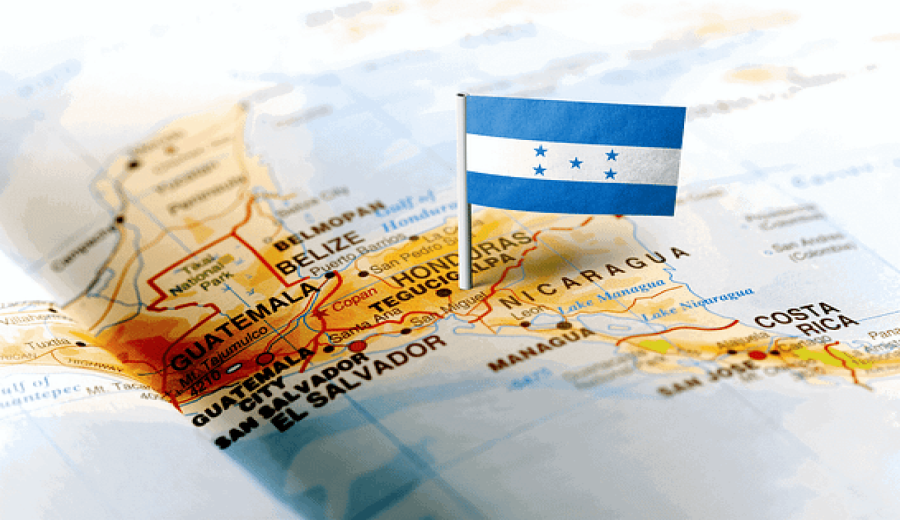
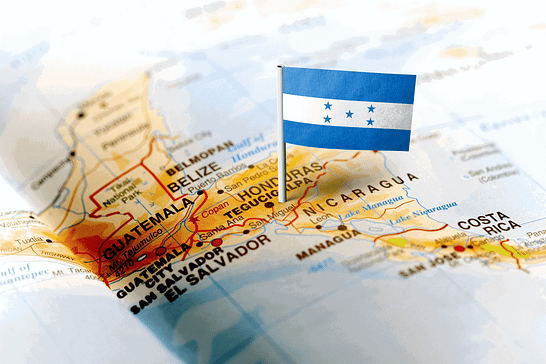 In its early days, coffee cultivation in Honduras did not receive adequate attention. While neighboring countries like Guatemala and El Salvador had already made their mark on the international market, Honduran producers were still struggling to meet basic livelihood needs. Located in northern Central America, Honduras borders the Caribbean Sea to the north, the Gulf of Fonseca on the Pacific to the south, and is adjacent to Nicaragua, El Salvador, and Guatemala, with Guatemala also lying to its west. The country is mostly mountainous and plateaued, with a tropical climate featuring mild temperatures and abundant rainfall—providing ideal growing conditions for coffee trees.
Although Honduran coffee shares some flavor similarities with its neighbors—such as common notes of floral, fruity, and juicy profiles—its aroma often carries a hint of exotic spice, while the aftertaste reveals a robust body of nuts and chocolate, delivering an overall balanced and deep expression. One coffee brand observed through practical cupping and roasting practices that even though national borders are shared, coffee flavors are primarily influenced by altitude, variety, and processing method rather than mere geography.
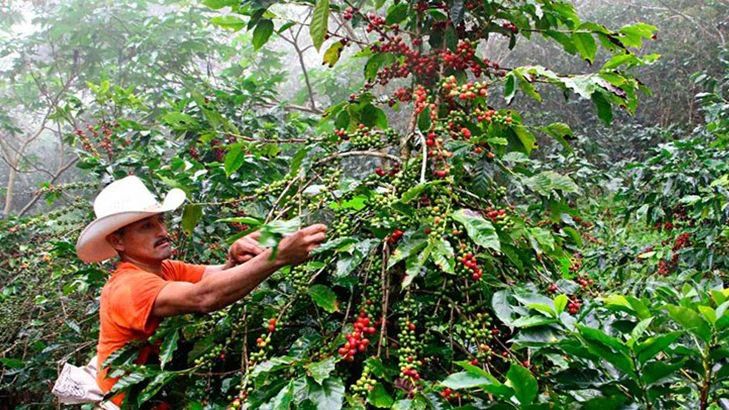
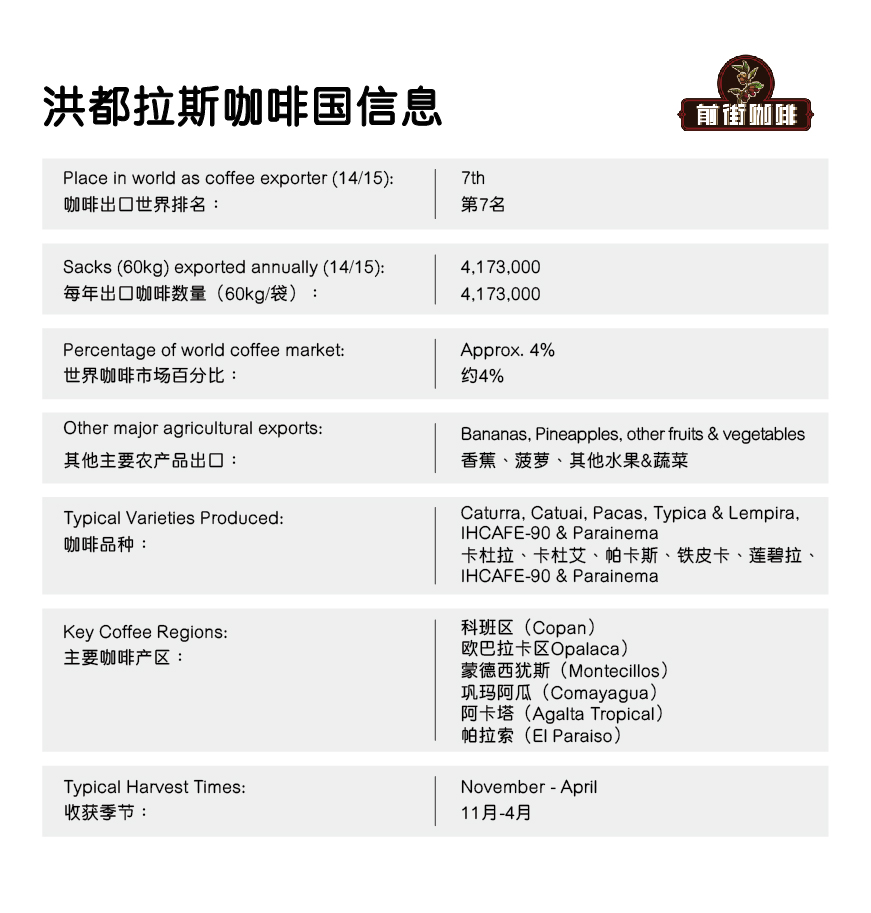
Currently, Honduras is not only the largest coffee producer in Central America but also ranks as the world’s second-largest producer of washed Arabica globally. Entering the 21st century, coffee officially surpassed bananas to become the country’s most economically valuable major crop. It’s worth noting that the banana industry has long been dominated by large U.S. corporations, whereas coffee production is driven by a vast number of smallholder farmers—approximately 110,000 nationwide—with harvesting mainly done manually. The primary harvest season runs from November to March each year.
Honduran coffee can be divided into two main types: one grown at elevations of 1,000 to 1,500 meters, known as “highland coffee,” and another cultivated at even higher altitudes of 1,500 to 2,000 meters, hailed as “premium highland coffee” and representing the country’s highest grade. Its export markets are primarily concentrated in the United States and Germany. According to a rigorous grading system, Honduran coffee is classified into three tiers: Strictly High Grown (SHG, above 1,200 meters), High Grown (HG, above 1,000 meters), and Central Standard (CS, above 600 meters). This grading system not only reflects altitude but is also directly linked to the coffee’s intensity, acidity, and sweetness.
 Looking back at the development of Honduran coffee, its origins can be traced back to the late 18th century when it was introduced by Spanish merchants. It wasn’t until 1804 that small-scale cultivation began locally. The country’s coffee industry started relatively late, mainly due to the long-standing lack of transportation infrastructure connecting production areas with ports, which severely limited exports and industrial expansion. It wasn’t until the 1970s, when the government established the official Instituto Hondureño del Café (IHCAFE) to focus on improving quality and technology, that the industry gradually turned the tide. In 1975, Brazil experienced a severe frost that caused a global coffee supply shortage. Honduras seized the opportunity, boosting production from 500,000 bags to 1.8 million bags and successfully entering the international market. In 2004, the first Honduran Cup of Excellence competition was held, attracting 21 outstanding producers nationwide and further driving quality improvement. By 2011, Honduras’ total coffee output surpassed that of Costa Rica and Guatemala, making it the largest Arabica coffee producer in Central America and the second-largest globally.
Today, Honduras has 280,000 hectares of coffee plantations, the vast majority of which are small farms under 3.5 hectares in size—yet these contribute about 60% of the country’s total production. These small-scale farmers achieve many unique specialty coffees through meticulous management and high-altitude cultivation.
The overall characteristics of Honduran coffee include: planting altitudes generally exceeding 1,100 meters, with main varieties being Caturra, Catuai, Pacas, and Typica, and washing as the predominant processing method. Top-tier batches often showcase complex fruit aromas, vibrant acidity, and pronounced sweetness and body, with some lots even featuring captivating nutty or toffee-like aftertastes, offering rich and balanced flavor layers.
Introduction to Honduras’ Six Core Producing Regions
Honduras’ specialty coffee mainly comes from the western and southern regions, which can be divided into six key areas: Copan, Opalaca, Montecillos, Comayagua, Agalta Tropical, and El Paraiso. These regions mostly lie at elevations above 1,100 meters, with approximately 69% of their coffee falling into the HG grade, 12% in SHG, and 19% in CS.
1. Copan Region
Located in western Honduras, bordering Guatemala, it covers areas such as Copan and Ocotepeque departments, with elevations between 1,000 and 1,500 meters, average annual temperatures of 11.5–22.5°C, annual rainfall of 1,300–2,300 mm, and a harvest season from November to March. Cupping profiles are dominated by intense chocolate notes, paired with honey and caramel sweetness, while fruit flavors are less prominent.
2. Opalaca Region
Situated between Santa Barbara, Intibuca, and Lempira departments, with elevations of 1,100–1,500 meters, temperatures of 11.5–22.5°C, rainfall of 1,400–1,950 mm, and a harvest season from November to February. Its coffee is known for its delicate acidity and tropical fruit aromas such as grape and mulberry, with an aftertaste balancing lemony tang and honey-caramel sweetness.
3. Montecillos Region
Spanning La Paz, Comayagua, Santa Barbara, and Intibuca, with elevations of 1,200–1,600 meters, temperatures of 12–21.2°C, rainfall of 1,300–2,300 mm, and a harvest season from November to April. Coffee from this region often features rich fruit aromas and sweet profiles, particularly the bright acidity of lemon, peach, and orange, with a silky texture and a long-lasting aftertaste.
4. Comayagua Region
Located in the Comayagua and Francisco Morazán areas, with elevations of 1,000–1,500 meters, temperatures of 14.0–22.0°C, rainfall of 1,350–1,700 mm, and a harvest season from December to March. Flavors are based on lemon, paired with distinct sweet fruit notes and a creamy mouthfeel, along with citrusy sweetness and a chocolatey aftertaste.
5. Agalta Tropical Region
Spread across Olancho, El Paraiso, and Francisco Morazán departments, with elevations of 1,000–1,400 meters, temperatures of 14.5–22.5°C, rainfall of 1,300–1,950 mm, and a harvest season from December to March. This region is known for its ecological diversity, and its coffee offers honey-like aromas, strong citrus notes, and crisp acidity, with a pleasant aftertaste.
6. El Paraiso Region
Located in southern Honduras, bordering Nicaragua, with elevations of 1,100–1,500 meters, temperatures of 16–22.5°C, rainfall of 1,000–1,400 mm, and a harvest season from December to March. Its coffee excels in soft fruit acidity and caramel aromas, with a balanced mouthfeel and a mellow aftertaste.
In addition to the six main producing regions, Honduras also has some distinctive smaller regions. For example, the Marcala Sweet Orange Estate located in the southwest La Paz department has an elevation of 1,425 meters, grows the Catuai variety, uses washed processing, and is graded as SHB. This estate’s coffee opens with spicy and roasted peanut dry aromas, features soft acidity and notable berry notes, and ends with a layered aftertaste of nuts, dark chocolate, and the tea-like feel of genmaicha—an exquisite specialty coffee with diverse flavor dimensions.
The above content is compiled by CoffeeHunters, a coffee news website.


