







Introduction:Jamaican Blue Mountain coffee is hailed as one of the world’s top-tier coffees, yet the so-called "Blue Mountain flavor" commonly found in the market is often just a marketing gimmick. This article delves into the real regional grading system of Blue Mountain coffee, the Japan-led trade background, and explains in detail how to identify authentic Blue Mountain No. 1 beans based on variety, packaging, and certificates. Finally, we also provide pour over parameters and flavor characteristics for the washed Blue Mountain No. 1 from the Clifton Estate, helping you make more confident choices and brews.
When it comes to specialty coffee, "Blue Mountain coffee" is undoubtedly one of the most iconic names, but many commercially labeled "Blue Mountain" products are often just similar in flavor or commercial blends, with no actual connection to the true coffee grown in the Blue Mountains of Jamaica. This article will take you from the historical origins of Blue Mountain coffee, diving deep into its regional altitude grading system, the cultivation and quality control standards set by CIB (Jamaica Coffee Industry Board), and teaching you how to effectively distinguish genuine Blue Mountain No. 1 coffee beans through bean variety, wooden barrel packaging, and three types of official certificates.
The Blue Mountains of Jamaica are located in the northeastern part of the country, with elevations exceeding 2100 meters at their highest points. This mountainous region boasts fertile volcanic soil and a year-round fresh maritime climate, creating a unique environment ideal for growing high-quality coffee. The cultivation history of Blue Mountain coffee dates back to the early 18th century, however its international reputation was not truly established until 1953. Thanks to the significant diurnal temperature variation brought by high altitudes, the coffee cherries mature slowly, accumulating richer and more balanced layers of flavor.
Due to Jamaica’s limited land area, there are very few regions capable of producing high-quality coffee, and the Blue Mountains are among the few areas on the entire island with sufficient elevation. To effectively manage this hard-won resource, the Jamaican government established the Coffee Industry Board (CIB) in 1948 to conduct detailed grading of the Blue Mountain growing region and to establish strict standards for cultivation, processing, and export, ensuring that each batch of Blue Mountain coffee can showcase its due quality.
According to CIB regulations, only coffee grown at an altitude of910 meters to 1700 metersis eligible to be called "Jamaican Blue Mountain coffee." If the altitude is below 910 meters but above460 meters, it falls under "Jamaican High Mountain coffee"; while coffee grown at an altitude ofbelow 460 meterscan only be classified as "Jamaican Prime Coffee." It is worth noting that the highest point of the actual Blue Mountains exceeds 2256 meters, butareas above 1700 meters are designated as nature reserveswhere the cultivation of cash crops is strictly prohibited, making the actual plantable range for Blue Mountain coffee even more limited.
In terms of cultivation techniques, Jamaica initially introduced the Typica variety from Africa, brought in along with systematic planting methods by British colonists. Britain has over 300 years of experience in coffee cultivation—while the technical foundation is solid, there was a lack of unified standardized procedures. After the establishment of the CIB, clear regulations were introduced regarding planting density, pruning, harvesting, and processing workflows, gradually incorporating modern management practices to make the quality of Blue Mountain coffee more stable and consistent.
In terms of quality control, the CIB sets extremely stringent standards for Blue Mountain coffee beans. Taking the top-tier Blue Mountain No. 1 as an example, it requires a green bean size of17/18 mesh, with a defect rate not exceeding2%[value missing]; Blue Mountain No. 2 is16/17 mesh, also with a defect limit within 2%; Blue Mountain No. 3 is15/16 mesh, with a defect rate also not exceeding 2%; additionally, there is a grade known as "Blue Mountain Prime," sized at10MS[value missing], with a defect rate also controlled within 2%. These rigorous screening criteria ensure that the final Blue Mountain coffee produced exhibits highly consistent and outstanding flavor performance.
So why is Blue Mountain coffee so widely known? In fact, this is inseparable from long-term support from Japan. Starting in the 1960s, Japan imported large quantities of Blue Mountain coffee, even once accounting for90%of global Blue Mountain trade. Until the year 2000, the majority of Blue Mountain coffee was still purchased by Japanese buyers. In fact, mainland China did not introduce Blue Mountain coffee beans until 2004 via the Kalumon green bean company, but due to its high price and limited supply, it has long only been available in a few high-end venues, adding to the mystique of Blue Mountain coffee. It wasn’t until 2011 that the Jamaican government began direct exports to China, giving consumers more opportunities to taste this legendary coffee.
However, the market is flooded with counterfeit Blue Mountain coffee—how can you tell what's real? First,Blue Mountain coffee beans must be 100% Typica variety. Typica is the oldest Arabica variety, beloved by coffee enthusiasts for its clean and balanced flavor profile. Genuine Blue Mountain No. 1 often shows a balanced acidity, sweetness, and bitterness with distinct layers and a long aftertaste when cupped. Additionally, the Typica variety grows slowly, has longer terminal branches, white flowers, and ripe fruits that appear as bright red cherry-like cherries, with beans that are slightly oval or somewhat pointed in shape.
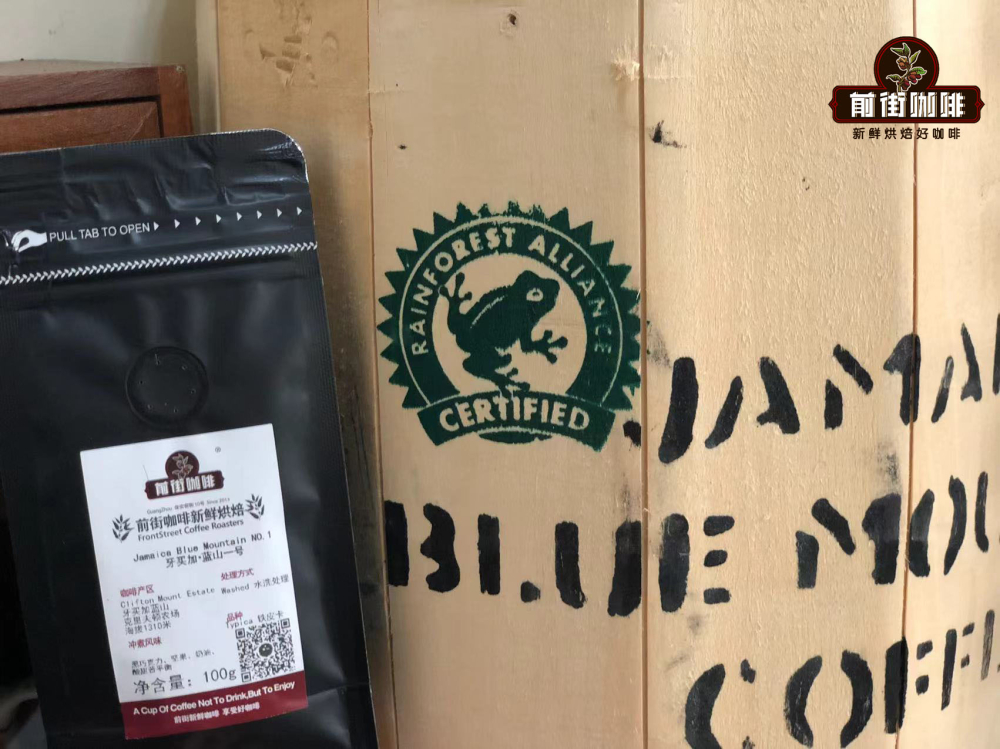
Another key identification point lies in theexport packaging. Jamaica remains one of the few countries in the world that still uses wooden barrels to ship coffee beans, with barrel sizes divided into70 kilograms, 30 kilograms, and 15 kilograms—unlike the more common jute sacks. This is not only a tradition, but also serves to minimize flavor loss during transport.
Most importantly,authentic Blue Mountain coffee will always come with three types of official certificates: a quality certificate issued by the Jamaica Coffee Board, an authorized sales certificate from the Blue Mountain coffee producer, and a certificate of origin for the Blue Mountain coffee. Among these, the quality certificate is randomly sampled by officials from submitted samples, with inspection time and quantity noted, and only batches that pass the inspection are granted certification.
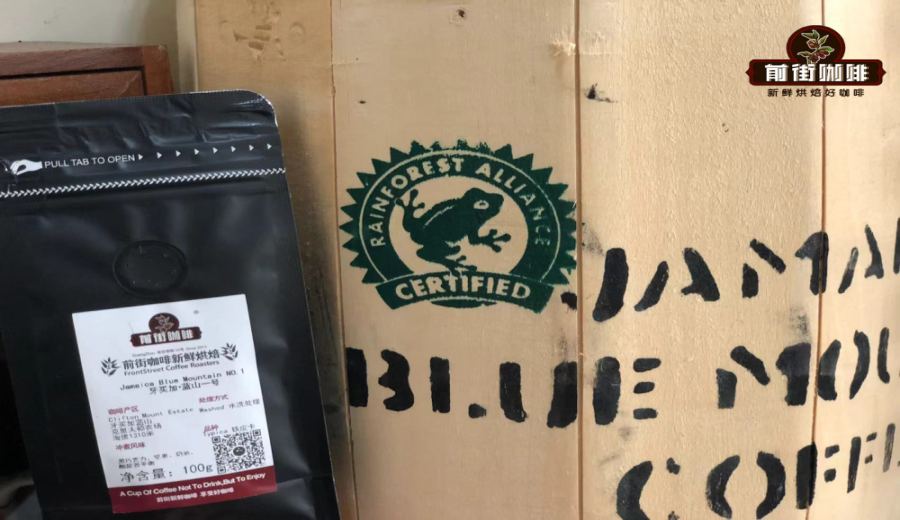
So, where can you buy authentic Blue Mountain coffee? A well-known coffee brand has long supplied washed Blue Mountain No. 1 beans from the Clifton Estate in the Blue Mountains. The Clifton Estate is the only farm in the entire Blue Mountain region to have received "Rainforest Alliance Certification," with a cultivation altitude of1310 meters, and was the first to launch a natural (sun-dried) version of Blue Mountain No. 1 and Blue Mountain Geisha between 2019 and 2020, breaking the previous tradition of only offering washed Typica. Currently, the brand steadily supplies this classic washed Blue Mountain No. 1.
Regarding pour over recommendations, a brand suggests using a KONO filter, with water temperature controlled at87-88°C[value missing], a recommended powder amount of15 grams, a powder-to-water ratio of1:15[value missing], and a grind size of medium (approximately 75% passing through a Chinese standard 20-mesh sieve). Specifically, start by pouring 30 grams of water for a 30-second bloom, then slowly pour 95 grams of water in small circles up to 125 grams, wait for the water level to drop, and then pour up to 230 grams to finish, with a total extraction time of about2 minutes and 05 seconds. Under these parameters, Blue Mountain No. 1 exhibits aromas of dark cocoa, nuts, cream, and caramel biscuit, with a rich and layered mouthfeel—it’s a classic choice perfect for deeply experiencing the flavors of Blue Mountain.
The above content is compiled by CoffeeHunters, a coffee news website.


