







Introduction:Geisha coffee is hailed as the king of specialty coffee, captivating enthusiasts with its unique flavor profile and rare prestige. This article will delve into the variety’s origins, the key factors behind its global popularity, explain the differences between Red and Green Label beans, and provide expert pour over parameters along with a three-stage extraction process. These insights will help coffee lovers master the brewing secrets of this legendary bean and experience its richly layered floral-fruity aromas and full-bodied finish.
In the world of specialty coffee, Geisha is undoubtedly one of the brightest stars. Some say there are only two types of specialty coffee beans: Geisha and everything else. While this statement carries a hint of humor, it truly reflects the lofty status Geisha holds in the hearts of coffee aficionados.
What makes Geisha coffee so enchanting? Why is its price always sky-high? What are the differences between the Red Label and Green Label? Let’s start from the origin of the variety and gradually uncover the mystery of Geisha.
The widespread popularity of Geisha is largely due to the complex flavors it presents in the cup: elegant and intense floral notes, distinct citrus and peach tones, a richly layered acidity of composite fruits, a silky texture akin to cream, and a lingering aftertaste hinting at oolong tea sweetness. This sensory experience feels more like savoring an exquisite fruit tea than what one might traditionally expect from coffee.
A coffee’s flavor expression is closely tied to the variety’s inherent traits, growing environment (including climate, altitude, and soil conditions), and farm management practices. Post-harvest processing and roasting techniques serve to preserve and highlight these natural characteristics. Geisha’s ability to deliver such exceptional flavors is the result of multiple ideal factors working in harmony.
As the saying goes, rarity drives value. The production of Geisha is extremely limited. Taking Panama as an example, the country’s annual coffee output is around 10,000 metric tons, yet the renowned Hacienda Esmeralda produces only about 150 bags of Geisha green beans per year (approximately 9,000 kg). Calculated at a 3% proportion of total production, that amounts to roughly 270 kg. Coupled with ongoing media promotion, the demand for Geisha continues to soar, naturally driving up its price.
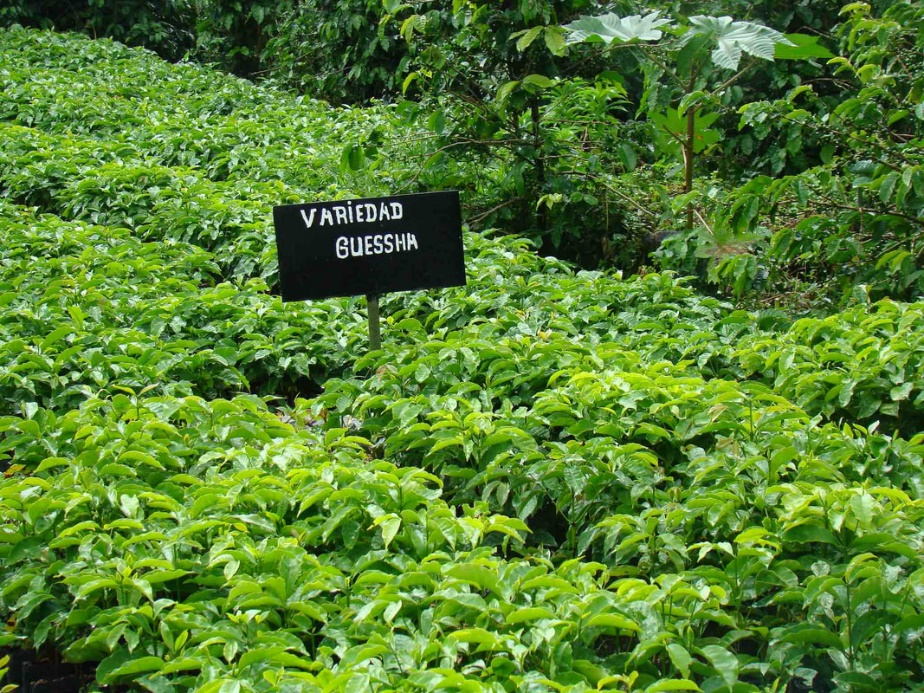
Compared to other Arabica varieties, not only does Geisha yield less fruit, but the plant itself is also quite delicate. It requires high-altitude environments and fertile soils, preferring shaded or cloudy conditions and unable to withstand direct, intense sunlight. Geisha leaves are thinner, resulting in lower photosynthetic efficiency, and its root system is fragile, leading to slow absorption of water and nutrients, all of which contribute to its consistently limited yields. Additionally, fruits in high-altitude regions take longer to ripen, and a single Geisha tree produces only half the yield of a Catuaí tree—these are all key reasons for its premium pricing.
Daniel Peterson, the third-generation owner of Hacienda Esmeralda, revealed that the discovery of the Geisha variety came after years of comparative testing, and was finally confirmed in 2003. Notably, two weeks before that year’s Best of Panama (BOP) competition, cuppings showed that Geisha exhibited unique flavors such as jasmine, citrus, peach, blueberry, bergamot, and sugarcane. Although these did not align with mainstream preferences at the time, Daniel still chose to enter the competition—and won first place.
In 2005, Geisha defeated numerous competitors in the Specialty Coffee Association of America (SCAA) competition and earned world-class specialty coffee certification. It went on to win again in 2006 and 2007, drawing global attention ever since. Although Geisha is now grown in various parts of the world, Hacienda Esmeralda, as the discoverer of its signature flavor, remains the best at showcasing the classic “Geisha taste” through its natural processing method.
On the offering list of a certain brand, there are usually around 10 different Geisha coffee options. For first-time tasters, it’s recommended to start with either the Hacienda Esmeralda Natural Red Label or Washed Green Label. The Red Label belongs to the Hacienda Esmeralda Special (ESMERALDA SPECIAL, including auction lots), sourced from high-altitude regions between 1,600 and 1,800 meters with cupping scores above 90. These beans mainly come from the Jaramillo and Cañas Verdes farms.
The auction lots of Red Label Geisha are selected from specific plots, with each batch assigned a unique number corresponding to its particular plot. The most common example is the Geisha from the Mario plot at Jaramillo farm, processed using the natural (sun-dried) method. Despite the many challenges posed by high-altitude cultivation, the Boquete region’s Geisha thrives in this environment, showcasing its most outstanding floral and fruity characteristics.
The Green Label Geisha falls under the Private Collection grade, processed via washed method. Its cup profile is fresher and more natural, featuring notes of lemon, berries, pomelo, and Tieguanyin tea. The Green Label is selected from micro-lots within the same altitude range but does not participate in auctions. Though slightly lower in grade than the Red Label, it equally showcases the classic traits of high-altitude Geisha.
To perfectly express the classic flavors of Geisha, a light roast is essential. A certain brand adjusts its roasting curve to emphasize the retention of floral notes and acidity. Cupping results confirm that the Natural Red Label Geisha exhibits rich aromas of rose, citrus, berries, composite fruits, and honey; the Washed Green Label offers a fresh profile of jasmine, citrus, berries, honeysuckle, and oolong tea.
For lightly roasted Geisha beans, it is recommended to use hot water at 92–93°C for extraction, with a grind size based on 80% passing through a #20 standard sieve (similar to the coarseness of fine sugar, or a setting of 10 on the EK43s grinder). Freshness greatly impacts flavor, so it is advised to choose beans roasted within the last 5 days to ensure optimal taste expression.
When choosing a filter dripper, the V60 resin dripper is particularly well-suited for highlighting the orange-honey layered profile of Red Label Geisha. Its unique spiral rib design and large central hole accelerate water flow, while the helical venting grooves extend the water path, increasing contact time between coffee grounds and hot water—resulting in a more complex extraction.
Below are the standard pour over parameters and three-stage extraction steps for a certain brand’s Hacienda Esmeralda Red Label Natural Geisha, for reference:
Brewing Parameters:Dripper - V60, Water Temperature - 91–92°C, Coffee Dose - 15g, Coffee-to-Water Ratio - 1:16, Grind Size - Fine Sugar (80% passing through #20 sieve)
Three-Stage Extraction:First stage: pour 30g of water for a 30-second bloom; second stage: pour 95g of water (scale shows approximately 125g), completed in about 1 minute; when the water level drops to 2/3 of the coffee bed, pour the remaining 100g of water (scale shows approximately 225g), completed in about 1 minute 35 seconds; total brew time is around 2 minutes 10 seconds.
The resulting cup of Geisha coffee will present elegant acidity of rose, citrus, strawberry, and tropical fruits, accompanied by a lasting black tea note. The flavor layers evolve with temperature changes, and the overall mouthfeel is smooth and delicate.
The above content is compiled by CoffeeHunters, a coffee news website.


