







Introduction:Have you ever wondered why many coffee packages proudly claim to be "100% Arabica"? In fact, Arabica, Robusta, and Liberica are the three primary species of coffee, each with unique flavors, growing environments, and market positions. This article will delve into the fundamental differences among these three types of coffee beans—from origin, climate requirements, flavor profiles to commercial uses—to help you choose the most suitable coffee based on your needs and to debunk common marketing myths.
In the world of coffee, "100% Arabica" has almost become synonymous with high quality, but many consumers don’t realize that Arabica is actually just one of the coffee species, not a specific type of coffee drink. The world’s coffee beans mainly come from three primary species—Arabica, Robusta, and Liberica—which differ significantly in yield, suitable growing conditions, flavor performance, and commercial applications. Among them, Liberica has almost exited the mainstream market, Arabica dominates the specialty coffee scene with its delicate aroma, while Robusta plays a key role in espresso blends with its bold and rich taste. Understanding the characteristics of these three species can not only help you identify marketing tactics but also make smarter choices when selecting coffee.
 Nowadays, many coffee brands emphasize using "100% Arabica" in their promotions, even making it a key selling point of their products. However, the first important concept to clarify is: Arabica refers to a species of coffee bean, not a specific type of coffee drink.
The world’s coffee beans can be broadly divided into three primary species: Arabica, Robusta, and Liberica (also known as Liberian). Among them, Arabica has the highest production, accounting for about 60% to 70% of global coffee output, and includes many well-known sub-varieties such as Bourbon and Typica. Robusta accounts for about 30% to 40%, while Liberica makes up only about 3%, mostly grown in the Asia-Pacific region.
Liberica is also known as the large-bean coffee, and although it is more resilient, its flavor performance is poor and it has weak resistance to leaf rust. As a result, it is rarely cultivated, with a current market share of less than 1%, having almost withdrawn from the commercial market, and is preserved only in a few research facilities. Therefore, this article will focus on the two most prevalent species in today’s market: Arabica and Robusta.
Arabica, also known as the small-bean coffee, originates from Ethiopia in Africa. This coffee tree typically grows at high altitudes between 1,000 and 2,000 meters, is relatively cold-tolerant, thrives at temperatures of 15 to 24°C, and requires relatively high humidity with annual rainfall exceeding 1,500 mm. It also demands higher cultivation techniques. The Arabica coffee tree is a medium-sized shrub with oval-shaped, dark green leaves. Its fruit is also oval, usually containing two slightly flat coffee beans. The front of the bean is oblong, with a narrow, S-shaped crack in the center, while the back is flatter. Its caffeine content is relatively low, about 0.8% to 1.5%.
Arabica coffee is renowned for its elegant flavors and rich aromas and is the dominant species in the global specialty coffee market. Well-known examples include Jamaican Blue Mountain, Indonesian Mandheling, Ethiopian Yirgacheffe, and Brazilian coffee—all single-origin coffees based on Arabica beans. However, Arabica is sensitive to environmental changes, particularly vulnerable to drought, frost, pests, and diseases, with leaf rust being its greatest threat. As a result, various producing regions continuously focus on variety improvement and disease-resistant breeding.
Arabica coffee produced under different origins, altitudes, and climatic conditions exhibits distinctly varied flavor profiles. Before roasting, it emits a fresh, grassy aroma. After proper roasting, it can showcase fruity notes in light to medium roasts or caramel and chocolate flavors in dark roasts. It is suitable for single-origin coffees and widely used in various blend recipes, supporting multiple brewing methods such as pour over, siphon, or French press.
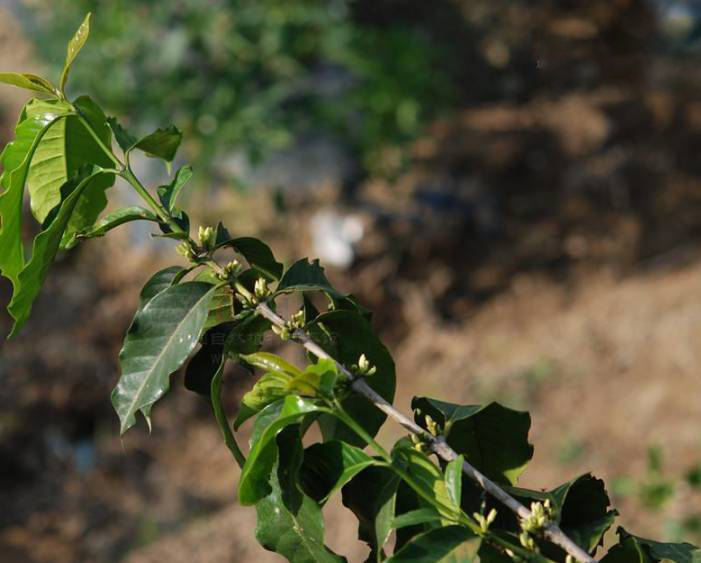
In contrast, Robusta, also known as the medium-bean coffee, originates from the Congo region of Africa. The Robusta coffee tree is suited to low-altitude areas between 200 and 800 meters, prefers warmer climates with temperatures between 24 and 29°C, and requires relatively lower rainfall. This species relies on insect or wind pollination, and the time from pollination to fruiting is longer, about 9 to 11 months, significantly more than Arabica.
The Robusta coffee tree looks like a cross between a shrub and a tree, with longer and brighter green leaves, and can grow up to 10 meters in height but has a shallower root system. Its fruit is rounder than Arabica’s, with a vertical central seam that splits open, usually appearing flat or slightly bulging from the side, and feels harder, similar to small pebbles. Robusta’s flavor is generally less refined than Arabica’s, but its biggest advantage lies in strong disease resistance, high yield, and higher caffeine content of about 1.7% to 3.0%.
Robusta holds an irreplaceable position in the commercial coffee market, especially playing a key role in espresso blends. Italian baristas often add a small amount of Robusta to blends to enhance the coffee’s body and rich crema, resulting in a bolder Espresso. When Espresso is combined with milk, Robusta’s bold character complements Arabica, making milk-based coffees like lattes or cappuccinos creamier and smoother.
Frequently Asked Questions:
1|What’s the difference between a $10 and a $30 cup of coffee?
In the coffee market, coffee beans can generally be divided into two main categories: commercial beans and specialty coffee beans. Due to its high yield and low cultivation cost, Robusta has an international futures price of about $1,686 per ton (approximately 11.5 RMB per kilogram), so it is often used in instant coffee or mass-market ready-to-drink coffee. In contrast, the price of specialty coffee beans is often several times higher because they use high-quality green beans and undergo refined roasting and processing techniques, fully showcasing the unique flavors of the origin—such as bright acidity, rich sweetness, and full-bodied aftertaste.
In short, the difference between a $10 and a $30 cup of coffee often reflects the value gap between commercial and specialty beans. Commercial beans are mostly used in mass production, such as common espresso-based drinks like lattes and cappuccinos, offering lower costs but relatively ordinary flavor. Specialty coffee emphasizes origin characteristics and the details of processing methods, making it suitable for pour over or premium espresso, delivering a more layered tasting experience. However, even with blends, choosing the right beans can still produce surprisingly delightful coffee flavors.
2|'Blue Mountain Coffee' and 'Kopi Luwak' are drinks, Arabica is a species
Many people have heard of 'Blue Mountain Coffee' or 'Kopi Luwak,' but these are actually specific coffee drink names, not coffee bean species. For example, 'Blue Mountain Coffee' refers to coffee made from Arabica beans grown in Jamaica’s Blue Mountains; whereas 'Kopi Luwak' is a special coffee made from beans that have been eaten, partially digested, and excreted by civets, then collected and processed by hand.
Therefore, when we talk about 'Arabica,' we are referring to a coffee bean species, not a specific coffee drink. The Arabica species also includes several sub-varieties such as Typica, Bourbon, and Caturra. It’s important to note that not all coffee made from Arabica beans is specialty coffee—the actual flavor depends on origin, processing method, and roast level. In specialty coffee shops, you’re more likely to see specific origin names such as 'Kenya AA,' 'Colombia Huila,' or 'Yirgacheffe G1,' which are the true keys to showcasing a coffee’s regional character.
The above content is compiled by CoffeeHunters, a coffee news website.


