







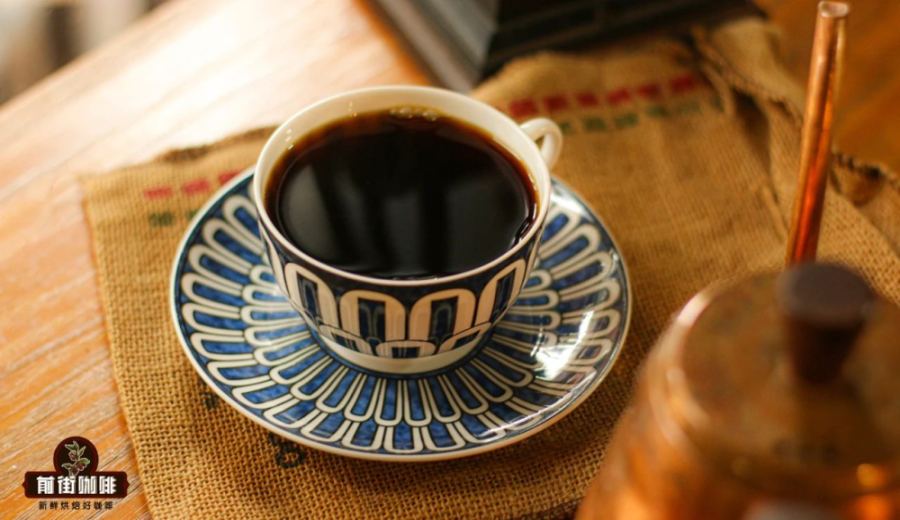
Introduction:Discover how Mandheling coffee from Indonesia’s Sumatra Lintong region shapes its distinctive horseshoe-shaped beans and rich, full-bodied flavor through the wet-hulling process. This article delves into the origins of Mandheling’s flavor profile, regional characteristics, and offers expert pour over recommendations along with a three-stage pouring technique to help you master optimal extraction parameters—bringing out caramel sweetness and layers of nutty chocolate notes.
Indonesian Mandheling coffee is beloved by many coffee enthusiasts for its bold, full-bodied taste and captivating caramel and dark chocolate notes. These beans are typically medium to dark roasted, with low acidity but pronounced bitterness and a heavy body, making them especially popular among those who prefer dark roast profiles—particularly in the Japanese market, where they have a large following. Behind this widely adored bean lies not only an interesting naming origin, but also its unique wet-hulling process, which is a key factor in creating its distinctive appearance and flavor.
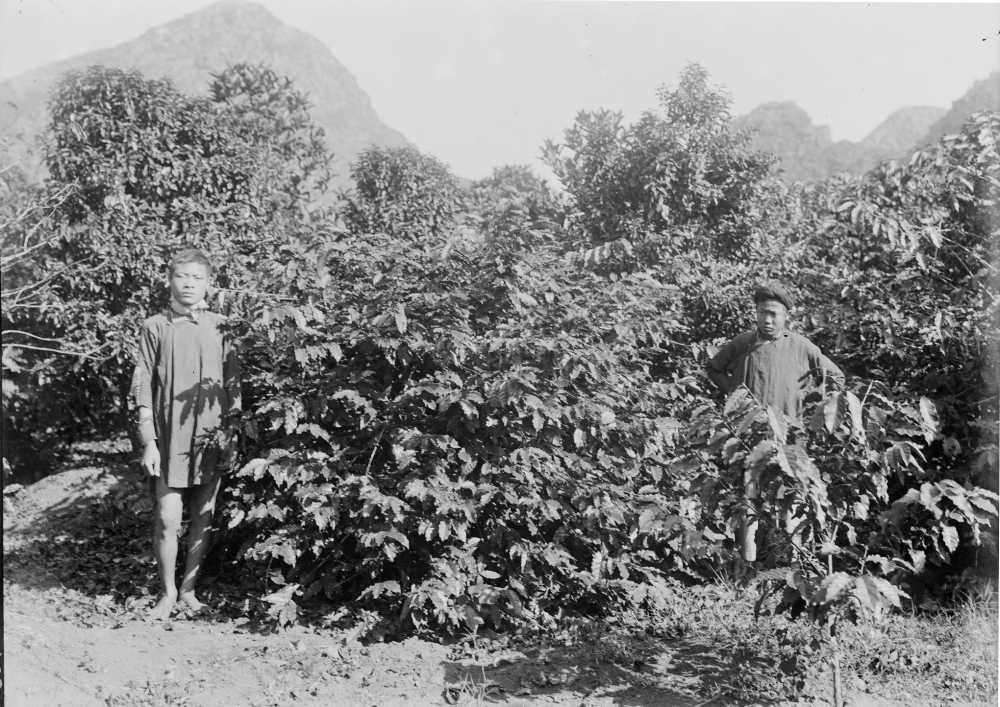
The history of Indonesian coffee dates back to 1696, when colonial officials from the Dutch East India Company introduced the first batch of Arabica coffee seedlings from Malabar, India, as a diplomatic gift to the Dutch governor stationed in Batavia (now Jakarta, Indonesia). However, these seedlings were completely destroyed by flooding. It wasn’t until 1699, when they were reintroduced and successfully harvested in 1701, that Indonesian coffee cultivation truly began. Among the regions, Sumatra’s Lintong area, with its unique geography and climate, became an important cradle for nurturing the classic Mandheling flavor.
As for the origin of the name “Mandheling,” it actually has no direct connection to coffee itself. It originally referred to an indigenous ethnic group in the Lintong region of Aceh, Sumatra, an area primarily known for rubber cultivation rather than coffee. Legend has it that during the colonial period, a Japanese soldier was deeply impressed by an exceptionally flavorful coffee and asked the local unit responsible for rubber production in North Sumatra (i.e., PWN Company) to help find beans with a similar profile. PWN staff collected samples from various regions to send to Japan for evaluation, one of which received high praise. When asked about the origin of that particular coffee, the person in charge initially wanted to indicate that the beans came from the Mandailing region, but for reasons of commercial confidentiality, ended up referring to it as “MANDHELING”—which later became the well-known “Mandheling.” This serendipitous name has since become one of the representatives of Indonesia’s specialty coffee.
Lintong Mandheling, as a representative product from the mountainous Lintong region in north-central Sumatra, Indonesia, is located near Lake Toba and serves as an ideal entry point for many coffee beginners exploring Indonesian flavors. The Mandheling produced in this area generally employs the region’s unique wet-hulling process, resulting in a flavor profile that is low in acidity, rich, and carries distinctive aromatic qualities. Due to Sumatra’s proximity to the equator, the region experiences year-round high temperatures and humidity, with air moisture levels consistently maintained between 70% to 90%, coupled with limited sunlight. Traditional sun-drying or washed processing methods often face challenges in drying. As a result, the wet-hulling process has become the most practical solution for local coffee farmers.
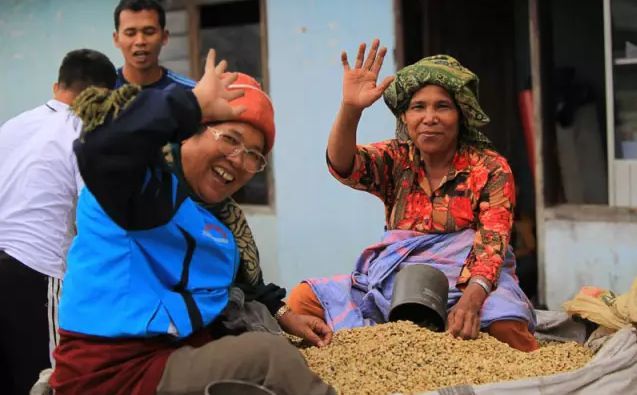
The so-called wet-hulling process involves partially drying the coffee beans—still in their parchment—after the washing fermentation and rinsing steps, by exposing them to sunlight for one to two days until their moisture content drops to around 30% to 50%. The parchment is then removed, and the beans continue to be sun-dried until fully dry. This method significantly shortens the drying time, preventing the beans from over-fermenting or developing mold due to prolonged dampness. However, because the beans are still semi-hard when the outer protective layer is removed and are subjected to intense sunlight, they tend to crack during the shrinkage process, resulting in a distinctive horseshoe-like appearance—commonly referred to as “horse hoof beans.” It’s important to note that this shape is not a defect, but rather a typical characteristic of the wet-hulling method.
For pour over brewing of Lintong Mandheling, given that it is mostly dark roasted, it is recommended to use a Kono filter to enhance body and crema expression; if a Kono is unavailable, a V60 filter can be used as an alternative. A recommended coffee dose is 15 grams (based on a single serving), and the beans should be used between the 4th and 7th day post-roast, when flavor development is more balanced. The grind size is suggested to be slightly coarser than that of typical light roasts, with a reference of approximately 70% passing through a #20 sieve—this helps avoid over-extraction leading to burnt bitterness, as well as under-extraction resulting in a thin flavor.
In terms of water temperature, it is advised to maintain a range between 87–88°C. Excessively high temperatures can amplify bitterness and off-flavors, while too low may render the flavor dull. For the coffee-to-water ratio, a 1:15 recommendation strikes a balance between intensity and aftertaste; compared to the more concentrated 1:13, it better showcases the full layers of flavor without highlighting undesirable notes in the finish.
Regarding brewing technique, a three-stage pouring method is recommended to gradually release the richness and caramel sweetness of Mandheling. The first step is the bloom phase, where about 30 ml of hot water is poured to ensure all coffee grounds are evenly saturated and to release CO₂; the second step involves pouring about 100 ml, which brings out the golden foam on the coffee’s surface and highlights the primary flavors; the final step uses a gentle center pour to add about 95 ml, enhancing sweetness and overall roundness, making the chocolate and nut tones more pronounced.
In summary, Indonesia’s Lintong Mandheling, with its unique wet-hulling process and regional flavor characteristics, stands as a classic choice for dark roast enthusiasts. Mastering the correct pour over parameters and techniques not only accentuates its rich and full-bodied profile, but also allows you to experience the distinct charm of Sumatran coffee. From roast level and grind coarseness to water temperature and pouring rhythm, each element influences the final flavor expression—making it well worth the exploration and fine-tuning by every coffee lover.
The above content is compiled by CoffeeHunters, a coffee news website.


