







Introduction:Want to know how Geisha 1931 made its way from the Ethiopian forests into your coffee cup? This article takes an in-depth look at the varietal background of this legendary bean, the plot management at Gesha Village Estate, and the essence of the Golden Natural processing method. It also provides practical pour over brewing tips — from water temperature and grind size to a three-stage pouring technique — teaching you how to extract top-tier flavors with notes of blueberry, honeydew, and magnolia blossom at home.
What’s the connection between Geisha 1931 and the more common Panamanian Geisha? And why has this bean become the dream coffee for enthusiasts? The answer lies in its birthplace — the wild coffee forests of Ethiopia’s Bench Maji region. The founders of Gesha Village Estate, Adam Overton and Rachel Samuel, were originally documentary filmmakers and photographers. In 2007, while filming a coffee-related documentary for the Ethiopian government, they first heard the story of the discovery of the Geisha variety. Later, with the help of professional consultants, they personally visited the Bench Maji region in 2011 to further trace the roots of this legendary coffee.
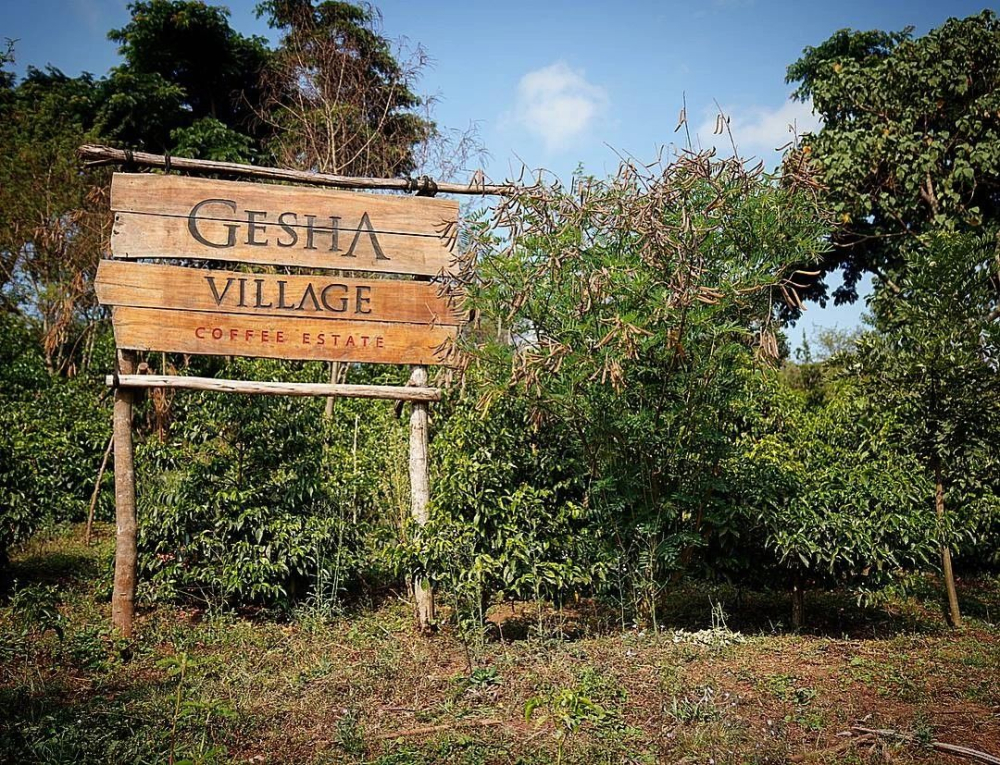
In search of the purest Geisha heirloom variety, they ventured deep into the Gori Gesha Forest under the guidance of expert Willem Boot, collecting seeds from wild trees and bringing them back to cultivate at Gesha Village Estate. Subsequently, the couple built a large estate spanning nearly 500 hectares near the forest. Unlike the smallholder farming model commonly seen in Ethiopia, this estate focuses solely on growing the Geisha variety and introduces scientific management practices. Each plot is numbered and meticulously documented to track flavor profiles under different microclimates.
Gesha Village Estate divides the farm into multiple plots based on altitude, sunlight, and soil characteristics. Among them, the OMA, SURMA, and SHEWA-JIBABU plots located on the western side sit at elevations of 1900 to 2069 meters, with SHEWA-JIBABU being the highest point in the entire estate. Different plots grow the most suitable Geisha varieties according to their unique microclimates, showcasing distinct flavor profiles. The Gold Label lot introduced in this article mainly comes from the Oma plot, which ranges from 1900 to 2040 meters in altitude.
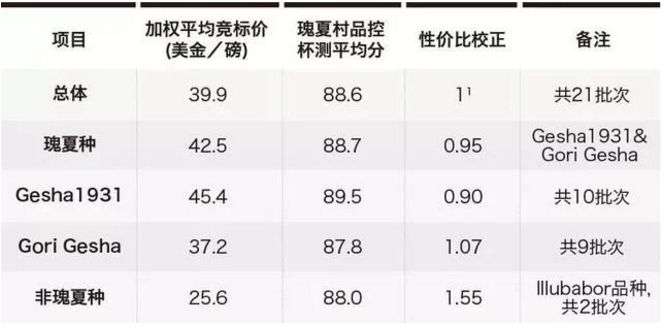
When it comes to the Geisha variety, a common misconception is treating all related strains as the same. In fact, Gesha Village Estate currently grows three main types: Gori Geisha, Geisha 1931, and another disease-resistant strain, IIIubabor Forest. Although Gori Geisha and Geisha 1931 originate from the Ethiopian Gesha Forest, they are only distantly related to Panamanian Geisha and are not the exact same variety. However, the performance of Geisha 1931 closely resembles the familiar Panamanian Geisha, making it a top choice for many competitions and high-end roasters.
So, what’s the relationship between Geisha 1931 and Geisha? In fact, the Geisha variety was first discovered in 1931 on Gesha Mountain in southern Ethiopia (the Japanese pronunciation of "Gesha" sounds similar to "geisha"), and was later introduced to places like Kenya. Therefore, Geisha 1931 represents the original Geisha variety discovered in 1931, and the number in the name indicates its year of discovery. Broadly speaking, the varieties cultivated in the nearby Gori Geisha forest share genetic similarities with the Geisha lineage and can be considered part of the Geisha family. But strictly speaking, Geisha 1931 is the classic Geisha we commonly refer to.

The Gesha Village Gold Label lot is a selection of high-quality beans, accounting for only about 10% of the annual production. Each batch has clear origin and processing traceability information. This natural-processed lot from the Oma plot reveals a rich flavor profile through cupping — not only does it have a unique dry fragrance, but it also presents complex fruit and floral notes during the sip, with a long-lasting aftertaste that carries a tea-like quality, leaving a deep impression.
Gesha Village’s processing method primarily uses natural drying, which aligns with the local dry season from December to March of the following year when rainfall is extremely low, creating ideal conditions for natural drying. The traditional method involves evenly spreading freshly harvested coffee cherries on African-style raised beds, turning them regularly each day to prevent over-fermentation. The entire natural drying process takes approximately 21 to 40 days until the moisture content drops to 12%, after which the beans undergo hulling. This ensures intense yet clean flavors.
If you’d like to brew this Gesha Village Gold Label Natural lot at home using pour over, it’s recommended to choose a faster-flowing filter cone, such as the V60. This is because lightly roasted Geisha beans have a smaller expansion rate and firmer bean structure. If the filter cone has insufficient flow rate, it can lead to fine particle buildup, causing uneven or blocked extraction in the latter stages, affecting the overall mouthfeel. The spiral ridges of the V60 aid in gas release, allowing aromatic acids to be more easily released, and the large bottom hole helps speed up water flow, improving extraction efficiency.
For water temperature, it’s advised to maintain a range between 90°C and 93°C. If you prefer a brighter acidity and a tea-like aftertaste, opt for 90°C to 91°C. If you want more vibrant fruit acidity and a fuller body, you may slightly increase the temperature to 92°C to 93°C. Additionally, grind size is extremely crucial as it directly impacts extraction time and flavor expression. Generally, if using 15 grams of coffee grounds with a three-stage pour over, a total brew time of less than 1 minute and 40 seconds indicates the grind is too coarse, resulting in under-extraction and overly sharp acidity. If it exceeds 2 minutes and 20 seconds, the grind may be too fine, causing over-extraction and leading to bitter, heavy flavors.
For the coffee-to-water ratio, the recommended range is 1:15 to 1:16. If you enjoy a richer flavor, closer to oolong tea or berry notes, go for 1:15. If you prefer a refreshing white floral and citrus acidity, it’s suggested to use 1:16 to allow the flavors to open up more.
A three-stage pouring technique is recommended. Follow these steps: First, pour 30 grams of water for blooming for about 30 seconds, using a small stream and circling from the center outward to ensure even saturation of the coffee bed. Next, pour 95 grams of water steadily with a slightly larger stream, aiming for a total of 125 grams by around 55 seconds. This stage helps lift the coffee bed and promotes even extraction. Finally, when the liquid level drops to half, switch to a small stream and circle narrowly to pour 100 grams of water, totaling 225 grams. Be mindful to control the water flow so as not to disturb the coffee bed. The overall dripping time should be around 2 minutes. This method fully highlights the complex flavors of Geisha 1931, including blueberry, sweet cherry, honeydew, and magnolia, with bright acidity and a refreshing, lingering tea-like aftertaste.
The above content is compiled by CoffeeHunters, a coffee news website.


