







Introduction:The French press is one of the simplest yet most faithful tools for brewing coffee at home, capturing the true essence of the beans. Through a straightforward immersion method, it not only preserves the rich aroma and full-bodied flavor of the coffee but is also ideal for making refreshing iced coffee in summer. This article delves into the design origins and advantages of the French press, and provides two practical recipes for medium-roast beans—hot brew and cold brew—including precise coffee-to-water ratios, grind sizes, water temperatures, and steeping times to help you easily master professional-level home coffee extraction techniques.
Thanks to its ease of use and exceptional ability to preserve flavor, the French press has long been a common brewing tool in coffee lovers' homes around the world. This device requires no complicated techniques—just steep the coffee grounds with hot water for a period of time, then gently press the filter, and you can enjoy a cup of rich and bold coffee. Compared to pour over or espresso machines, the French press is more user-friendly and better showcases the layered profile of the coffee, making it especially suitable for those who appreciate a full sensory coffee experience.
Speaking of the origins of the French press, its history dates back to France in 1850, where it was initially introduced as a design using a heat-resistant glass bottle paired with a metal filter, primarily intended for brewing tea—thus it was also once called a “tea infuser.” It wasn’t until 1852 that a French artisan and businessman jointly applied for a patent for a “piston-filtered coffee device,” which used a plunger with holes and sandwiched flannel to more effectively filter out coffee grounds. However, the French press truly gained popularity in 1935, when a Milan-based company launched an improved version equipped with a spring-loaded piston, allowing the filter to press tightly against the bottom of the carafe and significantly improving filtration efficiency and ease of use. Though it gradually became popular in Europe, it didn’t gain widespread recognition in the U.S. market until the 1980s, where it was often referred to as a “cafetiere” or “French piston coffee maker.”
The greatest charm of the French press lies in its simple yet highly effective immersion extraction principle. This method demands very little in terms of pouring technique—just control the coffee-to-water ratio, water temperature, and steeping time well, and you can consistently extract the essence of the coffee. Compared to filter cone brewing, which requires higher skill levels, the French press is more suitable for everyday use and can more fully present the original flavors of the coffee beans, including sweetness, body, and mouthfeel.
If you want to enjoy a refreshing and layered iced coffee in the summer, the French press can also deliver. The key is choosing the right coffee beans: it’s recommended to go for medium to light roasted beans with a higher degree of fermentation, such as sun-dried, honey-processed, or anaerobically fermented coffees. These types of beans usually have pronounced fruity and juice-like notes that pair perfectly with the cold extraction method, delivering a refreshing experience akin to fruit tea.
Below is a set of tested iced coffee extraction parameters, suitable for those seeking bright flavors and smooth textures: use 30 grams of coffee grounds, with a 1:10 coffee-to-water ratio (i.e., 300 ml of water), using an Ek43 grinder set to 9 (approximately equivalent to 85% passing through a #20 sieve, with a fineness similar to granulated sugar). The water temperature should be maintained at 100°C, and the total steeping time is 9 minutes. These parameters can fully bring out the coffee’s fruit acidity and sweetness while avoiding bitterness from over-extraction.
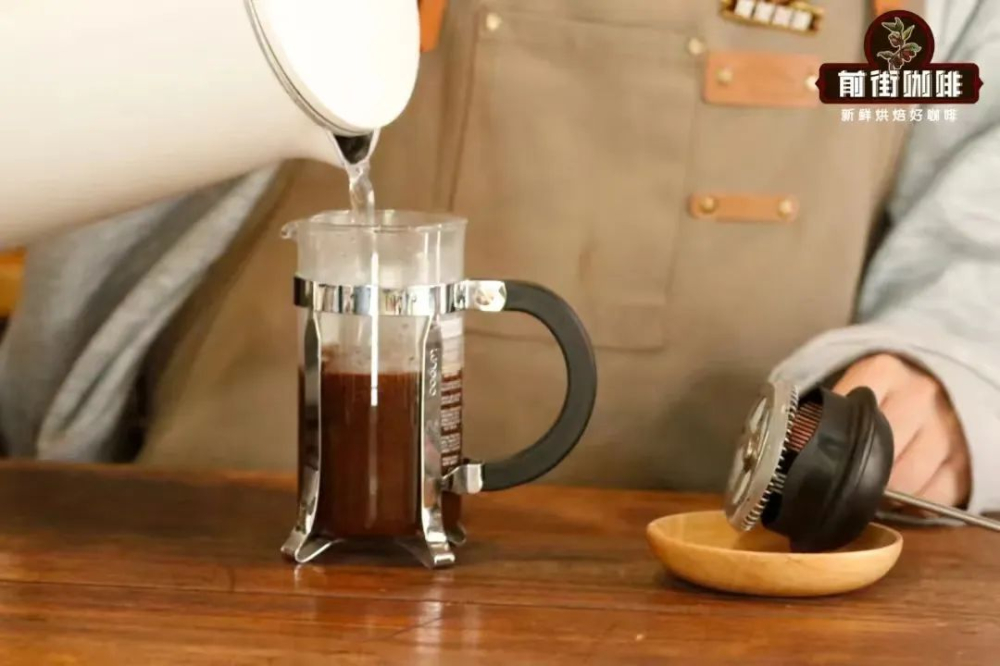
The specific operation process is as follows: first, pour all the coffee grounds into the French press and add a small amount of hot water (about 1/5 of the total water volume) to quickly wet the grounds. Then add the remaining hot water up to 300 ml, and immediately stir about 10 times with a non-metallic spoon to help the coffee grounds absorb water evenly. Next, start the timer and let it sit for 4 minutes. This stage allows the coffee grounds to initially expand and release gases.
After four minutes, use a stirring stick or spoon to gently press the floating coffee grounds down into the water, ensuring all the grounds are fully immersed in the hot water. Then let it sit for another 5 minutes to allow the flavor compounds to fully develop. By this point, the total steeping time has reached 9 minutes—be careful not to exceed this time to avoid affecting the balance of the taste.
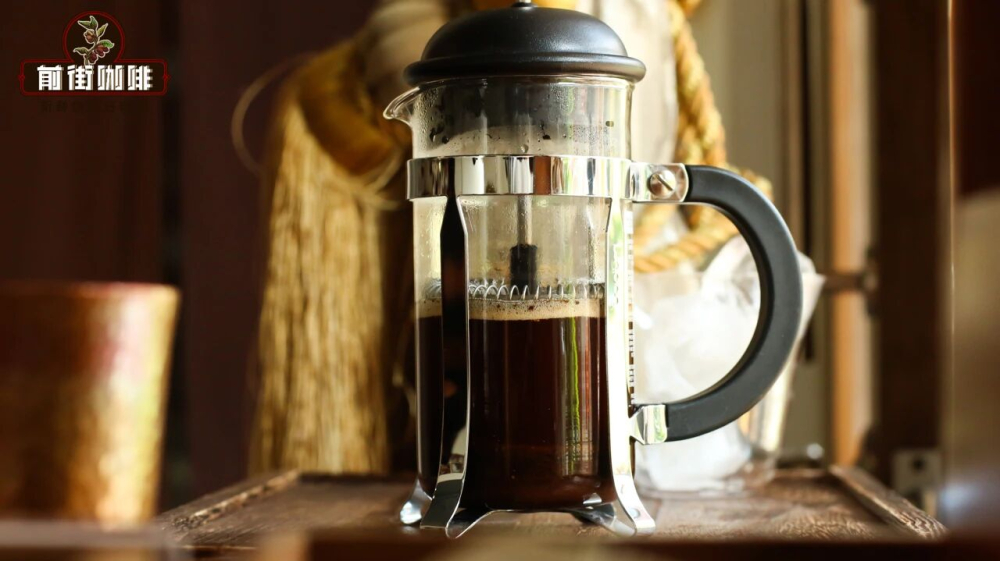
When the time is up, slowly press the plunger of the French press down to just above the surface of the coffee liquid to avoid pressing too hard, which could cause fine particles to break through the filter and affect clarity. Next, prepare a cup pre-filled with about 120 grams of ice cubes, and slowly pour the coffee from the French press over the ice. As the ice cools the coffee, it will also help filter out some of the fine particles, resulting in a smoother mouthfeel. After pouring, gently stir to blend the ice and coffee evenly—and your bright, refreshing, and smooth iced coffee is complete.
In addition to cold brew, the French press is also excellent for hot brewing medium-roast coffee. If you prefer a rich and full-bodied taste, you can opt for medium to dark roasted blends or single-origin beans, adjusting the coffee-to-water ratio to 1:12 to 1:15, lowering the water temperature slightly to 92–96°C, and reducing the steeping time to 4 minutes—you’ll still achieve a balanced and robust coffee flavor. Whether hot or iced, the French press offers a simple way to explore the diverse possibilities of coffee.
The above content is compiled by CoffeeHunters, a coffee news website.


