







Introduction:Want to understand the origins of the unique floral aroma and citrus acidity in Yirgacheffe washed coffee beans? This article delves into the high-altitude terroir of Ethiopia’s Yirgacheffe region, explores how the washed processing method influences flavor, and offers expert pour over recommendations — including 15g of coffee grounds, a 1:16 coffee-to-water ratio, 92°C water temperature, and a four-stage pouring technique with an extraction time of approximately 2 minutes and 28 seconds — to help you master the key to balanced flavor. Perfect for both beginners and advanced enthusiasts.
Yirgacheffe is one of Ethiopia’s most iconic specialty coffee regions, and the well-known “Yirgacheffe flavor” — that fresh white floral note paired with vibrant citrus acidity — is actually inseparable from the washed processing method. This article will explore the characteristics of the region, the evolution of processing techniques, and the reasons behind the flavor formation, while also sharing practical pour over parameters and a step-by-step guide to the four-stage pouring method to help you brew a captivating cup with notes of jasmine, citrus, apricot, and a honey-green tea finish.
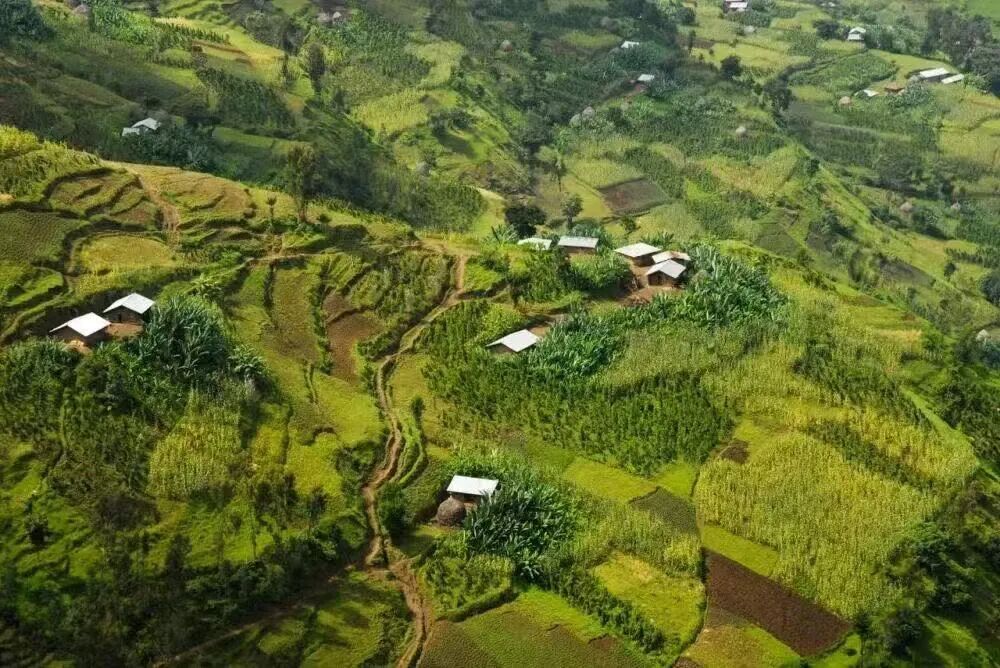
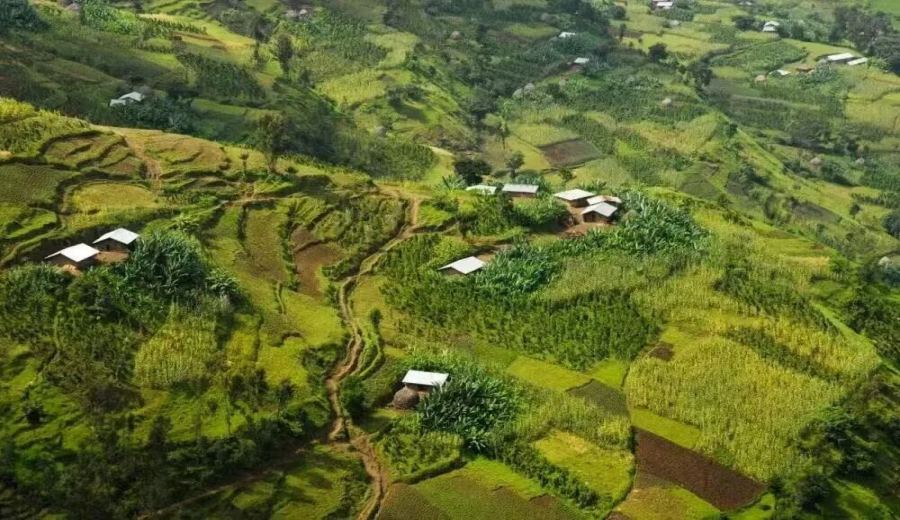
When we talk about the “Yirgacheffe flavor,” we’re referring to the distinct flavor profile of coffees from this region. Located in southern Ethiopia, Yirgacheffe sits at an overall elevation of around 2,000 meters, making it one of the highest-altitude coffee-growing regions in the country. The high altitude extends the ripening period of the coffee cherries, allowing them more time to accumulate sugars and flavor precursors. Coupled with the area’s unique terrain and smallholder farming practices, these factors create nearly ideal growing conditions tailor-made for coffee.
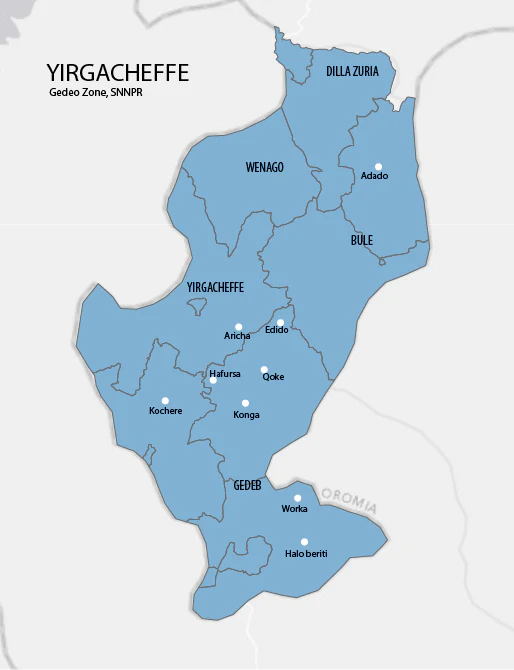
Although Yirgacheffe was originally part of the Sidamo region, its exceptional flavor performance eventually led to its distinction as a separate region, and it has since become one of Ethiopia’s most renowned coffee-producing areas.
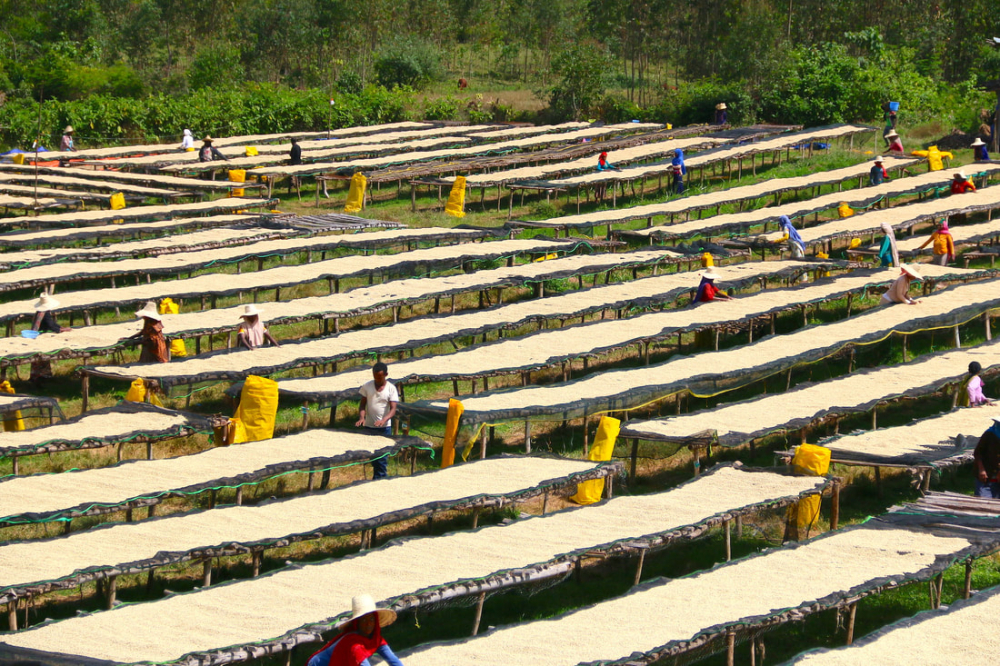
When discussing Yirgacheffe, one cannot overlook the washed processing method, as the so-called “Yirgacheffe flavor” is largely shaped by this technique. In the early days, Ethiopia primarily used the natural (sun-dried) processing method, but due to limitations in technology and experience, coffee was prone to spoilage during processing, resulting in high defect rates and inconsistent overall quality.
To address this, the Ethiopian government introduced washed processing equipment and technology in 1972, establishing the first washed coffee processing station in the town of Yirgacheffe. The results were significant: not only did the number of defective beans drop drastically, but the overall quality also improved markedly. More importantly, washed processing prevents over-fermentation of the beans, allowing the inherent characteristics of the coffee variety to fully shine — including that bright, uplifting citrus acidity, soft yet distinct white floral notes, and a clean, crisp green tea-like finish. Together, these elements form the well-known “Yirgacheffe flavor.”
Nowadays, there are also many medium to dark roasted Yirgacheffe coffees on the market. While such roasts can mellow the acidity and enhance body, they often stray from Yirgacheffe’s original flavor profile. Whether sun-dried or washed, only a moderate roast level can fully express the flower and fruit aromas without bringing out grassy notes due to under-roasting. As a result, many professional roasters opt for medium-light roasts to highlight the tea-like qualities and honey-sweet layers of the coffee.
If you want to brew a well-balanced cup of Yirgacheffe washed beans at home, here are some practical pour over parameters and tips: Use 15g of coffee grounds, with a grind size similar to the 10th notch on an Ek43 grinder or roughly 75% passing through a #20 sieve — about the granularity of fine sugar. Set the coffee-to-water ratio at 1:16, control the water temperature at 92°C, and use a four-stage pouring method. The total extraction time should be around 2 minutes and 28 seconds, yielding clear notes of jasmine, citrus, and apricot, with a honey-like sweetness and green tea-like freshness in the aftertaste.
Here’s the step-by-step process: First, pour about 30ml of hot water (approximately double the coffee weight) to bloom the grounds. Let it sit for 30 seconds to allow the coffee to fully degas and expand. After the bloom, move on to the second pour: slowly pour about 90ml of water in a wide circle, being mindful to keep the stream gentle and avoid too high a water level that could cause channeling.
Once the water from the second pour has mostly drained, proceed to the third pour. Take half of the remaining water (about 60ml) and pour it in a small, tight circle with a slower stream. Finally, when the water level is nearly at the bottom, perform the fourth pour with another 60ml. Adjust based on extraction time: if it hasn’t exceeded two minutes yet, use a small, tight circle; if it has gone over two minutes, switch to a small, fixed-point pour. Once all the water has been poured, wait for the coffee to completely drip through the filter before removing the dripper and completing the extraction.
This set of parameters and steps not only highlights the floral character of Yirgacheffe washed beans but also balances acidity and sweetness. It’s ideal for coffee lovers who enjoy bright fruitiness and a refreshing mouthfeel. With the right grind size, water temperature, and pouring rhythm, you can easily recreate a professional-grade pour over flavor at home.
The above content is compiled by CoffeeHunters, a coffee news website.


