







Introduction:Indonesian Mandheling is renowned for its deep, full-bodied flavor profile, and one of the key factors behind its unique characteristics is the region’s distinctive wet-hulling processing method. This article delves into why Indonesian coffee farmers prefer this technique, fully explaining the steps involved in wet hulling, the reasons behind its development, and its actual impact on coffee flavor. It also provides pour over brewing parameters for medium-dark roasted Mandheling to help you gain a deeper understanding of this classic Southeast Asian coffee.
Indonesia is one of the world’s major coffee-producing regions, with Mandheling coffee being celebrated for its bold, low-acid profile accompanied by earthy and spicy notes. These distinctive regional characteristics are inseparable from Indonesia’s unique climate conditions and the widespread adoption of the local “wet-hulling” processing technique. Compared to traditional washed or natural methods, wet hulling not only copes better with high humidity but also shapes Mandheling’s uniquely bold flavor profile.
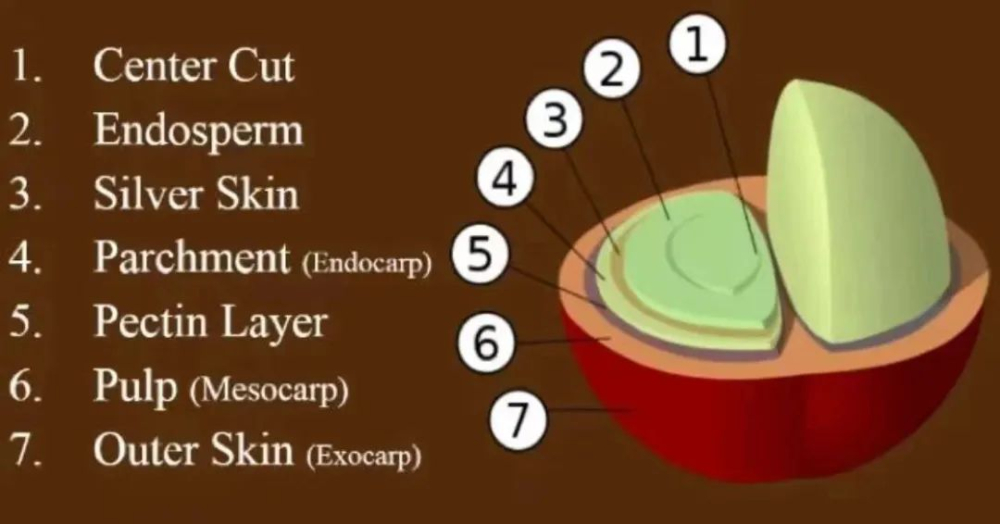
Wet hulling (also known as Wet Hulling or Giling Basah) is a processing method that sits between washed and natural. Unlike conventional methods, wet hulling involves removing the parchment layer (also called the inner fruit skin) that encases the green coffee bean before it is fully dried and while the moisture content is still relatively high. This approach helps accelerate the drying process but also has a profound effect on the final flavor expression of the coffee.
Why does Indonesia opt for what seems like an “unfinished” processing method? The answer largely lies in the local natural environment. Indonesia, especially the island of Sumatra, experiences a typical tropical rainforest climate, with air humidity consistently ranging between 70% and 90% year-round, and short periods of low-intensity sunlight. Under such conditions, traditional sun-drying methods require a long time to dry coffee beans to a safe moisture level—not only inefficient but also prone to mold. In addition, the moist environment is not conducive to thoroughly drying beans in the washed process, increasing operational difficulty and risk.
For this reason, Indonesian coffee farmers have developed wet hulling as a solution. This method first follows the initial steps of the washed process—such as floatation to remove defective cherries, depulping, and mucilage fermentation—then, while the beans still retain their parchment layer and have a high moisture content (around 30% to 50%), the parchment is quickly removed mechanically. The beans are then further dried to a target moisture level of around 12%. This approach not only saves time but also helps stabilize quality to some extent.
In the wet hulling process, harvested coffee cherries are first floated to remove defective beans that float on the surface. Next, machines are used to remove the outer skin and pulp, leaving the mucilage-covered coffee beans. These mucilage-coated beans are then placed in water tanks for fermentation, typically lasting between 12 to 36 hours depending on temperature and humidity. Once fermentation is complete, clean water is used to wash away residual mucilage, at which point the beans are still enclosed in their parchment layer.
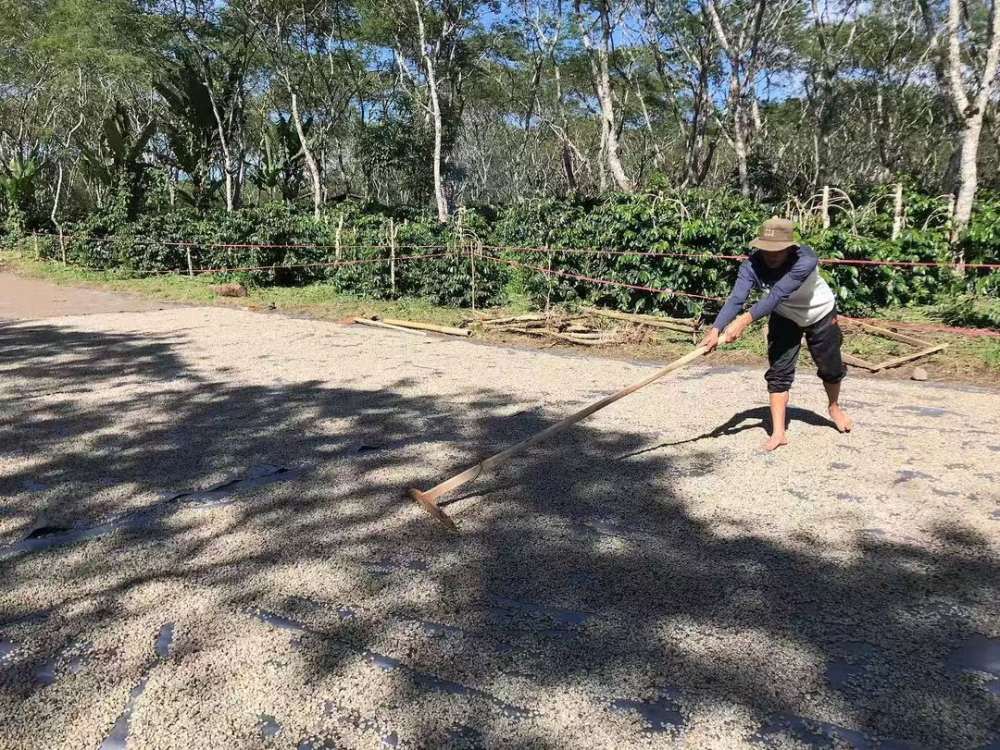
The next step is where the critical difference lies: farmers spread these parchment-covered wet beans out in the sun to dry until their moisture content drops to around 30% to 50%. At this stage, a specialized hulling machine is used to remove the parchment layer. Because the beans are still in a high-moisture state during this process, the hulling can easily cause compression and damage, leading to surface cracks on some beans that resemble deer hoof prints—hence the beans are colloquially referred to as “deer hoof beans.” Finally, these parchment-free beans continue to dry until their overall moisture content reaches the standard 12%.
Many believe that the scars on “deer hoof beans” contribute to Mandheling’s distinctive flavors, but in fact, these physical damages do not directly influence the flavor. What truly shapes Mandheling’s flavor profile is the accelerated drying process under high humidity and the alteration of internal chemical reactions caused by the early removal of the parchment layer. As a result, Indonesian Mandheling often exhibits rich woody notes, herbal aromas, and subtle spiciness, with a flavor direction that tends to be deep, bold, and layered.
When brewing medium-dark roasted Mandheling using the pour over method, selecting the right parameters is especially important. Generally speaking, medium-dark roasted beans undergo more pronounced caramelization reactions, releasing more large molecular compounds that can easily bring heavier bitterness and a fuller body. To balance the flavors and highlight chocolate and spice notes, it is recommended to control the water temperature between 87 and 88°C to avoid extracting excessive impurities due to overly high temperatures.
In terms of grind size, it is advisable to adjust to a medium-coarse level, roughly equivalent to 70–75% extraction through a standard #20 sieve. Using a brew device with fewer ribs—such as the Kono dripper—that extends the contact time between water and coffee grounds can help improve extraction evenness and enhance the full-bodied mouthfeel. In practice, you can start with a 30-second bloom using 30 grams of water, followed by slow circular pouring to reach 125 grams for the first pour. After the water level drops, continue pouring to 225 grams to finish the extraction, keeping the total brew time around 2 minutes.
In summary, the unique flavor of Indonesian Mandheling is not solely due to its variety or origin, but is also closely tied to its distinctive wet-hulling processing method. Understanding the rationale and details behind this technique not only allows for a deeper appreciation of Mandheling’s complex layers but also enables adjustments to brewing parameters to better suit its characteristics—thereby extracting its optimal flavor. Whether you’re just starting out or are a seasoned coffee enthusiast, this is a facet well worth exploring in depth.
The above content is compiled by CoffeeHunters, a coffee news website.


